Start from the last thing you are certain of. Not where the object usually lives, not where it should be, but the last moment you can genuinely verify it was in your hand or in use. That verified point is your anchor. Everything after it is a sequence of transitions: rooms crossed, tasks started, hands freed, containers opened.
Treat the anchor as a starting point, not a conclusion. Walk forward from it in the order things actually happened. At each step, ask what your hands were doing and what you set down to free them. Check the surfaces and containers that were part of that moment, even if they seem unlikely. The goal is to follow the chain of actions rather than return to the places you already expect.
Begin at the anchor. Move forward through what you actually did, not what you usually do. Check each transition point before moving to the next. Stop checking the usual places until the route itself is exhausted.
The last confirmed point is the start, not the answer
The glasses were on your nose at the kitchen counter while you signed for a delivery. You set the pen down, answered the door, spoke for a minute, came back to the counter, and the glasses were gone. You have now checked the counter four times, the drawer twice, and the bathroom shelf, because those are the places glasses live. Each pass feels more certain and finds nothing.
The useful shift is to stop asking where the glasses should be and start asking what happened to your hands after the signature. The counter is the last verified point, not the answer. From there, the search becomes a reconstruction of transitions: the walk to the door, the conversation at the threshold, the return trip, and whatever you carried or touched in between. Each of those is a candidate handoff where the glasses could have left your face or your hand without any conscious decision.
Research on how people bind objects to locations suggests that identity and location are stored separately and can come apart, so you may clearly remember the glasses while the location attaches itself, wrongly, to the counter or the drawer. That means a vivid memory of the object is not proof that the remembered place is correct. Treat the remembered spot as one candidate, not the answer.
Walk the route in order and check each handoff
You remember using your keys to open the front door, then nothing. Start at the lock itself. Look at the door, the lock, the handle, and any surface within arm’s reach of someone standing there with keys in hand. Check the floor directly below the lock, the doormat, and the nearest shelf or hook.
Next, reconstruct the walk from the door to wherever you went first. Move slowly and name each transition out loud if it helps: through the hallway, into the kitchen, toward the table. Pause at each doorway and look at the surfaces nearest the entrance, because crossing between spaces can clear recently held information from working memory.
Then check the containers that changed during that window. Empty the pockets of the jacket you were wearing, not the one hanging there now. Open the bag you actually carried, including side compartments you rarely use. Look inside anything you were holding when you came in: a shopping bag, a laptop sleeve, a folded newspaper.
You know the feeling: the glasses were in your hand at the counter, and now you are checking the same drawer for the fourth time.
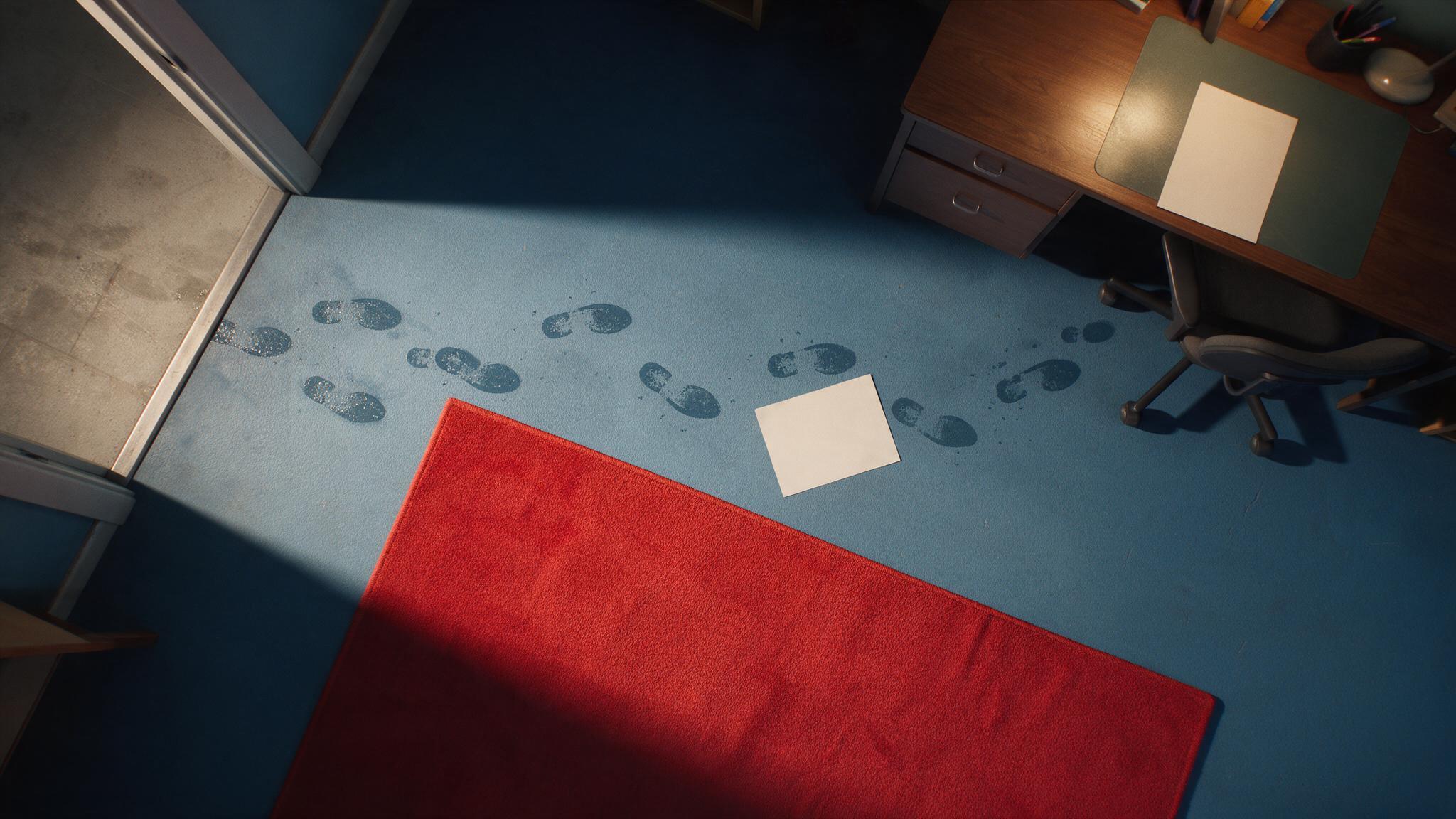 The handoff nobody remembersThe route you walked without recording itWatch the full video about the kind of memory slip that leaves you searching the same shelf three times.
If this kind of unrecorded handoff keeps happening with different objects, watch the full video presentation about recurring memory slips and the approach it proposes for improving memory.
When the route splits into a second task
You used your phone at your desk, then carried a stack of mail to the kitchen, and now the phone is missing.
The desk is the last confirmed use, but the phone almost certainly left with the mail. Check the kitchen counter where the mail landed, the space between the mail pile and the wall, and any surface you touched while sorting.
Your cardigan had pockets when you wore it to the garden, and your secateurs are missing.
The cardigan is now on a hook, and you have checked the garden twice.
You think you used the tape measure in the garage, but you are not certain.
Before walking any route, spend a minute testing the anchor: can you picture the tape measure in your hand in the garage, or is that just where it usually lives? If the memory is more habit than image, widen the anchor to the last time you are genuinely sure you saw it, even if that was days ago, and retrace from there instead.
When the retrace reaches its limit
If your reconstruction is thorough and the object is still missing, the next question is not where did I put it but who else touched this space. That is a different search, one that starts with asking rather than looking. Before you ask, write down the last place you are sure you saw the item and the time frame. Ask in a neutral way, without assuming they moved it.
Ask the people you live with whether they moved the item, borrowed it, or put it away while tidying. Check the places where they usually store things, not just where you do. If you were in a shared or public space, ask staff or check a lost-and-found area.
If missing objects are becoming frequent enough to worry you, or if the lapses extend beyond objects into conversations, appointments, or familiar routes, it is worth mentioning to a doctor rather than managing each incident alone. Occasional misplacement is ordinary. A pattern that is new, worsening, or spreading into other kinds of remembering deserves a proper conversation, not just a better search strategy.