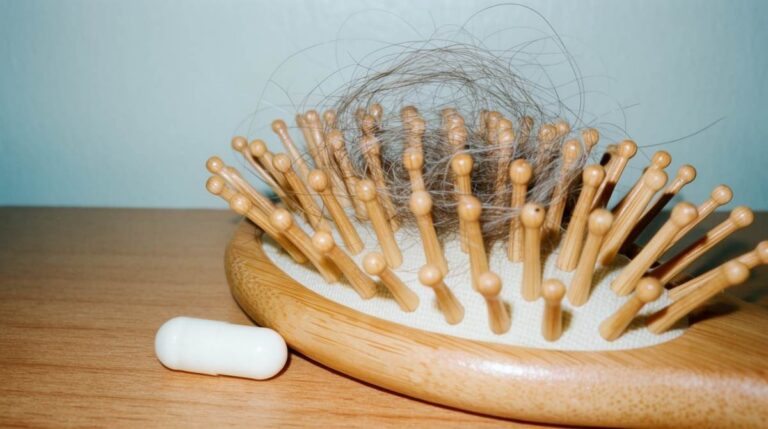
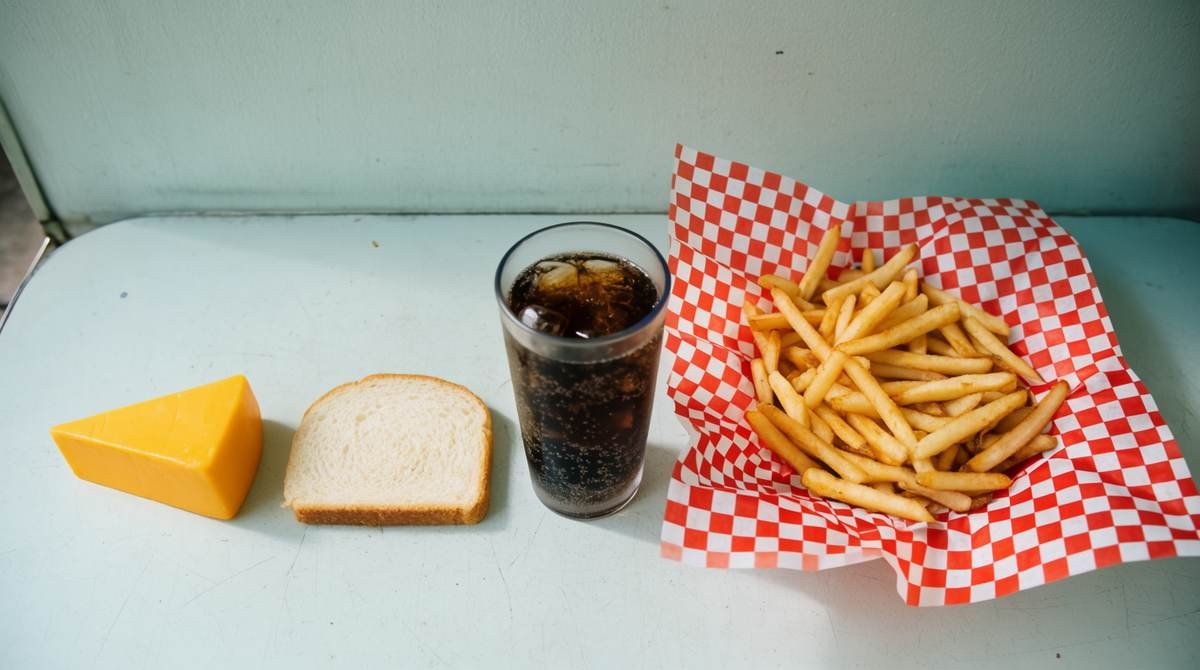
You are standing at the counter with your back to the shelf, phone face-up beside a block of cheese, reading a list that runs cheese, white bread, sugary soda, fried everything. The store lights put a glare across the screen. Around item four you notice the list has told you what to fear and has not once said what was measured, so you keep scrolling for a verdict that never appears. No single food has been shown to cause memory decline on its own; what studies associate with memory change is a pattern of eating held over years, of which any single item on a top-ten list is one thread. That distinction is the whole job of this page. We keep returning to it because these lists are not exactly lying. They compress, and compression is where a cohort association hardens into a commandment. What follows is where the lists come from, the cheese question answered as the evidence actually stands, every row sorted by what was measured rather than what the headline claimed, and a way to change a plate without throwing the week away.
Where the top-ten list comes from
Most of these lists begin with a search rather than a study. Someone gathers the foods mentioned most often in coverage of memory, ranks them, and attaches a mechanism sentence: sugar inflames, fat blocks, an additive crosses into the brain. That sentence does work the data never did. Trace a row backward and you usually find a cohort instead: people asked what they eat, then followed for years while researchers record who develops what.
A cohort can show that two things arrive together. It cannot show which one knocked the other over.
The differences ride along in the numbers. People eating a great deal of processed food also tend to differ in sleep, activity, drinking, blood pressure, and how much of a week is spent sitting. When a list reports an association and prints a cause, that is the gap being crossed. Ask three things of any row: was the food assigned or chosen, who was followed and for how long, and what else moved at the same time.
It is the third night the same takeout lands on the counter, and this time you read the panel before you open the container. The sugary drink goes back in the fridge unopened, you pour a glass of water, and you eat the rest exactly as before. That is the entire change. For one week you cook on Tuesday, then you don’t, and the list you saved sits unopened in your phone. The swap holds on good nights. On the tired ones the pattern resumes, and the pattern is what the studies were measuring all along.
Is cheese bad for your brain?
The evidence is mixed and observational, and nothing in it establishes cheese as a cause of memory decline. Dairy has been studied inside whole eating patterns rather than on its own, and the results point in more than one direction. Cheese is dense, and it carries saturated fat and salt, which is why it keeps appearing on lists, but density is not a finding.
Rows sorted by what was measured
| Named as | How it was measured | What the evidence says |
|---|---|---|
| Cheese | A memory killer | Studied inside whole eating patterns, mixed and observational, no cause shown |
| Sugary drinks | A fast route to decline | Intake tracked across long-running cohorts, an association |
| Ultra-processed food | The top offender | Diets scored by processing over years, travels with sleep and activity |
| White bread and sweets | Sugar that starves the brain | Carbohydrate intake compared with cognitive test scores, no causal demonstration |
| Alcohol | Poison or antidote depending on the list | Drinking patterns followed alongside memory, guidance is to limit alcohol |
| Brain supplements | The fix | No vitamin or supplement is recommended for preventing cognitive decline |
Context decides what it means. The National Institute on Aging describes a healthy balanced diet as fruits and vegetables, whole grains, lean meats, fish, poultry, and low-fat or nonfat dairy, with solid fats, sugar, and salt limited. A slice of cheddar on that plate is a different row than a slice standing in for lunch, three days running.
So the honest entry reads mixed, observational, association at most. The better question is what else is on the plate.
Most of this we would rather talk through than argue in print, so we put the kettle on and watch the full video with the notes beside us.
What each row actually says
Sorted, the rows read like this. Cheese: named as a memory killer, measured inside whole eating patterns, mixed and observational, no cause shown. Sugary drinks: named as a fast route to decline, intake tracked across long-running cohorts, an association rather than a single-cause finding. Ultra-processed food: named as the top offender, diets scored by processing over years, an association that travels with sleep and activity. White bread and sweets: named as sugar that starves the brain, carbohydrate intake compared with cognitive test scores, no causal demonstration. Alcohol: named as poison or antidote depending on the list, drinking patterns followed alongside memory, guidance is to limit alcohol, and no amount is offered here as protection. Brain supplements: named as the fix, NIA states that no vitamin or supplement is recommended for preventing Alzheimer’s or other forms of cognitive decline.
Three questions for any row
- Was the food assigned to people or chosen by them?
- Who was followed, and for how long?
- What else moved at the same time?
- Does the row report an association or print a cause?
- Is the verdict mixed, observational, association at most?
Read down the last column and the pattern is boring: association, association, mixed, not established. On this subject, boring is what honest evidence looks like.
Where the evidence is genuinely thin, we say so rather than fill the cell. Single foods have rarely been assigned to people and watched for a decade, so the field answers in tendencies across long stretches of time, not in verdicts about an ingredient. That is a limitation of the research, and a list that hides it is selling certainty the science does not have.
The trade-off a swap does not mention
Every swap has a cost, and the cost is usually the thing that made the food easy. A packaged lunch holds a shift together, and replacing it means deciding at seven in the morning what happens at one in the afternoon. Whether that trade is worth making depends on context: what else you manage, how many people eat from the same kitchen, whether a medicine you take interacts with a food. The swap that fits one month is the wrong one for the next.
Swap, don’t panic
- Keep the meal and change one line of it
- Pour water or unsweetened tea where the sugary drink was
- Keep the cheese and put vegetables beside it
- Choose fruit and nuts over the packaged pastry
- Change one item a week so the change survives a tired week
- If a supplement interacts with a medicine you take, ask your doctor first
Swap, don’t panic, in practice. Keep the meal and change one line of it. Pour water or unsweetened tea where the sugary drink was. Keep the cheese and put vegetables beside it. Choose fruit and nuts over the packaged pastry. Change one item a week so the change survives a tired week. If a food or supplement interacts with a medicine you take, ask your doctor first.
What people get wrong is the purge. Clearing the whole cupboard on a Sunday produces a rule nobody keeps by Wednesday, and the swing back is larger than the habit that started it.
The larger question behind a slip that keeps returning is the one this page leaves standing: if a pattern of eating accounts for only part of how memory changes, what accounts for the rest, and at what point does a pattern become something you would name out loud? We don’t answer it here.
Diet is one part of a longer picture
The National Institute on Aging places diet among many factors for cognitive health, genetic, environmental, and lifestyle, and notes that some of them can be changed while others cannot. Blood pressure is the example it gives the most weight to: decades of observational studies link high blood pressure in midlife, from the 40s to the early 60s, with cognitive decline later in life, and the SPRINT MIND trial found that adults aged 50 and older who lowered systolic pressure to less than 120 mmHg had a reduced risk of developing mild cognitive impairment over five years of treatment.
Sleep sits in the same row, generally seven to nine hours a night. So do medicines: some drugs and combinations can cause confusion and memory problems in older adults, and the advice is to talk with a doctor rather than stop anything on your own. Hearing and vision loss, falls, smoking, and heavy drinking belong to this page too.
Dietary patterns themselves stay under study. Observational work has reported lower dementia risk among people eating a Mediterranean pattern, and the MIND diet has been associated with slower decline in some studies, while a clinical trial found only small improvements in cognition, similar to those in a control diet with mild caloric restriction. Mixed, and reported as mixed.
This is the point the food lists miss: diet explains only part of how memory changes. If a change persists or gets worse, bring it to a doctor, because several different causes can produce the same complaint.
 Which suspect actually hurts memory?The row the list never measuredWatch the video and see how each food row gets sorted by what was measured
This page settles what a food list can settle, and the rest is where we watch the full video without a list in front of us.
Everything on Supplements & food →
▶ Watch the memory video