You are standing in the produce aisle with your phone still open, and the bunch in your hand is cold and wet from the misters, the leaves sticking together in a clump against your knuckles. The question that sent you here is short, and you have asked it before: what belongs on the list? A new answer arrives every few weeks, a few items long and completely sure of itself, and the version it replaces quietly stops being mentioned. No food prevents dementia and no food removes plaque from the brain. That is the honest starting point, and it is also where the short lists break: they take a pattern observed across groups of people and hand it back as a single shopping item, with the certainty attached for free. What survives is narrower and still useful. In observational studies, people whose overall eating followed a set of food groups declined more slowly, and NIA reports that findings like these are not conclusive. A large randomized trial then put the MIND diet against a control diet and did not beat it. So the list you searched for appears below, carrying its proper label, followed by what diet can and cannot do, and the question this page leaves open.
What the trial compared
The MIND diet takes the Mediterranean diet and DASH and turns them into named food groups rather than nutrients. People whose eating follows it more closely have shown slower cognitive decline in observational research, and some of that work found a lower risk of Alzheimer’s disease. Observational research records what people eat and watches what happens afterward, so it can show association without showing cause. NIA’s plain reading of the field is that these findings are promising and not conclusive.
The trial, side by side
| Aspect | What the article reports |
|---|---|
| Assignment | Randomly assigned to the MIND diet or a control diet allowing mild caloric restriction |
| Primary outcome | Change in cognition over the course of the trial |
| Headline result | Only small improvements on the MIND diet, similar to those on the control diet |
| The design consequence | When both groups move in the same direction, the pattern cannot be credited with the movement |
The design and the headline, in rows: participants were randomly assigned to the MIND diet or to a control diet that allowed mild caloric restriction. Primary outcome: change in cognition over the course of the trial. Headline result: participants on the MIND diet had only small improvements in cognition, similar to those following the control diet.
Months in, the basket fills itself: greens at the bottom, fish wrapped at the counter, the pastry aisle crossed without a glance. You are eating differently and you notice it every time. What you quietly stop doing is asking the question honestly. You stop reading past the headline, stop raising it with anyone who might answer, and stop admitting that you do not know whether any of this is doing what you hoped. The shelf stays exactly as indifferent as it was the first morning you stood there with a wet bunch in your hand.
Why the control diet was the hard part
A control diet that also trims calories is not an empty baseline. It gives both groups a reason to eat differently, which is what a careful comparison requires, and it sharpens the question: whether the food groups add anything beyond eating a little less. When both groups move in the same direction, you cannot credit the pattern with the movement. That is a design consequence, not a verdict on anyone’s dinner.
What people get wrong is the pair of readings. No difference does not mean the pattern is useless, and it does not mean the observational work was mistaken about who declined more slowly. It means a controlled test could not separate the diet from its own comparison, and the distance between watching people and changing what they eat is where most diet claims quietly live.
We hold one thread aside here, for when you want the fuller argument, watch the full video before you weigh any of this for yourself.
The list, with its label attached
Here is the short list people arrive looking for, described as what an eating pattern emphasizes and limits. Every line is a group rather than a dose, and the label stays attached: these are associations from observational studies, linked with slower decline in some cohorts, not a treatment and not a guarantee.
What the evidence does not say
- Myth: a food clears plaque in the brain. Fact: no food has been shown to do this.
- Myth: a supplement prevents Alzheimer’s. Fact: none is currently recommended for prevention.
- Myth: observational research proves cause. Fact: it records diet and watches what happens afterward.
- Myth: no difference means the pattern is useless. Fact: the trial could not separate it from its comparison.
- Myth: one food group does the work alone. Fact: no serving size will do that on its own.
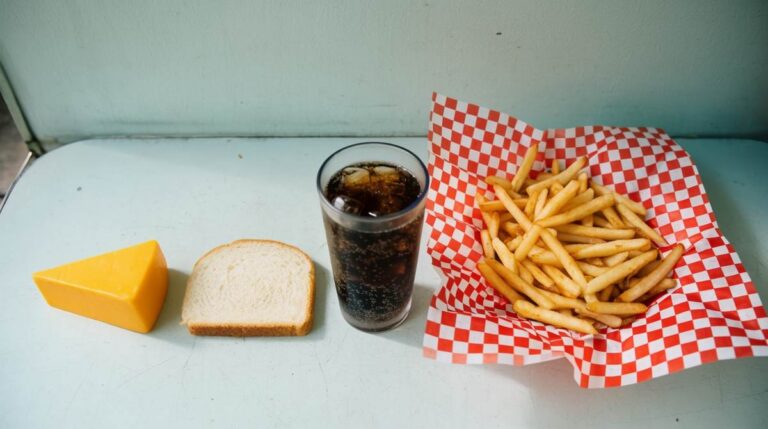
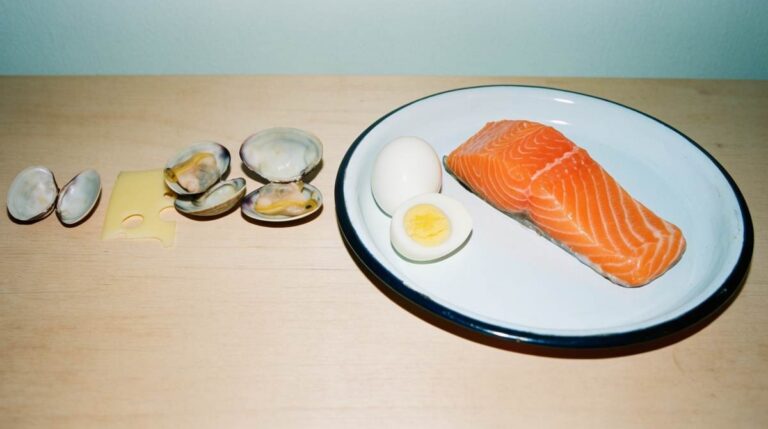
Emphasized: leafy green vegetables on most days. Emphasized: berries on most days. Emphasized: whole grains daily. Emphasized: nuts on most days. Emphasized: beans regularly. Emphasized: fish across the week. Emphasized: poultry in place of fried and red meat. Emphasized: olive oil as the main cooking fat. Limited: fried food. Limited: pastries and sweets. Limited: red meat. Limited: butter and full-fat cheese.
Notice what the rows do not contain: a serving size that will do the work on its own, and any promise about memory. The pattern matters because the lines hold together over years, alongside sleep, blood pressure, hearing, activity and whatever medicines a doctor has already reviewed.
Can any food remove plaque from the brain?
No. Plaque in the brain is a pathological feature found in tissue, and no food has been shown to clear it. Results that promise this are selling a mechanism as though it were an outcome. NIA’s position on supplements is blunter still: at this time, no vitamin or supplement is recommended for preventing Alzheimer’s or other forms of cognitive decline.
Numbers worth holding onto
- Systolic blood pressure lowered to less than 120 mmHg, with reduced risk of mild cognitive impairment over five years
- Physical activity at 150 minutes a week under federal guidance
- Sleep generally runs seven to nine hours
- Sudden confusion with weakness, trouble speaking or a severe headache needs 911 now
Prescription treatment, where it is appropriate, is a conversation with a doctor about medicines that act on the underlying disease process, and food has no equivalent role. A memory change that persists or worsens deserves a doctor’s visit on its own. Sudden confusion with weakness, trouble speaking or a severe headache needs 911 now.
The question underneath the slip that keeps returning is not which food to add. It is why two people eating the same pattern for years end up in different places, and how much of that distance is food at all. Sleep, blood pressure, hearing, activity, medication, genes and chance all sit inside the gap. This page leaves it open, because the diet research as it stands does not close it.
What diet can and can’t do
Diet can: deliver fiber, vitamins and minerals through food rather than pills. Diet can: be one part of a pattern kept for decades. Diet cannot: prevent dementia. Diet cannot: remove plaque or reverse a decline already noticed. Diet cannot: stand in for a medical evaluation, or for the treatments a doctor does prescribe.
Food is one lever among several, and the others are not decoration. In the SPRINT MIND study, people age 50 and older who lowered systolic blood pressure to less than 120 mmHg had a reduced risk of developing mild cognitive impairment over five years of treatment. Federal guidance sets physical activity at 150 minutes a week, sleep generally runs seven to nine hours, and medicines that affect memory are worth reviewing with a doctor.
None of that is a list of guarantees, and none of it replaces a clinician. Memory concerns that persist or worsen belong in a doctor’s appointment; a sudden severe change belongs in the emergency room.
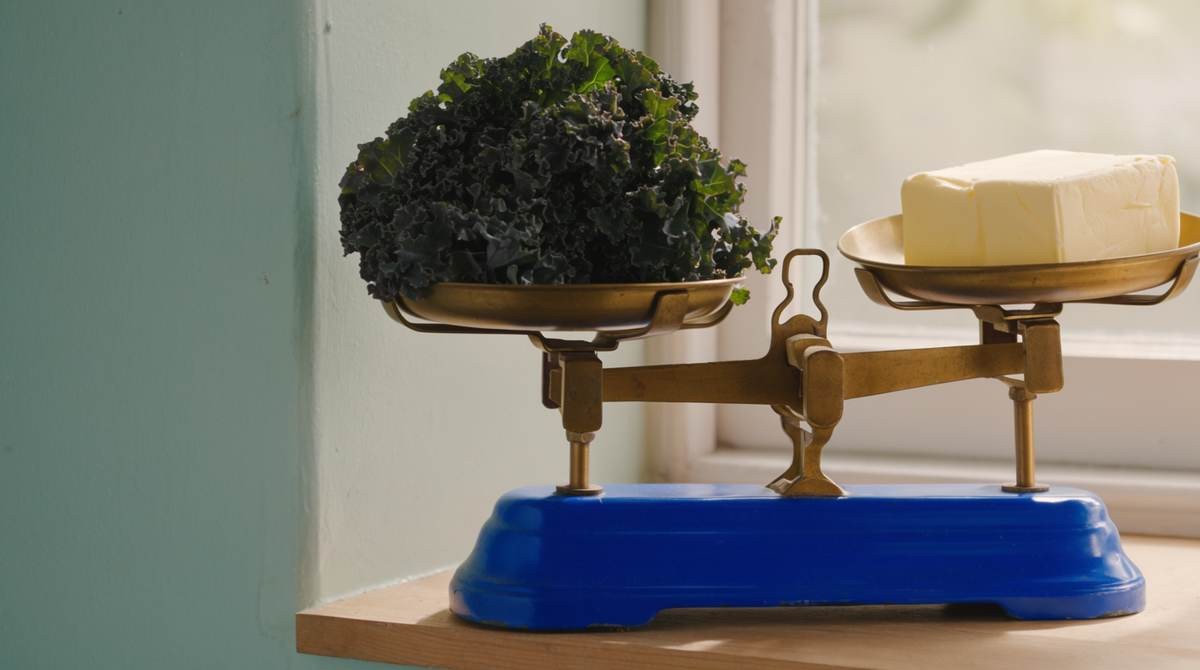 Worried your diet is not enough?Could the food groups add anything?Watch the video for the fuller argument before you weigh any of this for yourself
The evidence above will not settle what you do tomorrow morning, and we would rather you heard the case whole than in fragments from us: watch the full video when you are ready.
Everything on Supplements & food →
▶ Watch the memory video