Someone leans across the table and asks what you’ll eat before the exam, and you find you have no answer beyond the usual. The plan in front of you is built on keeping the morning ordinary, yet the harder question sits untouched: why a fact you could produce last night disappears when the first question lands.
The exam hall fills at nine, and you have been up since five with a mug going cold next to a notebook you have already read three times. The first question lands, and the fact that felt solid at midnight is only a shape with no words on it. You read it again. Someone’s chair scrapes. Your hands know one thing to do, which is to move on. Brain food for exams is a familiar meal you already eat, water with it, and caffeine only in the amount you normally drink, on the night before and again on the morning of the exam. There is no ingredient to add and no special dish to buy. One thing to say before the plan: good human trials on brain food for exams are scarce, and published guidance gives no dose. A trial would need the same people on comparable weeks, sleep, stress and study hours held steady, recalling the same kind of material at the same delay afterwards. That is hard to run and rarely published. What follows is a plan for not making the morning worse, built from the parts of the day you can actually control.
What a useful study would have to measure
Good human trials on this are scarce, and the reason is methodological rather than mysterious. People know what they ate, and the weeks when someone eats carefully are usually the weeks when they also slept and revised. To settle the question you would need comparable weeks in the same people, matched for sleep, stress and hours studied, material learned the same way, recall tested at a fixed delay, and a comparison group eating similar amounts in a different pattern. Without that, a result is an association dressed as a meal.
When the choice depends on you
- If you eat at seven and feel settled by nine, keep seven
- If you normally head to class on an empty stomach, do not start today
- If you drink caffeine, keep the amount and the hour you normally use
- If you do not drink it, an exam morning is the wrong time to find out
- If a bottle is not allowed, drink before you go in and again at a break
Published guidance stops well short of a dose. The Dietary Guidelines for Americans asks people to meet their nutritional needs through a healthy eating pattern of nutrient-dense foods, and singles out nothing for thinking. The National Institute on Aging’s material on cognitive health is blunter about longer-term diet research: findings are mixed and not conclusive, one trial of the MIND diet produced only small improvements similar to those of a control diet, and no vitamin or supplement is recommended for preventing cognitive decline. Scarcity of evidence is not evidence of benefit.
Third sitting in a row, you reach a page you wrote yourself and read it as though it belonged to someone else. So you begin writing everything twice, once into the notebook and once into a phone list you scroll instead of testing yourself. You stop reading aloud, stop answering in the study group, stop asking the question out loud because the answer is gone before you finish asking. The list grows longer every week. The recall does not come back with it.
Why would you test a recipe at nine in the morning?
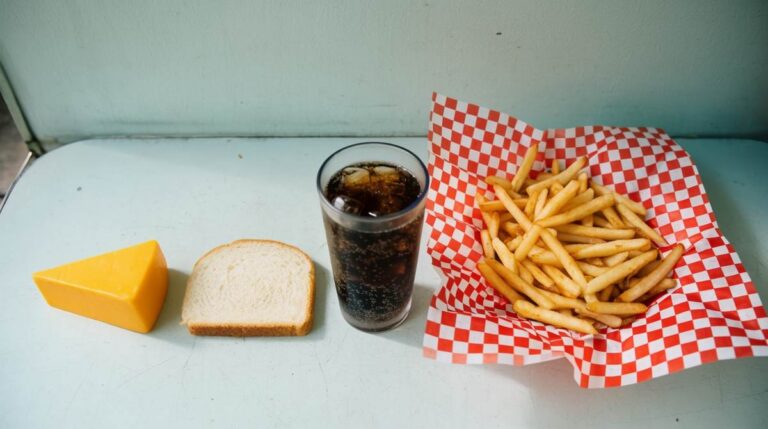
Because it is a nice idea, and because the list you saved in the autumn promised something specific. The problem is not that the food is bad. The problem is that a rich, unfamiliar, larger-than-usual breakfast arrives on the one morning your stomach is already answering for your nerves, and you spend the first part of the exam managing it. Novelty is a small upside. Predictability is a large one.
The choice depends on what you already do. If you eat at seven and feel settled by nine, keep seven. If you normally head to class on an empty stomach, an exam morning is a poor place to begin, and a heavy plate you have never handled is worse than nothing. The same logic runs backwards through the evening: a dinner you digest overnight beats a special dish chosen by someone who is not taking this test.
When your hands need a break from the page, watch the full video and come back to the timeline after.
Night before, morning of, during the exam
Night before: the dinner you eat during an ordinary week, water with it, and no ingredient picked because a list called it a brain food. Stop drinking early enough that you are not up twice, and close the notebook in time to sleep a normal night rather than trading an hour of revision for the hour after midnight.
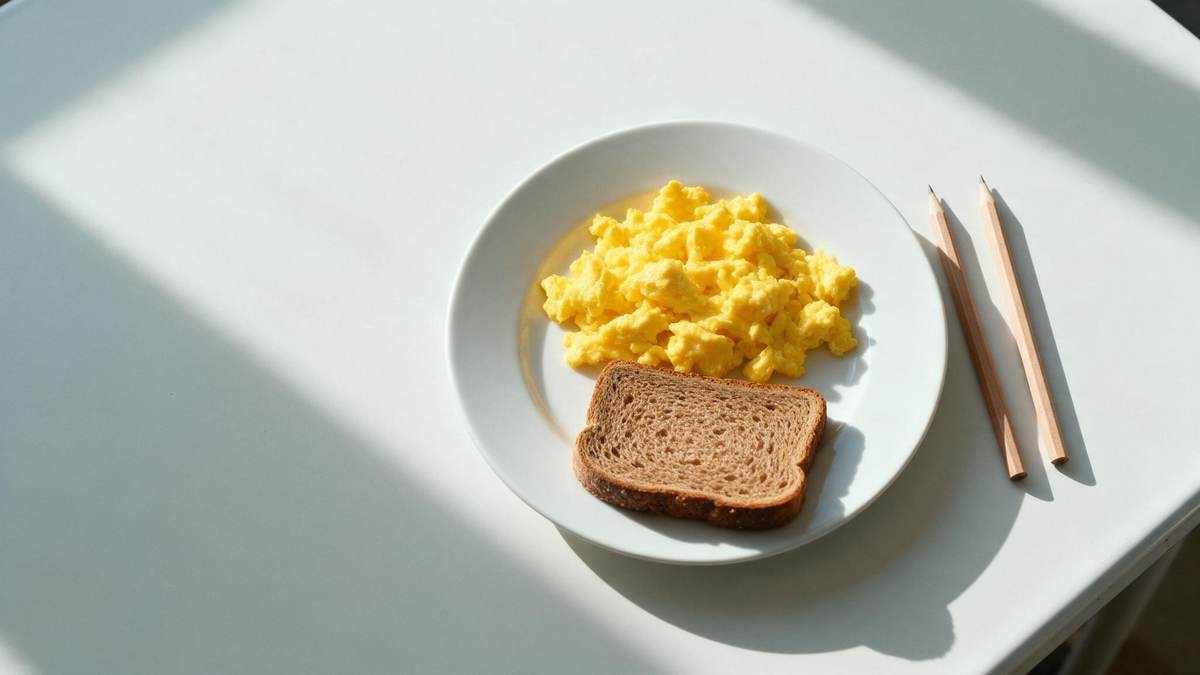
Morning of: a breakfast of the kind and size you normally have, eaten early enough to sit without heaviness before you walk in. If you never eat before class, do not start today. If you eat at the same hour every day, keep that hour, and add water rather than adding something new.
During the exam: water if the room allows it, a pause you have already practiced, and nothing you have not already tried on a study day. The rules on food and drink in the hall come from whoever runs the test, and they override any nutrition advice you have read, including this one.
How much caffeine is too much on exam morning?
Published guidance gives no dose for exam performance, so treat caffeine as something you already know rather than something to optimize. If you drink it, keep the amount you normally drink and the hour you normally drink it. If you do not, an exam morning is the wrong time to find out what it does. Pushing past your usual amount because you are nervous mostly buys jitters and a harder landing, and the test is still the same length.
Hydration is the simpler half. The National Institute on Aging’s advice on eating well says to control portion sizes and drink enough water and other fluids, and puts generally seven to nine hours of sleep a night in the same routine. A bottle may not be allowed in the room, so drink before you go in and again at any break. Water will not make you sharper. Being dry and short of sleep makes the morning harder, and that is the part worth arranging.
Why does a fact you could produce last night go missing this morning, when attention, sleep and retrieval are all involved and none of them can be watched from the outside? Whether the material was never laid down in the first place, or was laid down and cannot be reached, is the question this page leaves open.
When the problem arrived before the night before
A meal can steady the morning. It cannot repair recall that has been slipping for months, and no breakfast will. If the same kind of slip shows up on ordinary days and not only under exam pressure, that is worth a doctor’s appointment rather than another list, because memory trouble has several causes and they do not all behave the same. Bring what you have noticed: when it started, what kinds of names go missing, how you are sleeping, and every medicine you take, since some medicines and combinations affect memory, sleep and thinking.
What the evidence will not carry
- A special dish buys sharper thinking — published guidance gives no dose
- Scarcity of evidence is not evidence of benefit
- Water will not make you sharper — being dry makes the morning harder
- A steady meal can steady the morning — it cannot repair recall slipping for months
If a change comes on suddenly, with weakness, trouble speaking, a severe headache, or confusion that arrives fast, call 911 or go to the emergency room instead of waiting for an appointment. Worth a doctor’s time in the ordinary way: blood pressure, mood, hearing and vision, alcohol, and whether your sleep has quietly shortened across the term. We keep coming back to this, because the night before is where people look and the months before that are where it usually starts.
 Is this breakfast right before an exam?Why does last night’s fact vanishWatch the video on keeping the exam morning exactly like every other morning
The morning is arranged. What has been happening across the months is a separate question, and it is worth sitting with: watch the full video.
Everything on Supplements & food →
▶ Watch the memory video