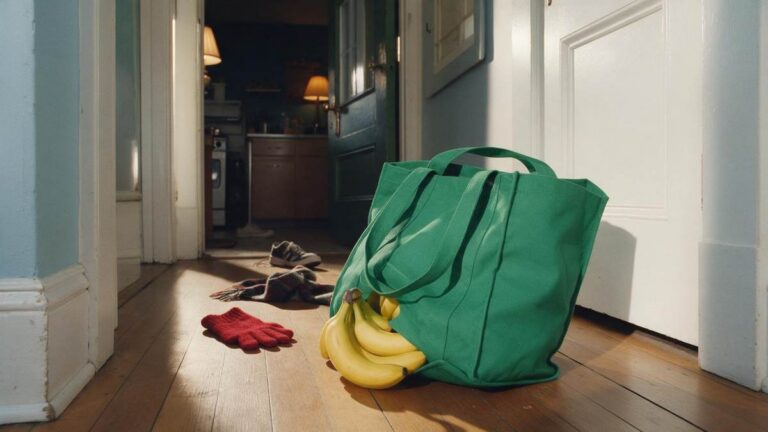
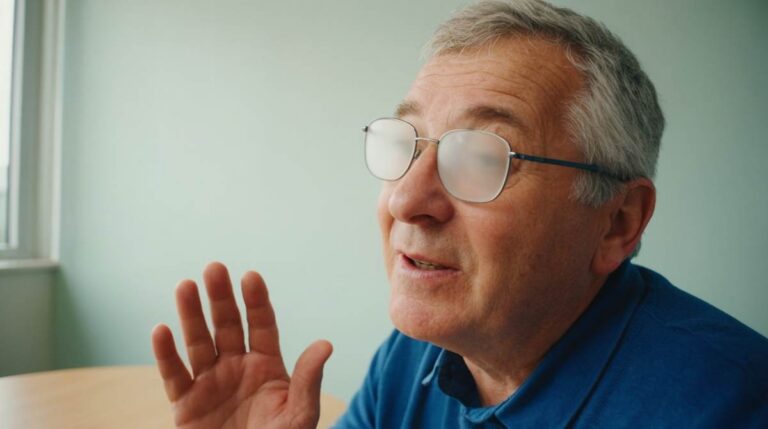
You are holding your phone with a two-line message half-written and the word you wanted simply is not there. You send it anyway and set the phone face down. Within a week you have quietly stopped drafting anything after four in the afternoon and handed the recipe to whoever else is around — so what is actually failing when a sentence you could say yesterday will not come today?
 Why thinking stays slow after thisWhat is actually failing?Watch the video and see how a foggy week gets written down line by line
You are standing at the counter with a tea bag between your fingers, and the sentence you were halfway through has gone. Not the subject, the whole shape of it. The counter is warm under your palm, you know you were mid-thought, and the word you wanted is simply not available. Ten minutes later it arrives on its own, you write it down, and it looks like nothing. That is brain fog after COVID in the form most people actually meet it: a change in thinking and memory that shows up during ordinary tasks. Losing the thread of a conversation. Reading the same paragraph and absorbing none of it. Walking into a room and losing the reason. Starting a familiar recipe and stalling at the second step. It arrives alongside the tiredness rather than instead of it, and it tends to move the way the rest of the illness moves. On the two things people want first. It is common for this to ease over months rather than days, and to come and go inside a single week; there is no reliable date attached to a person, and good evidence for a clean timeline is thin. And it is not, on its own, proof of damage. If it persists or worsens, that is a conversation for your doctor or a long COVID clinic, because several different things produce the same fog.
What people actually say
The descriptions are more consistent than people expect. Losing the word mid-sentence. Reading the same line four times and taking in none of it. Getting up to do one thing and standing in the hallway without it. Rarely does anyone offer a general verdict on their memory; they report a specific, familiar action falling over at a specific moment, and then happening again later that week.
What each task costs you
| Task | Cost | How the article says to handle it |
|---|---|---|
| Reading a short message | low | No break needed |
| Replying to three messages | medium | Stop after the first |
| A phone call | medium | Sit down and do nothing else at the same time |
| A grocery run | high | Rest before it and after it |
| Cooking an unfamiliar recipe | high | Split it across two sittings |
| A work meeting | high | Write the points down first and keep the hour after it empty |
Nobody hands over a score. They hand over a sentence that stops halfway.
The pattern matters more than the vocabulary. Fog is heavier after a short night and after a stretch of activity, lighter when rested, and it travels with the tiredness instead of replacing it. Some people lose ground in language, others in the step sequence of an ordinary task, others in following a conversation while also listening to it. Two people describing the same period can describe entirely different failures.
It is the fourth pass over a two-line message and you are still not sure it says what you meant, so you send it anyway and put the phone face down. The next morning you write it shorter. Within a week you have stopped drafting anything after four in the afternoon, stopped reading anything longer than a paragraph, stopped joining the call where you have to hold two threads at once, and started handing the recipe to whoever else is in the kitchen. Nothing dramatic happened. The cost was paid in advance, and you began arranging the whole day around not paying it twice.
Is this brain damage?
It is the phrase that arrives in the search bar and then in your own head late at night. The honest reading: researchers have measured differences in some people, and many people report improvement over months, and neither fact tells you what is happening in your own head. Losing a word does not demonstrate damage. Where the evidence is thin, this page will say so rather than fill the gap.
Two rules that keep pacing honest
- If it is a good day, do less than you want to do.
- If you are near needing an hour to recover, stop before that point.
- If the fog is heavier after a short night, expect the day to cost more.
- If a change persists or worsens, bring the diary to your doctor.
The same fog comes from several directions at once: too little or badly broken sleep, untreated thyroid trouble, anemia, blood sugar swings, low mood, ongoing stress, and medicines that dull attention, including antihistamines, sleep aids and muscle relaxants. A doctor can work through that list with a history, a physical exam and blood tests. Do not stop a prescribed medicine on your own to test the theory.
None of that is a verdict. It is a set of things a clinician can check while the fog is still there, and a reason to arrive with a list rather than with one bad morning.
Why the clock gives no single number
You want a number of weeks. The honest shape is this: many people notice improvement over months, some take considerably longer, and the course is not straight. A good Tuesday proves nothing, and a bad Friday disproves nothing. What is observed across groups rarely maps onto one person’s calendar, and good evidence for a precise individual timeline is thin.
So substitute a pattern for a date. Which tasks are cheap, which are expensive, and whether the cheap ones are getting cheaper week over week. That is measurable at your kitchen table with no study behind it.
Figures stated plainly, without decoration: the course is described in months for many people; no reliable percentage attaches to your own case; and no figure on this page will tell you when you are back to your old speed.
The kettle is on anyway, so you can watch the full video while it boils.
Pacing: task, energy cost, rest
Pacing is the unglamorous part, deciding in advance what each thing costs so the day does not decide for you. Rate your own costs for a week, because the plan only works if the numbers are yours.
Reading a short message: low cost, no break needed. Replying to three messages: medium, stop after the first. A phone call: medium, sit down and do nothing else at the same time. A grocery run: high, rest before it and after it. Cooking an unfamiliar recipe: high, split it across two sittings. A work meeting: high, write the points down first and keep the hour after it empty.
Two rules keep it honest. On a good day, do less than you want to, and stop before the point where you would need an hour to recover. General federal guidance of at least 150 minutes of moderate activity a week describes adults in general and is not a target to chase while symptoms are active; for the sleep side, NHS guidance on tiredness suggests keeping the same sleep times and aiming for 6 to 9 hours.
The pattern worth writing down
Words that will not come in conversation. The same paragraph read twice. A familiar task abandoned at step two. Losing the thread when two people speak at once. Fog that lifts after rest. Fog that returns after a long task. One line a day is enough to see which of these is holding.
We keep coming back to this because a written pattern is what makes the next appointment useful. It gives a doctor something to work with instead of a vague sense that this week was foggy, and it lets you tell the difference between a slow drift and a bad patch.
Underneath the fog sits a question this page deliberately leaves open: why the slips cluster at the same point of the day and the same kind of task, and what is actually failing when a sentence you could say yesterday will not come today. Attention, sleep, language, energy: all of them plausible, none of them settled here.
When to hand it over
Persistent or worsening change goes to your doctor or a long COVID service. Sudden confusion, trouble staying awake, or a decrease in alertness that cannot be explained is an emergency: call 911 or go to the emergency room. Bring the diary, the full medicine list, and your sleep pattern, because the cause is usually worked out from several directions at once.
Readings the article does not support
- Myth: losing a word proves damage. Fact: losing a word does not demonstrate damage on its own.
- Myth: a clean timeline exists for you. Fact: good evidence for a precise individual timeline is thin.
- Myth: a good day means you are back. Fact: a good Tuesday proves nothing, and a bad Friday disproves nothing.
- Myth: stop your tablets to test the cause. Fact: do not stop a prescribed medicine on your own.
Expect questions about timing: when it started, how long each episode lasts, whether anything like it has happened before. Expect questions about sleep, recent head injury, seizures, diabetes, alcohol use, and every medicine you take, including the ones you would not think of as relevant.
We keep coming back to this one because the pattern is the part people miss. When you are ready to sit with it properly, watch the full video.
▶ Watch the memory video