The bottle on the back of the toilet is open, the label gone soft at one corner from the steam. You are standing there with a list you wrote after an appointment: keep the bones steady, keep the mind clear, ignore anything that only sounds official. What the list has no way of telling you is which line is doing the work. Here is the shortlist people arrive at. Vitamin D and calcium, for bone. Vitamin B12, when levels are low, for nerves and clear thinking. That is the answer to what you came for, and it needs one line beside it: good human trials on this exact question are scarce, published guidance gives no dose, and the research here is thin. No dose appears on this page, and that is deliberate. A study that would settle it would take women through menopause, measure bone density and formal cognitive testing at the start and at the end, give some of them the nutrient and others an identical-looking placebo, and record what everyone eats in between. Very little of that exists for this question.
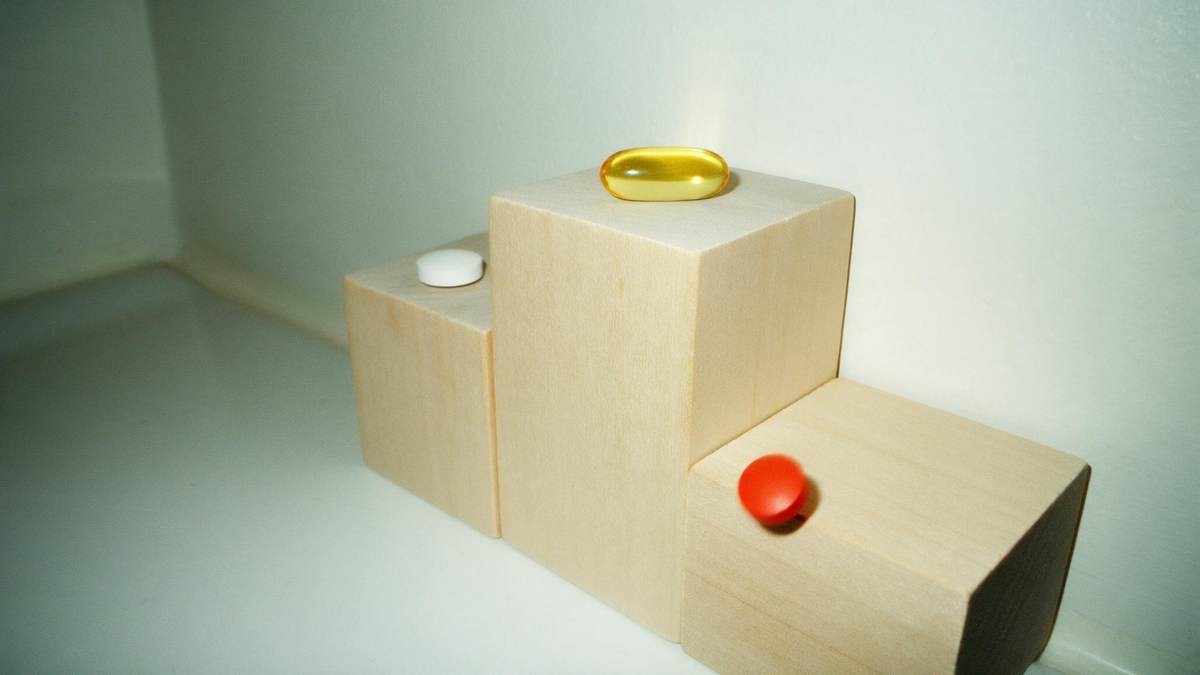 Do menopause vitamins help bones?Why is the dose column emptyWatch the video on what that confident label actually rests on
What would count as evidence here?
Evidence has to be measured against the thing it claims to help. For this question that means bone density measured with a scanner, cognitive testing run by a person rather than self-report, and a diet record running alongside, because food supplies these same nutrients and a result you cannot separate from diet is not a result about supplements. Placebo matters for the same reason: people who expect to feel sharper often do.
Studies built that way are scarce here. What circulates instead is evidence borrowed from other age groups and other reasons for taking the same nutrient. Borrowing is not automatically wrong, but it is not the answer you were given, and it should not be presented as one.
If this keeps happening, it lands first on the appointment. You have taken something for months and cannot name which one or what it was for, so you never raise the bone-density question at all, and you stop mentioning the word that went missing at dinner. What you start avoiding is the visit where someone would ask what is actually in the cabinet and what you expected it to do. The next list you write will be shorter, and vaguer, and it will still be untested.
The shortlist, line by line
Written out the way a reader can actually use it:
The shortlist, with two columns left open
| Nutrient | Why it matters after menopause | Who is at risk | Dose stated here |
|---|---|---|---|
| Vitamin D | The case rests on bone | A blood test decides, not symptoms | None stated here |
| Calcium | The same bone argument | Anyone whose daily intake falls short | None stated here |
| Vitamin B12 | Nerves and clear thinking when levels are low | Low levels can sit quietly for months | None stated here |
Vitamin D: why it matters after menopause, the case rests on bone; who is at risk of low levels, a blood test decides that, not symptoms; dose studied, none stated here, since published guidance gives no dose for this question; upper limit, none stated here.
Calcium: why it matters after menopause, the same bone argument; who is at risk, anyone whose daily intake falls short; dose studied, none stated here; upper limit, none stated here.
Vitamin B12: why it matters after menopause, nerves and clear thinking when levels are low; who is at risk, low levels can sit quietly for months, so only testing identifies them; dose studied, none stated here; upper limit, none stated here.
The last two columns are empty on purpose. Guidance written for general adult nutrition does not become menopause guidance by being repeated on a menopause page, and an upper limit quoted without a source is a guess wearing a number.
The longer version of this argument is sitting on the desk beside the drafts, and you can watch the full video whenever it suits you.
Why does no one give you a dose?
Because a dose is a claim, and the claim needs the study described above. A large figure printed on a bottle tells you what someone chose to print, not what was measured, and repeating it here would dress a choice up as a finding.
What the bottle phrase means
- Myth: the bottle was approved before it was sold
- Fact: supplements are not reviewed that way
- Myth: the phrase describes what is in your hand
- Fact: safety and labeling rules do exist
- Fact: premarket approval of the claim is a different thing
This is the part readers dislike, and it is still the honest part. We would rather send you back with a question than with a number we cannot stand behind.
Low B12 is not a memory problem
The two can coexist, and low levels are confirmed by a blood test rather than by whether a sentence went missing over breakfast. Treating a measured shortfall and treating a symptom you have never investigated are different acts, and only one of them produces a result you can read afterward.
So the decision is contextual: what your blood shows, what medicines you are already taking, what your diet supplies, and what your doctor is tracking, such as blood pressure, which is tied to thinking skills in later life. Test first and the result means something whether it comes back low or normal.
The trade-off is doing nothing against doing something inert. Nothing leaves a real shortfall untreated; inert leaves you in the same place with the same unanswered question. And on the brain side, plainly: no vitamin or supplement is recommended for preventing Alzheimer’s or other forms of cognitive decline, according to the National Institute on Aging.
Underneath the bottle question is the one this page will not settle: why does a word vanish mid-sentence, and which cause is yours? A nutrient shortfall, a night of broken sleep, an interacting medicine, blood pressure, or an ordinary distracted week all look identical from the inside. Which one is it, and how would you tell?
What approved means on a supplement label
Supplements are not reviewed and approved before they are sold the way a prescription medicine is. When a bottle borrows that phrase, it is borrowing authority from a process that never touched it. Safety and labeling rules do exist; premarket approval of the claim is a different thing, and ‘FDA-approved’ does not describe what is in your hand.
So the label’s confidence and the evidence’s confidence are not the same quantity. Ask your doctor which claims you should be acting on, and take any memory change that persists or worsens to a doctor rather than to a bottle. Sudden confusion, trouble speaking, or weakness on one side means get to the emergency room or call emergency services now.
Some questions do not belong in a paragraph, so this one has been set down in full on film: watch the full video.
▶ Watch the memory video