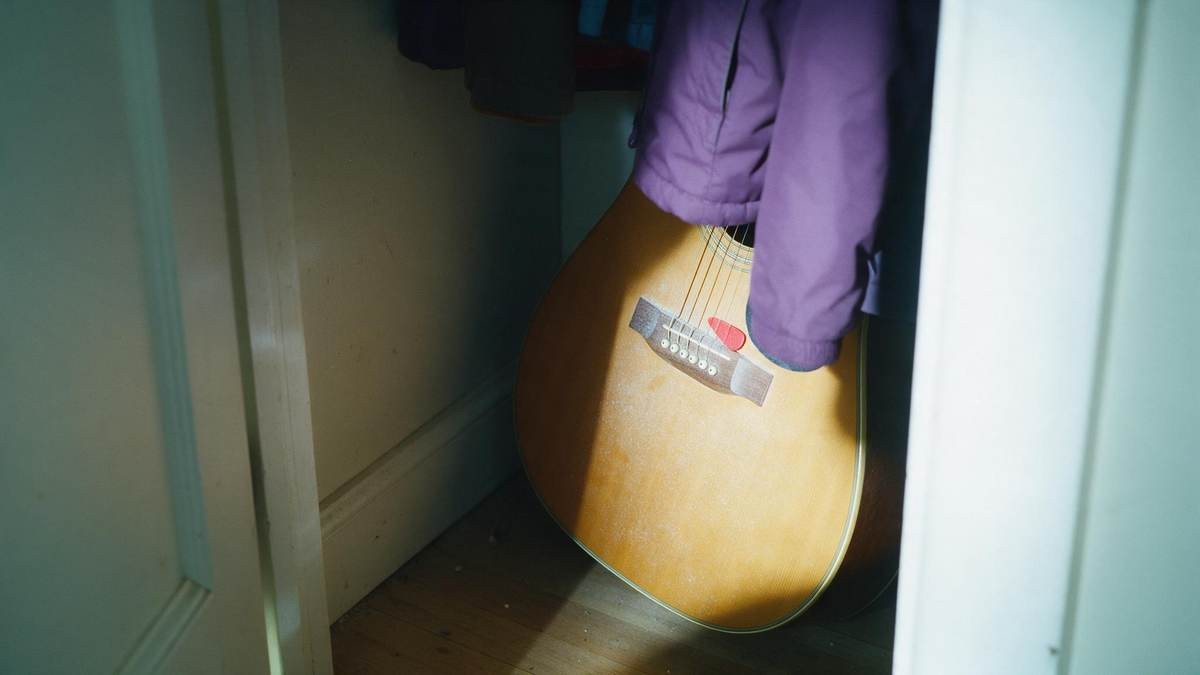
The guitar you bought to keep your memory sharp sits unplayed in the closet corner, still holding the chords from a week you abandoned. You picked the demanding thing, then quit when nothing felt different. And the question the research leaves open is simple: why do some brains respond to the hard version while others do not?
You are standing at the kitchen counter, phone in hand, and the name of the person you just spoke to has vanished. You can see their face, the color of their coat, but the word is gone. The effort to retrieve it feels like a physical reach into a dark shelf. That moment is why you are here. The exercises that change adult brains are not the ones that feel like a game. They are demanding, physical, and slow. And the research on them is thin. Good human trials are scarce. Published guidance gives no dose. What we can say is that certain activities, done consistently for months, have been linked to measurable changes in brain structure and memory in some adults. The thing to act on is this: pick one activity that requires real effort and repeat it for months, not days. But do not expect a miracle. The changes are modest, and not everyone sees them. If you have heart or mobility conditions, check with your doctor before starting something vigorous. And if your memory change is persistent or worsening, see a doctor, because the causes are several.
What counts as a neuroplasticity exercise?
The activities that show up in research are not gentle. They are things like learning a new instrument, studying a language, navigating a new city, or taking up a complex craft. One study of older adults found that those who learned quilting or digital photography had more memory improvement than those who only socialized or did less cognitively demanding activities. The ACTIVE trial, a large randomized controlled trial, tested memory, reasoning, and speed-of-processing training. Participants who had training in reasoning and speed of processing experienced less decline than those in the memory and control groups. The memory training did not show the same benefit. So the pattern is not any mental challenge. It is challenge that is new, hard, and sustained.
When the change does not come, the cost is not just disappointment. It is the moment at a dinner party when a name will not surface, and instead of waiting for it, you steer the conversation away. You start avoiding the new language class because you cannot follow the fast speaker. You stop taking the unfamiliar route because you feel foolish checking the map. The exercise was supposed to make you sharper, and when it does not, you quietly narrow your world. That narrowing is the real loss.
The research is thinner than the headlines
If you search for neuroplasticity exercises, you will find confident lists and downloadable plans. The honest picture is that good human trials are scarce. A useful study would need to randomly assign people to an activity or a control group, measure their memory or brain structure before and after, keep them at it for months, and follow up to see if the change lasts. Most published work is smaller or observational. It cannot tell you how many minutes per week, or which activity is best. Federal guidelines for physical activity exist, but they are not a neuroplasticity prescription. We keep coming back to this: the absence of a dose is not a reason to do nothing. It is a reason to choose something demanding and stick with it.
By the way, if you want another angle on everyday memory, watch the full video when you have a moment.
A printable weekly plan, without the fake certainty
Choose a single demanding activity. Put it in your calendar for the same days each week. Do the hard version, not the comfortable one. Keep a one-line log of what you practiced. Walk briskly on the days you do not practice. Ask your doctor before starting if you have heart or mobility conditions. That is the whole plan. It is not a protocol. It is a structure for the months ahead.
What people get wrong about the timeline
The changes take months. The studies that show structural changes ran for weeks to months, but the effects are modest. People quit after two weeks because they do not feel sharper. The brain changes are slow and not always noticeable in daily life. There is also a trade-off: time spent on one activity is time not spent on another. And the decision depends on context. If you have high blood pressure in midlife, managing that may matter more for your cognitive health than any single exercise. Decades of observational studies have shown that having high blood pressure in midlife increases the risk of cognitive decline later in life. So exercise is one lever, not the only lever.
What the training trial found
| Training type | Outcome reported |
|---|---|
| Reasoning training | Less decline than memory and control groups |
| Speed of processing | Less decline than memory and control groups |
| Memory training | Did not show the same benefit |
| Control group | More decline than reasoning and speed groups |
Why do some brains respond to these exercises and others do not? Is it the activity, the timing, the genes, or something about how long you have been doing it? The studies cannot say. And even if your brain does change, will you notice it in the kitchen, at the dinner party, on the drive home? We do not know. That question stays open.
When to see a doctor instead
If you have a persistent or worsening change in memory, see your doctor. The causes are several: stroke, depression, delirium, head injuries, blood clots or tumors in the brain, kidney, liver, or thyroid problems, and reactions to certain medicines. Some of these are emergencies. If you have sudden confusion, trouble speaking, or weakness on one side, call 911. If you have heart or mobility conditions, check with your doctor before starting a vigorous exercise program. And do not stop any prescribed medication without talking to your doctor first.
The plan in five moves
- Choose one demanding activity
- Put it in your calendar for the same days each week
- Do the hard version, not the comfortable one
- Keep a one-line log of what you practiced
- Walk briskly on the days you do not practice
 Will picking it up help your memory?The exercise that felt too slowWatch the video for a different angle on the slips that happen while you wait for change.
The exercises here take months. For a different way to think about the slips that happen in the meantime, watch the full video.
Everything on Memory training →
▶ Watch the memory video