The room goes quiet after you close the puzzle book. Your fingers still know the last clue, but the thought you were holding a moment ago has already slipped somewhere behind you. You look toward the shelf where your glasses should be and find only dust. Is the game sharpening your mind, or just filling the space where a memory used to be?
You sit down with a cup of tea and open the word puzzle you have done a hundred times. The clues come easily, the grid fills, and for ten minutes you feel sharp. Then you stand up and cannot remember where you left your glasses. That gap is the whole question about brain games: does getting better at a game make you better at your actual life? The honest answer is that some games train narrow skills, a few show modest transfer to everyday tasks, and many are simply enjoyable. If you only take one thing from this article, take this: the strongest evidence for real-world benefit comes from training in reasoning and speed of processing, not from memory drills or most commercial apps. Choose games that are new, challenging, adaptive, and fun, and treat them as one small part of staying engaged, not as a brain insurance policy.
What the strongest trial actually found
The most important evidence comes from the Advanced Cognitive Training for Independent and Vital Elderly trial, known as ACTIVE. This large randomized controlled trial followed older adults for ten years and tested three kinds of training: memory, reasoning, and speed of processing. The result was not what most brain game marketing would predict. Participants who trained in reasoning and speed of processing experienced less decline than those in the memory and control groups.
Game types and transfer evidence
| Game type | Skill used | Transfer evidence |
|---|---|---|
| Word games | Verbal retrieval and fluency | Mixed |
| Number games | Working memory and calculation | Mixed |
| Visual-spatial games | Mental rotation and navigation | Weak |
| Speed games | Reaction time and attention | Strong |
| Strategy games | Planning and inhibition | Weak |
| Card games | Memory, probability, social reading | Mixed |
That finding matters because it reverses the usual assumption. Memory training, the thing most people seek out, showed the least long-term benefit in this trial. Reasoning and speed training, which feel less like remembering and more like thinking quickly, held up better over a decade. The trial measured cognitive abilities and everyday function, not just game scores.
Building on ACTIVE, the National Institute on Aging is supporting a large clinical trial to assess whether speed of processing training can reduce incidence of cognitive impairment and dementia. That is a sign of how seriously researchers take this specific kind of training, and also a reminder that the question is not settled.
 Memory slips? Not every game trains itThe game that feels sharpWatch the video to hear how a small slip in this article may be the visible edge of a pattern that keeps returning.
The commercial app problem
The National Institute on Aging is explicit on this point: beware of claims that playing certain computer and online games can improve your memory and thinking. There currently is not enough evidence available to suggest that commercially available computer-based brain-training applications have the same impact on cognitive abilities as the ACTIVE study training.
This does not mean apps are useless. A game that is polished, adaptive, and backed by a subscription fee is not automatically the same as the structured, supervised training used in a trial. The ACTIVE training was specific, progressive, and delivered in a research setting. Most commercial games are not that.
If you enjoy an app, play it. But do not mistake enjoyment for transfer. The honest position is that good evidence for lasting everyday benefit from commercial brain-training applications is lacking, and no amount of streaks or badges changes that.
Game types and what they exercise
Word games draw on verbal fluency, retrieval, and vocabulary. Number games lean on working memory and calculation. Visual-spatial games, such as rotating shapes or finding hidden figures, exercise mental imagery and navigation. Speed games push reaction time and attention. Strategy games demand planning, flexibility, and inhibition. Card games mix memory, probability, and social reading.
Four questions for any brain game
- Is it new, or have you already mastered it?
- Is it challenging enough that you cannot do it on autopilot?
- Is it adaptive, getting harder as you improve?
- Is it enjoyable enough that you will keep doing it?
The transfer evidence varies. Reasoning and speed of processing show the strongest evidence from the ACTIVE trial. Memory training shows mixed evidence: people improve on the trained task, but the benefit does not reliably carry into daily recall. Visual-spatial and strategy games have weaker or less direct evidence for everyday transfer, though they are cognitively demanding and often enjoyable.
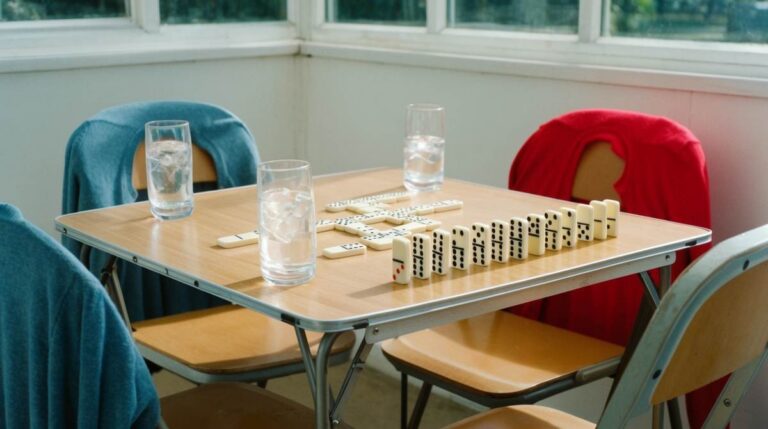
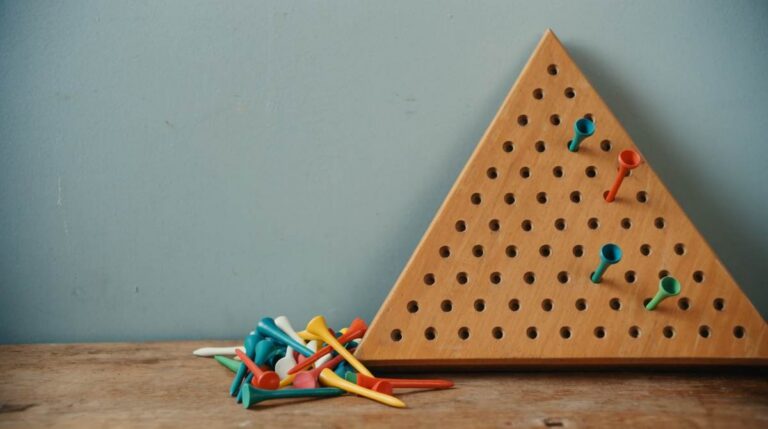
Here is the table in prose, one row per game type. Word games: skill used is verbal retrieval and fluency; transfer evidence is mixed; try-it-now version is a word ladder where you change one letter at a time to turn a given word into a target word. Number games: skill used is working memory and calculation; transfer evidence is mixed; try-it-now version is a number-sequence round where you repeat back a sequence of digits that grows longer. Visual-spatial games: skill used is mental rotation and navigation; transfer evidence is weak; try-it-now version is drawing a room from memory after looking at it for thirty seconds. Speed games: skill used is reaction time and attention; transfer evidence is strong; try-it-now version is a pen-and-paper cancellation task where you cross out every letter e on a page as fast as you can. Strategy games: skill used is planning and inhibition; transfer evidence is weak; try-it-now version is a simple two-player game with counters where you must think two moves ahead. Card games: skill used is memory, probability, and social reading; transfer evidence is mixed; try-it-now version is the concentration card game, where you turn over pairs and try to remember their positions.
Three games you can play right now
The first is a recall list. Write down twelve common objects, study the list for one minute, then cover it and write as many as you can. The next day, try again with a new list. This is memory training in its purest form, and it will make you better at recalling lists. Whether it helps you remember where you put your keys is a separate question.
The second is a number-sequence round. Have someone read a string of digits, starting with four, and repeat them back. Add one digit each round. When you miss, start again. This is a working memory task, and it is hard in a way that feels different from remembering a shopping list.
The third is a word ladder. Start with a word like cold and change one letter at a time to reach warm: cold, cord, word, ward, warm. Each step must be a real word. This exercises verbal fluency and retrieval, and it is free, needs no download, and can be done in a waiting room.
The four-question checklist for whether a game is worth your time
Ask yourself four questions. Is it new? A game you have mastered is no longer training anything. Is it challenging? If you can do it on autopilot, it is entertainment, not exercise. Is it adaptive? The best training gets harder as you improve. Is it enjoyable? If you dread it, you will stop, and a stopped game trains nothing.
What games can and cannot do
- Myth: A brain game prevents dementia. Fact: No game prevents dementia.
- Myth: A game reverses cognitive decline. Fact: No game reverses cognitive decline.
- Myth: A game cures Alzheimer’s disease. Fact: No game cures Alzheimer’s disease.
- Myth: A high game score means better daily memory. Fact: Transfer to daily recall is not reliable.
A game that fails all four is a habit, not a brain workout. A game that passes all four is worth keeping, even if the transfer evidence is weak, because engagement itself has value. The ACTIVE trial and other research suggest that staying engaged in meaningful activities may support cognitive function, though the evidence for a lasting beneficial cognitive effect is not definitive.
One study found that older adults who learned quilting or digital photography had more memory improvement than those who only socialized or did less cognitively demanding activities. That points to a broader truth: novelty and effort matter more than the specific game. Learning something genuinely new, whether it is a game or a craft, may be the active ingredient.
What brain games cannot do
No game prevents dementia. No game reverses cognitive decline. No game cures Alzheimer’s disease. The public health guidance is clear that at this time, no vitamin or supplement is recommended for preventing Alzheimer’s or other forms of cognitive decline, and the same caution applies to games. A game may improve your score on that game. It may even improve a narrow skill like reaction time. It does not make you immune to memory problems.
Memory trouble has several causes, and a game is not a diagnostic tool. Forgetting a name or where you put your keys is normal. Forgetting how to use your phone or find your way home may be signs of a more serious problem, such as Alzheimer’s disease, other types of dementia, stroke, depression, head injuries, blood clots or tumors in the brain, kidney, liver, or thyroid problems, or reactions to certain medicines. If you are worried about your forgetfulness, see your health care provider.
A persistent or worsening change in memory or thinking should always be routed to a doctor, not to a puzzle app. The game can wait. The conversation with a clinician cannot.
There is a wider question under this one, and watch the full video to hear how it is framed.
The small slip in this article may be the visible edge of a pattern that keeps returning, and watch the full video to see how that pattern is framed.
Everything on Memory training →
▶ Watch the memory video