You were about to say it helps your memory, that clearing the grid faster each week means something carries over. Then a colleague you have met twice introduces herself again and you have nothing to offer her. What does a round of matching actually leave behind when the cards go back in the box?
The deck is face down in four rows on the kitchen table, and the coffee beside it has gone cold. You flip one card, a jack of clubs, then a second, a two of hearts. No match. Both go back, and for a moment you are certain where the other jack sits until you reach two squares over and find a queen. Anyone who has played has had this exact second. It is the game. Concentration is also called memory, pairs, or pelmanism. Shuffle one deck, lay it face down in a grid, and take turns flipping two cards. Matching cards are yours to keep, and you go again. A mismatch goes back face down in the same spots, and the turn passes to the left. When the grid is empty, the player holding more pairs wins. That is the entire game, and it needs nothing but a deck and a table. Play it alone by clearing the grid yourself and counting the turns it took, then trying to beat that number on the next deal. Good human trials on this game are scarce, and published guidance gives no dose for how much of it to play. A useful study would have to show whether time spent matching cards changes what you remember later and outside the deck: a name, an appointment, a number read aloud. Nothing here shows that it does.
How a turn actually works
Deal no cards to anyone, because the grid belongs to the table. Play runs in turn, one flip at a time, and nobody touches a card out of turn, since a lifted corner spoils the deal for everyone still watching. On your turn you flip one card fully over, then a second. Match, and you keep both, set them at your side, and flip again. Mismatch, and both return face down exactly where they came from, and your turn ends there.
What you are storing is not the jack but the square it occupied, and the squares beside it, which is why the deal gets quicker as the grid thins. Play until the table is clear. More pairs takes it, and an even split ends level, which most tables settle with one more deal. House rules differ on whether a matched player keeps the turn and whether a partial deck is used. Settle them before the first flip, not after the last.
You have played the same deck all week and clear the grid in fewer turns each time, so the gain is real and it stays inside the cards. Then a colleague you have met twice introduces herself again at the coffee machine and you have nothing to offer her. That is where the cost lands: a good round starts standing in for the practice you meant to do, and the deck quietly answers a question it was never asked. You turn down the next deal with your grandson, and the grid measures only the grid.
Four ways to play the same deck
The deck stretches or contracts depending on who sits down. The rules do not change; the grid size, the clock, and whether anyone keeps score do. These are the four versions that come up most often. Adults: full deck, rows of six, pairs scored, one deal decides it. Grandchildren: half a deck, rows of four, no timer, older players naming each card aloud as it flips. Solo: one player, full deck, turns counted until the grid clears, then beaten on the next deal. Timed: full deck against a fixed limit, taken pairs stay on the table, more pairs when time runs out wins. Timed play rewards speed over placement memory, so it rewards deciding faster rather than remembering longer. With grandchildren, saying the card aloud adds a second channel, and the round becomes as much about the naming as the matching. Pick the version that fits the evening rather than the one that looks most demanding.
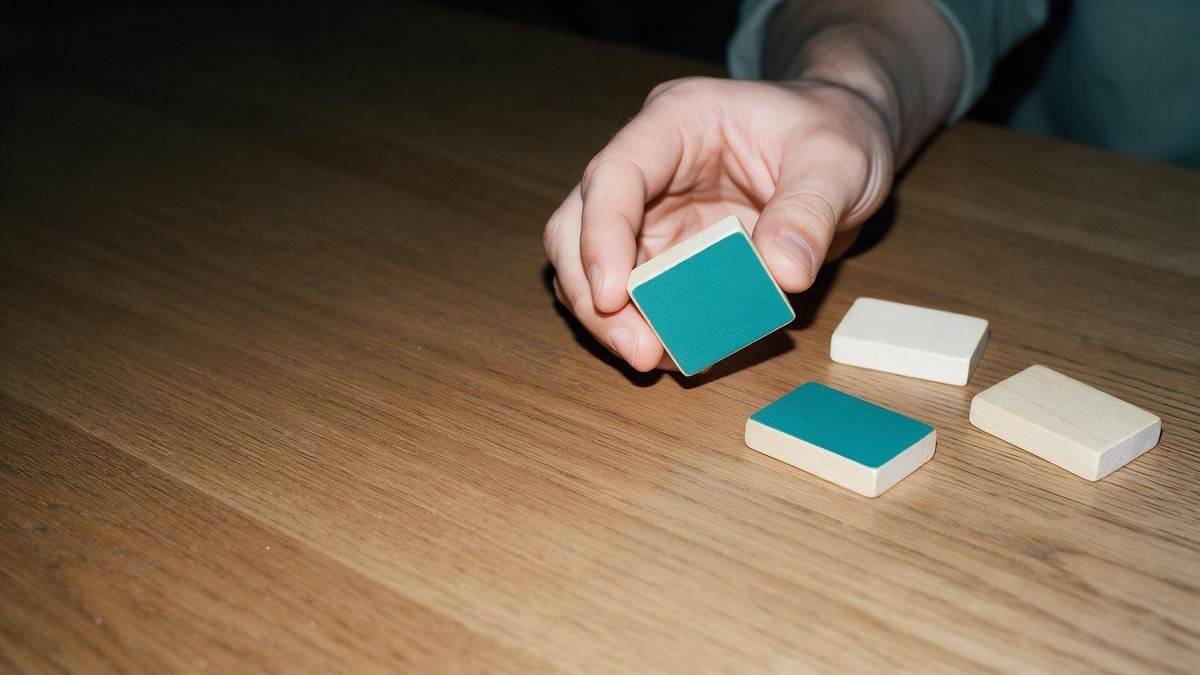 Do these two teal tiles match?What the deck leaves behindWatch the video and see where the grid ends and everyday remembering begins
What it trains, and what it leaves alone
Matching asks a narrow question: where was that card two turns ago. It is held for seconds, retrieved once, then dropped as the next pair turns over. That is a genuine demand, and it is why a deal accelerates. It is also why the demand stops at the edge of the deck, because nothing beyond it is being held, retrieved, or dropped while you play. What it trains: finding a card you already turned, in the same deal, within a few seconds. What it does not establish: better recall of names, appointments, lists, or where you left something. What the strongest trial evidence covers: structured training in reasoning and speed of processing, sustained over ten years, with less decline than memory training or no training. What federal guidance adds: not enough evidence that commercially available brain-training games carry that training’s effect.
How a turn runs
- Flip one card fully over
- Flip a second card
- Match: keep both and flip again
- Mismatch: both return face down
- Turn passes to the left
- Play until the table is clear
Put the rows side by side and the difference is obvious. The trial evidence concerns a supervised course in specific skills followed over a decade, and even there the memory group did not share in the benefit that reasoning and speed of processing showed. Good human trials on this card game are scarce, and no published guidance gives a dose. We cannot tell you how many rounds a week carries over, because nobody has measured it.
We set the rules aside for a moment here to watch the full video on how everyday memory behaves outside a game.
What a useful study would have to measure
A study worth believing would separate the two things that happen in one sitting: getting better at the deck, and getting better at remembering. That needs a control group playing something else entirely, a measure taken after the practice and again months later, and tasks that never look like cards, such as recalling a list read aloud, attaching names to faces, or holding an appointment without writing it down. Improvement on the grid alone counts as improvement on the grid.
What matching asks and what it does not
| Inside the deck | Beyond the deck |
|---|---|
| Where was that card two turns ago | Recall of names and appointments |
| Held for seconds, retrieved once | Lists and where you left something |
| Improvement on the grid alone | Carryover nobody has measured |
It would also need participants who resemble the people asking the question rather than only the keenest volunteers, and assessors who do not know which group each person joined. Follow-up matters more than the final round, because a gain that has faded by the following week describes practice rather than capacity. Until that design runs on this game, the description above stands: the deal, the squares, and the seconds between them.
A pairs sheet you can print and cut
The sheet is a page of matched pictures or words, arranged so each pair falls in a different column, ready to be cut apart and turned face down. Print it twice when one page does not hold enough pairs, cut along the lines so no edge shows which cards belong together, and use card stock rather than printer paper if the round will be played more than once, since paper curls at the corner after a few hands. It changes nothing about the rules above. It replaces the deck when you want pictures a child can name or words you are teaching, and it suits a small table at four columns and sixteen cards instead of forcing a full deck into the space.
If this, then that at the table
- If the cards match, you keep both and flip again
- If they mismatch, both return face down and your turn ends
- If the split is even, most tables settle it with one more deal
- If the round is timed, more pairs when time runs out wins
The question left open is why practice of one kind seems to reach everyday remembering for one person and not another. Is it the task itself, the length of it, or what a person does away from the table once the cards are back in the box? This page does not settle it, and we would rather leave it standing than round it off.
If you meant the hand-clap version
One line for anyone who arrived meaning something else: the hand-clap game called Concentration is a circle of players clapping through a rhyme and taking turns to add a word, with no cards and no grid. Same name, unrelated activity. The rules above will not help you there, and you will want a description of the chant instead.
The rules run out at the edge of the table. If the reason you picked up the deck was something else entirely, watch the full video and decide from there.
Everything on Memory training →
▶ Watch the memory video