You’re looking at a short list of instructions on your phone, confident you’ll remember the order. The screen goes dark for a second, and the confidence thins. You try to say the steps aloud and find the middle one has gone soft. What actually survived while the screen was off?
Retrieval practice means closing the source and trying to produce the answer yourself before you look again. That attempt, followed by an honest check against the original, is the whole mechanism. In the learning tasks where it has been studied, the act of pulling information back out is what separates knowing something from merely having seen it.
The useful version is unglamorous: read a short passage, look away, say what it said, then reopen it and compare. The comparison matters as much as the attempt, because an unchecked wrong answer can be rehearsed into place. What follows is how the principle works, where it stops working, and how to tell which information deserves the effort.
Why rereading feels easier than it is
Picture someone learning a short set of instructions for a new appliance: a sequence of steps, a couple of warnings, one detail about timing. Rereading the card feels productive because the words become smoother each pass, but that smoothness is familiarity, not recall. The retrieval-practice alternative is to close the card, say the steps aloud in order, and only then open it to check. The attempt is the work; the check is the correction. Research on how people hold future intentions describes the underlying structure in similar terms: an intention is formed, held across a delay, and later retrieved at the moment it is needed, and retrieval at that later moment is the part that often fails without practice.
When to use retrieval practice
- If you must produce the answer without the source, practice recalling it.
- If you can look it up at the moment of need, practice finding it.
- If one attempt feels exactly like rereading, the source is still doing the work.
- If the answer comes back partial, the missing piece is your signal.
This is also where the distinction between recognizing material and actually recalling it earns its place. When the card is open, the answer looks obvious, and that obviousness is easy to mistake for knowing. Only the closed-book attempt reveals what is actually available. That gap between how text feels while visible and what survives when it is hidden is the whole reason the method exists, and it is why a single confident reread tells you almost nothing about tomorrow.
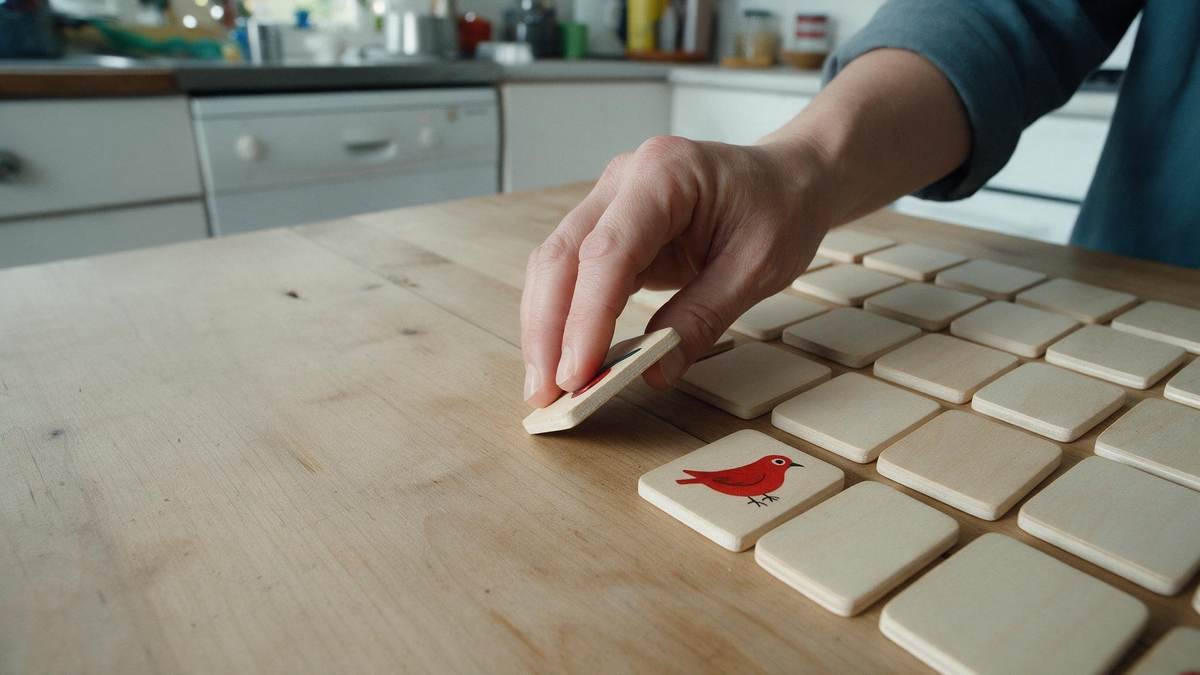 Recall is not what you thinkThe recall trick that feels like it shouldn’t workWatch the video to see the small attempt that changes what sticks, and the check that keeps it honest.
When a confident attempt quietly trains the wrong answer
The check after the attempt is not a formality; it is the part that keeps practice honest. Suppose the appliance learner recalls the steps but swaps two of them, then checks and sees the correct order. Without that check, the swapped version could be rehearsed again tomorrow with growing confidence, and confidence built on a wrong sequence is worse than no confidence at all. An unchecked wrong answer is still an answer you practiced. The attempt strengthens whatever was produced, accurate or not, so the source has to have the last word before the attempt counts as finished.
A practical rhythm follows from this: attempt, compare, note the exact point of divergence, then attempt again later with the card closed. The comparison should be specific, not a shrug of ‘close enough’. If the recalled version was incomplete rather than wrong, the missing piece is the signal, and the next attempt should start from the whole answer again rather than only the gap. Treating a partial answer as a pass is the quietest way to practice incompleteness.
If the same recall gap keeps returning whenever you test yourself on material that matters, watch the full video presenting one approach to improving memory for recurring slips like these. The rest of this article stays with the practical question of when an attempt is worth making and when it is not.
What one attempt can and cannot tell you
Not everything deserves this treatment, and applying it indiscriminately turns a useful principle into a chore. Retrieval practice makes sense for material you will need to produce without the source in front of you: a procedure you must perform, an explanation you want to give, a term you will need in conversation. It makes far less sense for information you can look up at the moment of need, like a phone number stored in a contact list or a measurement printed on a label. The decision rule is simple: if the future situation gives you the source, practice finding it; if it does not, practice recalling it.
There is also a limit to what one attempt can tell you. A single successful recall, minutes after reading, mostly shows the material is still warm. It says little about whether the answer will survive a busy week, an interruption, or a different setting. The broader picture of how everyday remembering works is that holding, retrieving, and noticing are separate stages with separate failure points, and one clean attempt only exercises one of them once. Judging the method by a single try, in either direction, overreads the evidence.
Fatigue and distraction change the conditions too. Poor sleep affects how well people think, react, and learn, so a failed attempt at the end of an exhausting day is not the same measurement as a failed attempt when rested. If a piece of information matters, it is worth at least one attempt under decent conditions before concluding it will not stick.
Choosing what deserves the effort
The everyday version of this method needs no equipment beyond closing the source. After reading a short passage you want to keep, look away and state its point in a sentence or two, then reopen and compare. After learning a small sequence, run it once from memory before checking. The attempt should feel slightly effortful; if it feels exactly like rereading, the source is probably still doing the work. Effortful is not a guarantee of learning, but effortless fluency with the page open is a reliable sign that no retrieval happened at all.
Keep the stakes and the scope matched. Retrieval practice is a study habit for chosen material, not a test of whether your memory is healthy. Occasional forgetting is ordinary, and a failed self-quiz on a paragraph is not a symptom. If memory problems are affecting day-to-day life, that is a different matter entirely: it is often nothing serious, but it is worth getting checked, because any treatment that is needed may work better when started early. For persistent or worsening changes, keeping a brief note of what happened and when, in the spirit of recording a useful pattern of memory slips, gives a professional conversation something concrete to work with.
The next decision, then, is narrow and practical. Pick one thing you actually need to recall unaided this week, close the source, and attempt it once with an honest check afterward. If the answer comes back complete, the method fits the task. If it comes back wrong or partial, you have learned exactly which part needs another attempt rather than another reread, and that specific gap is a more useful result than any amount of comfortable fluency.
If the same recall gap keeps returning whenever you test yourself on material that matters, that single slip may be the small version of a pattern worth noticing. Watch the full video for one approach to improving memory for recurring slips like these.
Everything on Memory training →
▶ Watch the memory video