The pencil stops halfway down the page and the room goes quiet for a beat after you realize the word you wanted has gone somewhere else. You finish the rest anyway and add up the marks at the bottom. But a total written in pencil can only raise a question, and you still do not know what that number will not settle for you.
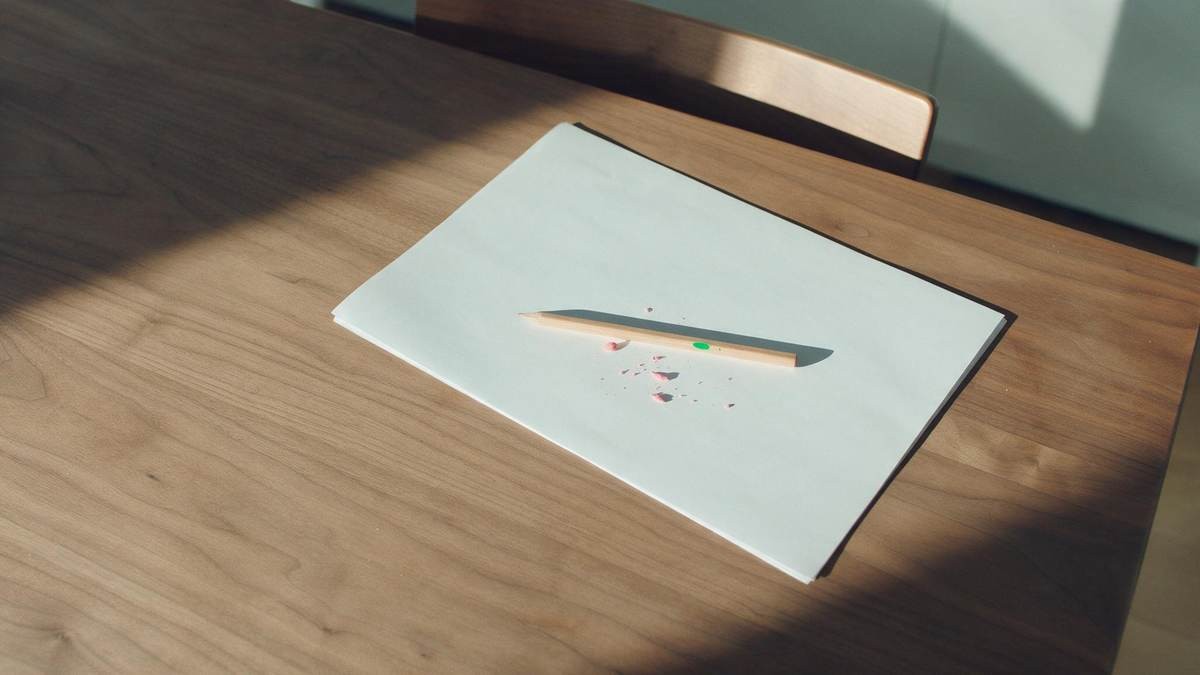 This sheet and pencil for your memory?What the second sitting really measuresWatch the video before you sit down with the form a second time
You printed the page and sat down at the kitchen table with a pencil, and your elbow soon found the coffee ring the mug had left on the paper. Somewhere in the middle you put the pencil down and looked at the wall for a moment, because a word you were certain of had gone somewhere else. Nothing dramatic happened. You picked the pencil back up and finished. The SAGE test is a twelve-question take-home screen you complete on your own in about fifteen minutes, score yourself against the official key, and bring to a doctor. We should say plainly, and early, that good human trials on it are scarce, so most of what can honestly be said concerns how the screen is meant to be used rather than how well it works. That limits things. A form built to be filled in at a kitchen table has one job, and the job is to raise a question worth taking to an appointment. It is not the appointment. What follows is about doing it properly, reading a total without over-reading it, and knowing what a number on paper cannot settle.
Taking it properly
The screen is meant to be done alone, at a table, in one sitting, without anyone prompting you. That sounds obvious, and it is the part that goes wrong. A spouse leans over to help with a word, the television is on, the form gets filled in at the end of a long day, and the total at the end describes the room as much as it describes you. Take it when you are rested and unhurried. Get the official form from the university that publishes it and use it as printed, because a copy that has been reordered or trimmed gives a total that belongs to a different instrument.
Taking the screen properly
- Sit alone at a table with nothing else on it
- Write the date before you start
- Keep one pencil and answer every item yourself
- Do not look anything up
- If interrupted, start the whole form again
- Use the official form as printed, untrimmed
Sit at a table with nothing else on it. Write the date before you start. Keep one pencil in your hand. Answer every item yourself. Do not look anything up. If you are interrupted, start the whole form again rather than picking it up where you left off.
What people get wrong is the second attempt. The first pass leaves you uneasy, so you sit down again a week later with the questions already familiar in your hand, and the higher total tells you nothing except that you have practiced. The same goes for doing it in company, or doing it while someone else reads the items aloud. The score you want is the honest one, which is also the least comfortable one to write down.
You sit down with the form a second time, and the pencil feels like a formality: you know what is coming, and your hand moves ahead of you. That is where the total starts to answer a question you did not ask. You write a better figure on the page, show it to nobody, and quietly drop the subject, because the paper now puts your score in the normal range. We keep coming back to this. A screen taken twice for reassurance is measuring practice, and the appointments you missed last month are still on the list you never wrote down.
What do the score bands actually mean?
A total only means something once it has been counted against the official key, and the guide that comes with the form prints the bands. We are not going to reprint the cut points here, since a band remembered from a snippet online is worth nothing, and the number you need is on the page you already downloaded. Add the marks, find the band, read the sentence beside it.
Reading your band
- If top of the range, then no items were missed this time
- If middle of the range, then describe the missed items at an appointment
- If bottom of the range, then a fuller assessment is the obvious next step
- If any band, then it names no condition and is not a diagnosis
Top of the range: these items were not missed this time, and the screen picked up nothing it was looking for. Middle of the range: some items were missed, and the pattern is worth describing at an appointment. Bottom of the range: enough items were missed that a fuller assessment is the obvious next step. Every band, whatever it says: it names no condition and it is not a diagnosis.
A person can land in the top band and still have a list of everyday slips to talk through, and that is the common case rather than the awkward exception. A total from one sitting on one day, filled in alone at a table, is a starting point for a conversation. It is not a verdict on your memory, and it does not tell anyone what is causing anything.
The desk recorded one slow run through the whole screen so you can watch the full video before you decide anything.
A take-home screen cannot diagnose anything
The line reads as strange for a moment, because people take the screen hoping for an answer, and it is built to give them a band instead. Screening is a different job from diagnosis. A screen sorts out who is worth a closer look, and the closer look is a set of questions, an examination, and sometimes imaging, done by a doctor who can weigh the whole picture. The pencil total arrives at that appointment as one piece of information among several.
Bringing it to the appointment
- Say what has changed and when it started
- Note what else was happening that week
- Bring the finished sheet with the band
- Ask someone else to describe what they noticed
- Expect the conversation to cover several possible causes
The causes of memory trouble are several, and they are not all in the same family. Depression and anxiety, sleep problems, medication side effects, thyroid, kidney or liver trouble, low levels of vitamin B12, alcohol or drug misuse, a head injury, blood clots, tumors or infections in the brain, and difficult months around a retirement or a bereavement all make the same complaint in different voices. Some of these are treated, and the change settles.
Bring the sheet, bring your notes, and say what has changed and when. A doctor can perform tests and assessments to help determine the source of the problem, and may suggest a neurologist, a doctor who specializes in diseases of the brain and nervous system. Confusion that comes on suddenly, or comes with weakness, trouble speaking or a bad headache, is an emergency: call 911.
Where the screen stops, and what you
The number is where the paper stops and the description begins. Keep a record of what you forgot, when it happened, and what else was going on that week, because a date and a concrete detail will carry more weight in a room than a band. It also helps to have someone else describe what they have noticed, since the changes that matter most are usually seen from outside before they are felt from inside.
A normal total alongside a handful of ordinary slips is the case we hear about most, and it is not a result to be waved away or turned into a worry. Serious memory trouble makes everyday things hard: driving, using the phone, finding the way home, keeping up with bills, following a recipe. Talk with a doctor about noticeable changes, and expect the conversation to be about several possible causes at once.
If the appointment leads to a plan, follow it. Guidance for people in this position is to see a doctor every six to 12 months so change can be tracked over time. The everyday tools are unglamorous and worth using either way: a daily routine, to-do lists and calendars, keys and wallet in the same place each night, enough sleep, exercise, and staying involved with people.
Underneath every slip that keeps returning is the larger question this page deliberately leaves open: which lapses are the ordinary tax of a tired, worried, over-scheduled year, and which is the first thread of something that will keep pulling? Nobody can answer that from a pencil total at a kitchen table, and we are not going to pretend otherwise here.
What a useful study would need to measure
Good human trials on this screen are scarce, and it is better to say that out loud than to fill the gap with confidence. A useful study would have to compare the band with what a fuller assessment later finds, in people who had neither the screen nor the assessment before the study started. It would need to count how often the screen flags someone whose difficulties turn out to be ordinary age-related forgetfulness, and how often it passes someone whose difficulties are not.
It would need to show whether the bands behave the same way in people with different levels of schooling and different first languages, and whether the total moves when a person takes it a second time. Without that, a band is a rough instrument used carefully, which is a legitimate thing to have at home, so long as nobody pretends it is more than that.
Until something better exists, the useful move is the same one either way: describe the change, name when it started, note what else was happening, and take the description to a doctor. The paper makes that conversation easier to start. It does not finish it, and a single number will never carry the weight of a whole picture.
Take the finished sheet with you and watch the full video once more, then hand the question to your doctor.
Everything on Memory loss & dementia →
▶ Watch the memory video