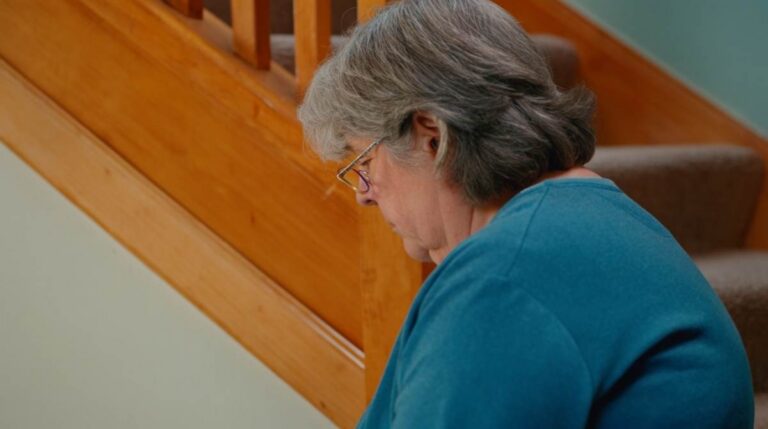
You are sitting at the table with a blister pack in your hand, the foil dimpled where yesterday’s tablet was pushed through, and a phone lying face up beside it with a headline about a new treatment. Someone asks whether the morning one was taken. You say it was, then read the headline a second time, because it is written the way you want it to be true. That gap is where this page lives. The research is real and it moves, and the road between a laboratory result and a bottle in a cabinet is longer than a headline admits. The plain version comes first, because everything after it turns on the same sentence. There is no cure for Alzheimer’s disease. Medicines approved by the U.S. Food and Drug Administration may help treat it, and they work only in some people. Other medicines address symptoms such as sleep problems, anxiety, or muscle stiffness. They can change the pace for some people; they do not stop it.
What is approved, what is in trials, what to ignore
Approved: medicines the U.S. Food and Drug Administration has reviewed and allowed onto the market, some aimed at symptoms of memory and thinking, others aimed at the proteins that build up in the brain, all of them working only in some people. In trials: the hundreds of active studies looking at ways to understand, diagnose, treat, and prevent the disease, which need volunteers of different ages, sexes, races, and ethnicities. Claims to ignore: anything sold over the counter or online that promises to cure, prevent, or reverse it, and any test offered on its own as a diagnosis.
Three columns that get blurred in a search result
| Column | What it is | Where it stands |
|---|---|---|
| Approved | Reviewed by the U.S. Food and Drug Administration after completed trials | Works only in some people |
| In trials | Hundreds of active studies needing volunteers of different ages, sexes, races, and ethnicities | Has not yet been shown to help anyone |
| Claims to ignore | Over the counter or online promises to cure, prevent, or reverse it | Selling, not a regulatory decision |
These three rows do not sit on the same footing. The first is a regulatory decision built from completed trials. The second is work that has not yet been shown to help anyone. The third is selling. When a line belongs to the middle column, the useful questions are what it measures, in whom, and against what.
We keep this table on the desk because the columns get blurred inside a search result.
The follow-up appointment arrives and the specialist asks the kind of question you answered last time: name what you can, while the clock runs. The words come slower. The drive home is quiet. Afterwards you stop saving articles about trials, stop bringing up the latest result at dinner, stop opening the pill box early to check what is left. The box stays in the same drawer, and the drawer stays shut.
 Why this key will not turnWhy does this take so long?Watch our video and see which questions are worth asking about any new treatment headline
Why stopping it is so hard
The brain changes behind Alzheimer’s, including the plaques between nerve cells and the tangles inside them, begin a decade or more before memory and thinking problems appear. This stretch is called preclinical, and not everyone with those changes develops dementia. Diagnosis often happens at the mild stage, when a person may still seem healthy while making less sense of the world around them.
Causes are still not fully understood in most people. Age is the biggest known risk factor, and the likely explanation combines age-related changes in the brain with genetic, health, and lifestyle factors. Most cases have no single genetic cause. Rare variants in three genes do cause the disease, and a well-known gene involved in carrying fats in the blood raises risk without deciding the outcome, since some people who inherit it never develop Alzheimer’s.
Research on lifestyle says that healthier habits are good for living healthier overall. It does not say they prevent dementia, and researchers cannot yet say for certain.
So a trial can hit its target and leave a person’s week unchanged.
We keep the research question here and park the other thread for now: watch the full video when the house is quiet.
What a trial has to prove before anyone gets it
A trial has to say in advance what it will count: a score on a memory test, a rating of daily function, a change measured over its own length. Mild cognitive impairment is one route into a study, and not everyone with it goes on to develop Alzheimer’s, which makes the comparison harder. Volunteers are needed across ages, sexes, races, and ethnicities so that a result can apply to wide groups of people.
Reading a claim or a change
- If a headline reaches for breakthrough, miracle, or game-changing, it is usually describing a single study
- If a screening test is offered on its own, it screens and does not diagnose
- If a change comes on suddenly or quickly, go to the emergency room
- If someone has trouble remembering recent events or thinking clearly, that is worth a doctor’s visit
- If a single explanation is offered for a change in someone’s thinking, the workup has been skipped
A result is a result in a group over a period. It cannot tell any individual what happens next for them, and it cannot tell you whether a symptom you have now comes from this disease at all. A screening test screens; it does not diagnose. That belongs with a doctor, who can ask questions, run tests and procedures to see what might be causing the symptoms, and refer you to a specialist such as a neurologist.
A trial that misses its measure is not a failure of the disease. It is a failure of the question.
How to read the approval record
A dated timeline of approvals is worth having, and it belongs to the regulator’s own record rather than to a summary. Each entry there carries the date of its decision, the population it was studied in, what it was measured to do, and the side effects it was found to have. Read the sequence and the labels. The year alone tells you nothing about whether a medicine fits a particular person.
Hype words are not part of that record. Breakthrough, miracle, and game-changing do not appear in a regulatory decision, and when a headline reaches for one it is usually describing a single study, which is a different thing from a medicine in a cabinet.
Behind every slip there is a larger question: if the brain changes start a decade or more before anyone notices, what decides which person with those changes goes on to develop dementia, and which does not? Nobody can answer that yet, and this page does not try. The search for whatever moves that decision runs alongside the trials.
What people get wrong about a breakthrough
Alzheimer’s is the most common form of dementia among older adults, and it is not the only one. Lewy body dementia, frontotemporal disorders, vascular dementia, and mixed dementia each follow their own pattern, and other conditions can produce dementia-like symptoms. So can hearing loss, depression, and poor sleep. A single explanation offered for a change in someone’s thinking is a sign that the workup has been skipped.
Getting a bit more forgetful with age is normal. Dementia is not a normal part of aging. If you or someone close to you has trouble remembering recent events or thinking clearly, that is worth a doctor’s visit, and a specialist can be brought in for further assessment. If a change comes on suddenly or quickly, go to the emergency room.
The desk keeps coming back to this: several causes, and rarely one.
Whatever the approval record adds next, your ordinary week will still be waiting on the table, and watch the full video is where this page hands the rest over.
Everything on Memory loss & dementia →
▶ Watch the memory video