Your hand pauses halfway to the laundry basket, a folded shirt still warm in your grip. The drawers are shut, the bed is clear, and yet the last ten minutes have gone blank. Did you already carry the rest upstairs, or is that pile still sitting on the chair where you left it?
If you cannot remember whether you sorted the mail, put the laundry away, or filed a piece of paper, do not trust the feeling of familiarity and do not repeat the step just because no mark is visible. The reliable answer is simpler: use a marker made after completion, and when that marker is absent or unclear, inspect the actual state of the task. Look at the basket, the pile, the folder, or the surface where the work would have ended. If the task is clearly finished, leave it alone. If it is not finished, complete it now and make the mark immediately after.
This works only for low-stakes routine steps. A marker is a memory aid, not proof that a safety-critical action happened, so anything involving risk needs direct checking rather than a note. For ordinary household steps, the goal is not to remember harder. It is to leave yourself a small, trustworthy record at the moment the job is done, then know what to do when that record is missing, stale, or made by someone else.
A marker helps only after the job is finished
The marker only works if it is created at the moment of completion, not before and not from memory later. Its job is narrow: to confirm that one specific, low-stakes step was finished. It does not prove anything about a safety-critical action, and it should never be used for one. If the step is already done, the marker is a convenience. If the step is only half done, the marker can mislead you into skipping the remainder. That is why the check has to begin with the task itself, not with the record.
For laundry, look in the basket, on the bed, and in the drawers where the clothes belong. For mail, look at the pile, the recycling, and the surface where opened envelopes usually land. For filing, open the folder or tray and see whether the paper is actually inside. These are small inspections, but they answer the real question. A tick on a list can tell you what you intended. The state of the task tells you what happened.
That distinction matters because ordinary routines are easy to half-finish. A handful of shirts may be put away while the rest stay folded in a basket. A few letters may be sorted while the statement that matters is still unopened. If you rely on memory alone, the brain often fills the gap with the most familiar version of the routine. That can feel convincing without being accurate. A completion marker reduces the guessing, but it never replaces looking.
Compare the two most common outcomes
Your laundry basket is empty, the drawers look plausible, and yet you cannot remember carrying the clothes upstairs. The sensible move is to inspect the actual state of the task: check the basket, the bed, the drawer edges, and any chair where a folded pile might still be sitting. If everything is genuinely put away, treat the task as complete and make the marker now, not as proof of the past but as a record for the next cycle. If a pile turns up, finish the job first and then mark it. The marker follows completion; it does not create it.
Marker vs task state
| What you see | What it means |
|---|---|
| Tick on the list | What you intended |
| Empty basket | What actually happened |
| Shut folder | Nothing by itself |
| Paper inside | Task likely completed |
| No tick | Not the same as not done |
Your desk has no tick beside filing, and the folder is shut, so the absence of a mark tells you very little. Open the folder, look for the paper, and check the tray where unfiled documents collect. If the paper is inside, the task was likely completed and the missing mark is just a missing record. If the paper is still loose, do the filing now and then write the marker. This is the crucial contrast: no marker is not the same as not done, and a marker is not the same as done.
If sorting mail is finished but you later feel unsure, picture checking a completion record for that low-stakes task. If that completion doubt recurs across ordinary tasks, what wider question would you ask beyond adding a marker to this one routine?
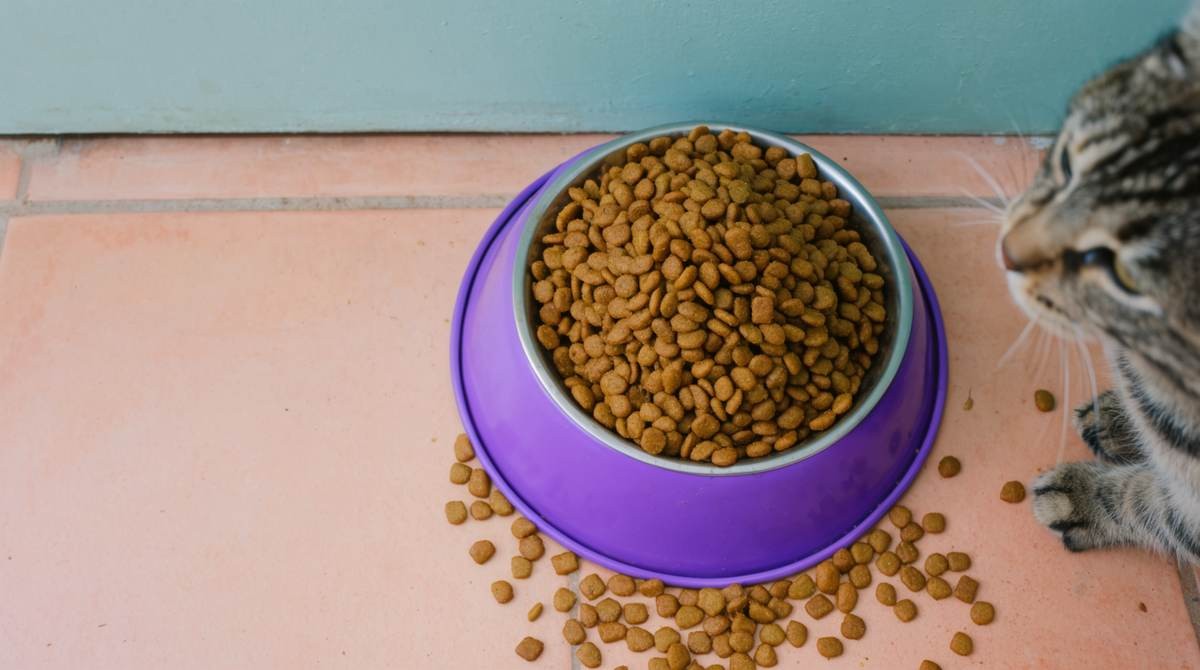 Did I feed this cat twice?When the checklist says nothing and the basketWatch the video to see the small slip that keeps returning in ordinary routines, and the one question worth asking before you redo anything.
If that question stays with you, watch the full video, a video presentation about recurring memory slips and the explanation it proposes.
When the record belongs to yesterday or someone else
A stale marker is the harder problem because it looks authoritative. If you use the same checklist every day, yesterday’s tick can sit exactly where today’s should be. The fix is to make the marker time-bound: a dated note, a fresh page, a reset box, or a small card that gets turned over only when the current round is finished. Without that reset, the record gradually becomes decoration. It still feels useful, but it no longer distinguishes this morning from last week.
Shared tasks create a different kind of uncertainty. Another person may have sorted the mail, put away the laundry, or filed the paper without leaving any sign. In that case, your own memory is the wrong tool, and so is the blank space on your list. Check the task itself, then, if needed, ask the person who may have done it. Households often need one agreed place for completion notes, not several private systems that contradict each other. That is the same logic behind using the right tool for the job: one record for fixed commitments, another for tasks that cycle.
There is also a limit to how much marking is worth doing. If every tiny step gets a checkbox, the list becomes noise and the important signal disappears. Save markers for steps that are easy to doubt and annoying to redo. The broader habit of making reminders work is not about recording everything; it is about recording the few things that keep recurring. A lean record is easier to trust than a perfect one you stop reading.
Build a marker that survives ordinary distraction
The most useful habit is small and immediate: finish the step, then make the mark while the result is still in front of you. That might mean ticking a dated square after the last envelope is sorted, or jotting a short note after the final folded shirt goes into the drawer. Keep the marker close to the task so it is part of the action, not a separate chore. If the record lives across the room or inside a crowded app, it will be skipped exactly when you need it most.
One careful check
- Inspect the actual state of the task.
- Act on what you find.
- Make the marker immediately after completion.
- Reset the marker before the next round begins.
It also helps to choose a marker that matches the task’s rhythm. A daily reset works for mail. A simple current-cycle note works for laundry. A folder label or dated sheet works better for filing than a vague mental promise to remember. If reminders are part of the system, timing them when you can act makes them easier to trust. A prompt that arrives too early becomes background noise, and background noise gets ignored.
If you keep coming back to the same uncertainty, do not solve it by repeating the task from memory. That is how papers get filed twice, mail gets reshuffled, and clean laundry ends up refolded for no reason. Check the actual state first, then decide whether the step needs doing, marking, or leaving alone. The real skill is not remembering harder. It is building a routine that leaves a trustworthy trace.
The limits of a completion record
Not every uncertainty deserves a system. If the task is trivial and the evidence is obvious, a quick look is enough. But if the same doubt keeps returning, the problem is no longer one forgotten step; it is a routine that leaves no reliable trace. That is when it helps to simplify the routine itself, reduce the number of places where paper or clothes can stall, and keep only the records that answer a real question. A marker should lower doubt, not add another layer of it.
There is also a point where repeated checking starts to create its own problem. If you inspect the same basket, folder, or pile again and again without new information, the routine has stopped being useful. Make one careful check, act on what you find, and let the record carry the answer forward. If memory problems are persistent, worsening, or interfering with daily life, medical advice matters more than any organizational trick. For the ordinary version of this problem, though, the next step is simple: pick one recurring low-stakes task, decide where its completion marker will live, and reset that marker before the next round begins.
The single slip in this article may be the small version of a pattern that keeps returning, the moment a routine leaves no trace and doubt steps in. If that pattern feels familiar, watch the full video and see what the wider question reveals.
Reading behind this note
Everything on Everyday slips →
▶ Watch the memory video