You were halfway through saying it when the sentence died in your throat: the door, the key, the turn. The hallway light was already off and your coat was on, but the image of the lock refused to sharpen. Was it this morning, or was that yesterday, and why can you remember the sound of the kettle but not the click of the bolt?
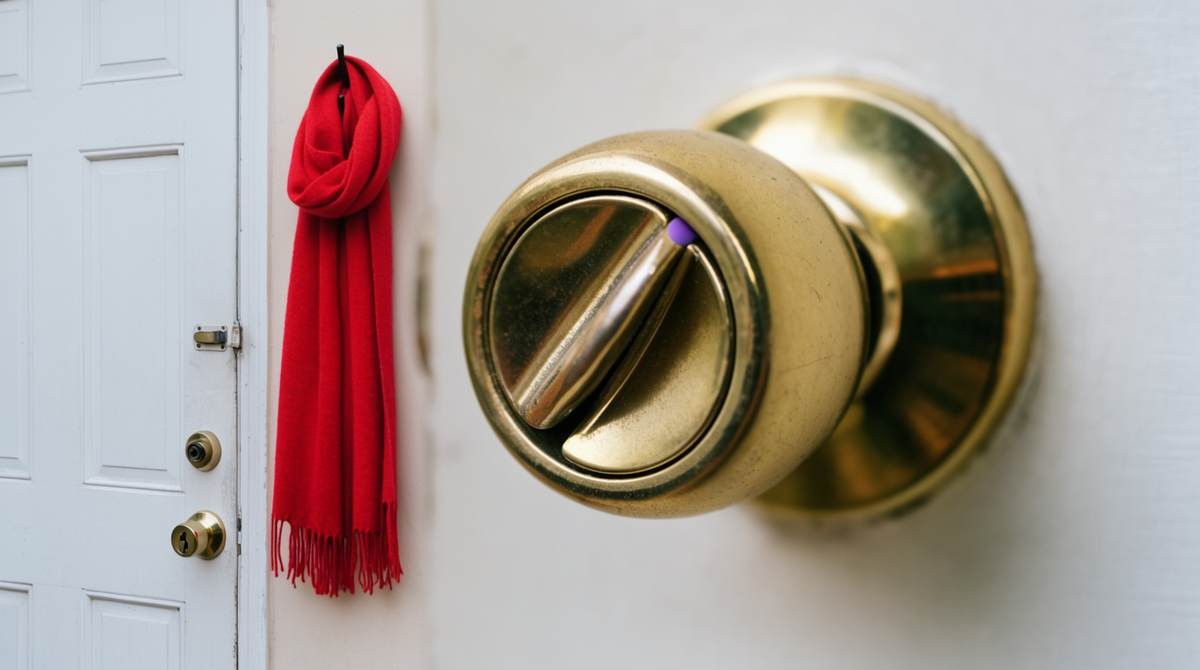 Is this deadbolt locked or not?Why your memory swears you left itWatch the video to see the small slip at the door that keeps returning, and the moment it starts.
Stand at the door and check the lock itself, not your memory of it. Turn the key or handle fully, then pull the door toward you once to confirm it catches. If the bolt is thrown and the door holds, it is locked. That single deliberate check, done with your full attention, is worth more than three distracted ones.
If you are already away from home, the honest answer is different: a photo or a mental replay is a cue about what you did, not proof of the door’s current state. Decide whether you trust the check you did at the time, and only go back if the doubt is specific and the cost of an unlocked door is real. The sections below walk through each situation in order.
Check the door once, then make the moment stick
You are still at the door and the doubt arrives before your hand has even left the key. Do one deliberate check: turn the key or press the handle until it stops, then pull the door firmly toward you so the latch or bolt proves it is engaged. Look at the lock indicator or the bolt itself if your door shows one. That single physical test answers the question in the present tense, which is what you actually need. The doubt you feel afterward is a memory problem, not a lock problem, and the fix for that begins at the moment you lock, not at the moment you worry.
The deliberate check
- Turn the key or handle until it stops
- Pull the door firmly toward you
- Look at the bolt or lock indicator
- Say the fact out loud in a plain sentence
If you lock up on autopilot while thinking about the train, the bag, or the message you are answering, the action leaves almost nothing behind to recall. That is why the question returns an hour later. The remedy is to make the locking itself a small event: pause, say the fact out loud in a plain sentence, and feel the resistance of the mechanism. Research on prospective memory, the kind that handles delayed intentions, shows people often rely on reminders because unaided recall of routine actions is fragile, especially when attention was split at the start. You are not broken; you were busy.
The sequence when doubt arrives
You are already on the pavement or at the bus stop when the question surfaces. Resist the urge to turn back immediately. Ask what you actually have: a deliberate check done at the door, a spoken sentence, or a photo taken this morning. A photo of the door after you locked it can settle a one-off doubt, but it only proves the door was locked at that minute, not that nobody opened it since. If you live alone and left minutes ago, that may be enough. If others have keys or you have been gone all day, the photo answers nothing about now, and the only honest resolution is a return trip or accepting the uncertainty until you get home.
Photo as proof
- Myth: A photo proves the door is locked now.
- Fact: A photo only proves the door was locked at that minute.
- Myth: A mental replay is proof of the door’s current state.
- Fact: A mental replay is a cue about what you did, not proof.
You are tempted to check a second time even though you already did the deliberate pull. Treat the first verified check as final. A second pull of the handle adds no new information; it only teaches your mind that one check is never enough. If you need a record for later, make it at the moment of locking, not afterward. Some people snap a photo; others prefer a note or a small object moved to a marked spot. The point of a record is to give your later self something concrete to consult, the same logic behind setting a reminder you can act on when it actually fires, as explored in when to set an actionable reminder.
Why a photo is a cue, not proof
The choice of record matters less than its timing. A photo taken as an afterthought, once doubt has already started, is just a picture of a door. A photo taken as part of the locking ritual, in the same instant you say the sentence and pull the handle, becomes a piece of a larger event your memory can grip. That is the difference between a cue and proof. A cue helps you recall what you did; proof tells you the current state of the world. For a door you locked an hour ago in an empty house, a cue is usually enough. For a door you locked yesterday, no cue substitutes for a direct look.
This is also why elaborate rituals backfire. If locking the door requires a chant, three photos, and a checklist, the routine becomes fragile and the checking multiplies. Studies of reminder use in laboratory tasks find that people check reminders more often when the load on memory is high, which is sensible, but the same habit applied to a single daily lock can spiral. Keep the ritual short enough that you will actually do it every day: one pause, one sentence, one pull, one record if you want it. Anything more invites the very doubt it was meant to prevent.
When repeated checking becomes the real problem
There is a line where ordinary forgetfulness ends and something else begins. Everyone rethinks or double-checks things sometimes, and not all repeated thoughts are obsessions. The concern arises when the checking repeats despite clear proof, when it eats time, or when the urge feels impossible to resist. The National Institute of Mental Health lists repeatedly checking that the door is locked among common compulsions, alongside fears of forgetting or losing something. If you return home mid-commute more than once, or the doubt ruins your morning most days, that pattern deserves attention in its own right.
If that description fits, the practical move is to speak with a health care provider, not to build a better checklist. Treatment helps many people, even those with severe symptoms, and a professional can explain the options and their tradeoffs. The distinction matters because the fix for a memory gap is a better moment at the door, while the fix for a compulsion is support that targets the urge itself. Keeping a brief record of how often the doubt strikes, and what you did about it, gives that conversation something concrete to work from, much like the approach in how to track patterns in memory slips.
A calmer exit routine from here
The same logic scales to the rest of a departure. If the door is one of several things you verify each morning, a short exit routine that ends with the lock check keeps the sequence intact and gives each step its own moment of attention. The broader craft of building routines that survive a busy mind is covered in making everyday reminders work, and the adjacent problem of the hob or the iron follows the same rule: check the actual state once, deliberately, then let the record stand.
When doubt arrives
- If you are still at the door, do one deliberate check.
- If you are already away, ask what record you actually have.
- If you live alone and left minutes ago, a photo may be enough.
- If others have keys or you have been gone all day, only a return trip resolves it.
So the next time the question arrives on the stairs, run the sequence in order. Recall the deliberate pull and the sentence you said. Consult the record if you made one. Decide whether that record answers the question you actually have, which is about now, not about this morning. If it does, keep walking. If it does not, because too much time or too many other keys are involved, go back once and check the door itself. Either way, the answer comes from the world or from a record made at the moment, never from a fourth replay of a memory that was never properly recorded.
If that keeps happening to you, watch the full video about the wider pattern behind slips like this one.
If this has happened more than once, the single slip is the small version of it, and watch the full video to hear how that wider pattern is framed.
Reading behind this note
Everything on Everyday slips →
▶ Watch the memory video