The scissors are not in the drawer where they have lived for three years. You stand at the cleared desk, one hand still resting on the empty spot beside the tape dispenser, and the room looks calm in a way that feels like a trick. The surface is clean, the old pile is gone, and so is the one thing you reached for without thinking. What did your hands do with it while your mind was busy making the room look better?
You cleaned up, the room looks better, and now the thing you need is nowhere. The fastest way to find it is not to search harder in the tidy room. It is to reconstruct the tidying session itself: what you picked up, where you carried it, and which ‘better’ place it was moved to.
That distinction matters because the room is no longer the room your memory recorded. A clear desk, an emptied counter, or a freshly sorted drawer can erase the exact cue that used to tell you where the object lived.
So the practical question is not, ‘Where would it be?’ It is, ‘Where did I send it while I was organizing?’ That shift turns a vague search into a sequence you can actually follow.
Start with the session, not the mess
The useful answer is simple: do not search the room as if it never changed. Reconstruct the organizing session itself. The object probably did not vanish; it was moved while your attention was on sorting, grouping, wiping, and deciding what should go where.
That means the old visual cue is gone. A bill under a mug, tape beside the charger, scissors near the mail pile: clutter often acts like an accidental labeling system. Once the surface is clean, the room looks calmer, but your memory has lost the landmark it was using.
This is also why the tidy version of the room can feel less familiar than the messy one. The problem is not that you forgot the object in some dramatic way. You updated the room faster than you updated the object’s new address.
Rebuild the route you actually took
You were clearing the table in a hurry and now the scissors are gone. Start at the exact clearing point, then follow the likely path: table to drawer, drawer to counter, counter to wherever similar tools were gathered. Do not begin by opening every cupboard in the room.
You tidied several rooms in one sweep and cannot remember where the tape went. Reconstruct the order of the rooms, not just the rooms themselves. The first place you carried a handful of items is often more useful than the last place you stood, because the object may have been dropped into the first plausible container that matched the moment.
If your tidy room keeps producing missing-object mysteries, the frustration is rarely about one drawer. It is about how ordinary lapses repeat across days, rooms, and routines. For a wider perspective on those recurring moments, watch the full memory video, a full video presentation about recurring memory slips and the approach it proposes for improving memory.
Check the temporary pile before the final drawer
A temporary sorting pile is one of the easiest places for an object to disappear in plain sight. The pile feels provisional, so the brain treats it as a pass-through zone rather than a destination. Later, you remember that the item was ‘put away,’ when really it was only moved to a staging area near the door, under a tote bag, or inside a half-folded laundry stack.
This is where the doorway effect can matter in ordinary life. Research on location updating suggests that moving between contexts can make recently handled objects harder to recall, especially when your attention is divided. If you carried things from desk to hallway to kitchen while still thinking about the next task, the item may be tied more to the trip than to any final home.
The practical move is to search the transition zones first: the chair where bags landed, the basket by the stairs, the counter beside the sink, the box that was meant to be temporary. These places feel too obvious to matter, which is exactly why they get skipped.
When the new home kept changing
Sometimes the object did get a new home, just not a stable one. You may have decided that batteries belong with tools, then changed your mind and put them with gift wrap, then shifted them again when a shelf filled up. Each move made sense in the moment, but none of them stayed long enough to become the place you automatically trust.
That is different from putting something down without noticing. In a tidy-up, you may have noticed the object clearly and still failed to preserve its final destination because the destination kept changing. The memory is not blank; it is attached to an earlier version of the room.
A useful test is to ask which category won at the end of the session. Was the item stored by function, by room, by size, or by whatever container had space left? That final rule usually predicts the hiding place better than the room you remember best.
Packaging can be the missing landmark
Old packaging creates a special kind of confusion. If the item came out of a box, wrapper, or pouch during tidying, your memory may still point to the packaging even though the packaging is gone. You look for the blue box, not the loose item that was transferred into a clear bin or a drawer divider.
Search the tidying route
- Start at the exact clearing point where the object was last seen.
- Follow the likely carry path: table to drawer, drawer to counter.
- Check transition zones like chairs, baskets, and temporary boxes.
- Ask which category won at the end of the session.
- Look where old packaging was stripped away.
Discarding the outer container can also remove the strongest visual cue. A spare cable in its original sleeve is easy to spot; the same cable coiled beside ten others is not. The cleanup improved the room, but it made the object less distinct.
If this sounds familiar, check the places where packaging was stripped away: recycling day piles, donation bags, emptied shoeboxes, and the drawer that received the ‘better’ storage version. Then check the container you chose because it looked neater, not the one you would have chosen a month earlier.
Choose the next search by how it was moved
The next decision is not whether your memory is ‘bad.’ It is whether the object is more likely in a transition pile, a category-based storage spot, or the place that replaced its old packaging. That choice narrows the search immediately.
If the item still does not turn up, widen the search in the order the session happened. Start where the tidying began, then move through each carry path, then end where the final ‘done’ version of the room was admired. That sequence beats random searching because it follows the route your hands actually took.
For next time, give the most-used small items one stable home and leave it unchanged even when the rest of the room gets upgraded. One reliable home for daily items is often more useful than a prettier system. And if you are still stuck, retrace the last confirmed context before you open another drawer.
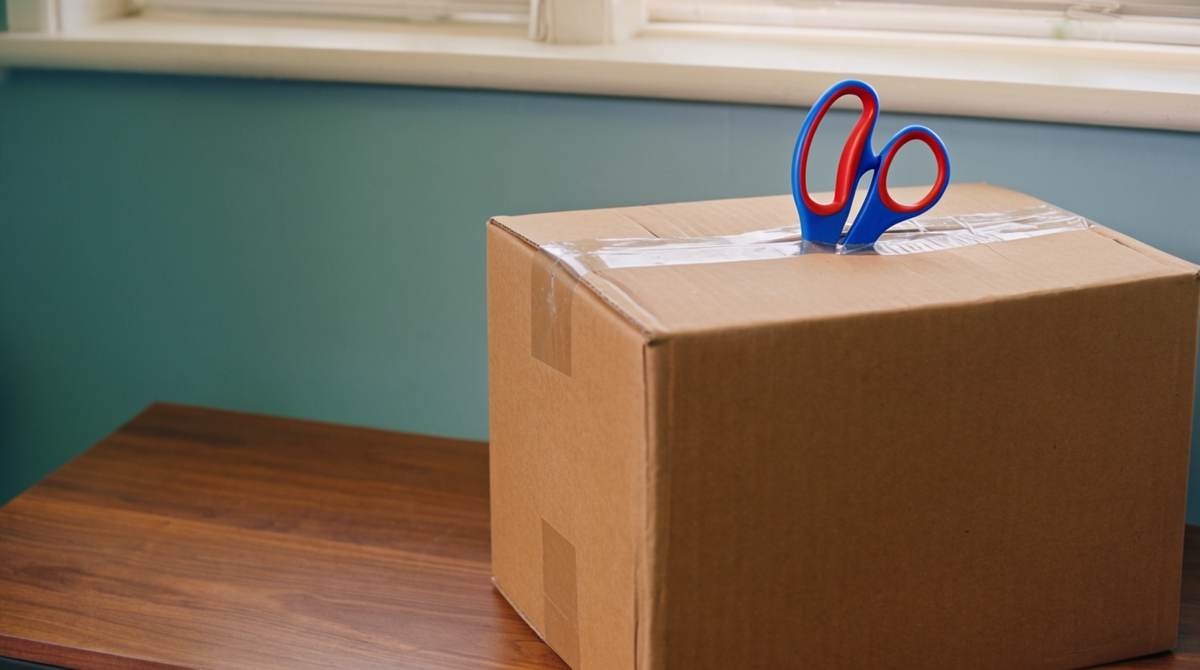 Lost the scissors you just put away?The thing didn’t vanish, it was moved while youThis short video shows why a tidy room hides the very cue your memory needed, and how to search the route your hands actually took.
One missing pair of scissors after a cleanup can feel like a small slip, but the same pattern returns whenever a room changes faster than your memory does. If you want to see how that loop plays out across days and routines, watch the full video and follow the wider picture it lays out.
Reading behind this note
Everything on Everyday slips →
▶ Watch the memory video