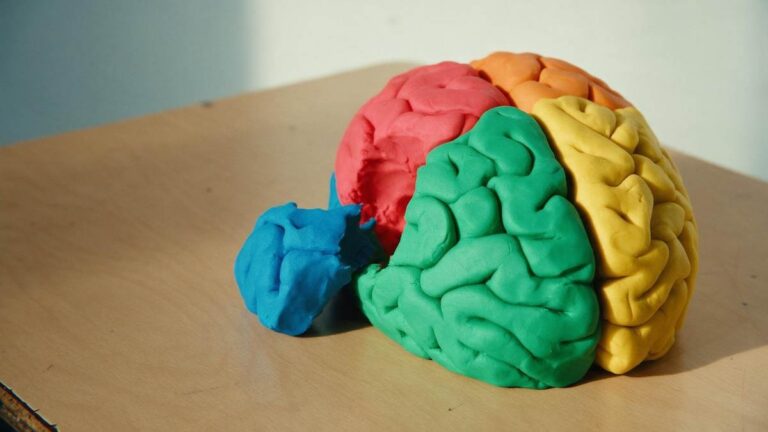
You are standing in a doorway, and the reason for walking through it has gone quiet. The doorway effect has a tidy explanation: crossing a threshold wiped the thought. But the research behind it is narrower than the story suggests, and the distinction it actually supports is more useful. Retracing your path back to the living room is not the same as recovering the event that started the errand.
You are standing in the kitchen holding the fridge door open, and the reason for walking there has gone quiet. The errand was real a minute ago. Now it feels like a word on the tip of your tongue, except there is no word, just a room and a faint sense of purpose. The practical answer is this: a change of context can be relevant to why the intention dropped, but a doorway is not a magic eraser. The more useful question is not which threshold you crossed but what happened just before you stood up. A request from someone, an empty hook where the scissors should be, a light left on. That event, not the route, is what you need to recover.
The doorway explanation is appealing because it gives the moment a shape. You walked through a frame, the frame took your thought. Tidy, almost satisfying. But the research behind it is narrower than the story suggests, and the distinction it actually supports is more useful: retracing your path back to the living room is not the same as recovering the event that started the errand. One is geography. The other is memory.
This piece works through both. What the lab findings do and do not say, why the blank at the threshold is better answered with a question than a walk, and what to do when the errand stays missing or returns hours later on its own.
What the doorway studies actually found
The lab finding usually described as the doorway effect is narrower than the name suggests. In controlled studies, people sometimes recall an item or intention less well after moving from one space into another than after covering the same distance inside a single room. That is a comparison between conditions, not a law about architecture. It says a context change can be relevant to what happens to a thought, not that every threshold is an eraser.
That caution matters because the effect is not consistent. A 2021 series of experiments set out to test the phenomenon across several setups, including immersive virtual rooms and different levels of task load, and did not reliably reproduce it. Forgetting appeared under some conditions and not others, and it shifted with how much attention the task demanded. A result that varies like that cannot support the popular version, where the doorway itself wipes the thought clean for everyone, every time.
There is also a quieter distinction buried in the moment, and it changes what you do next. Remembering your route is not the same as recovering your reason. You can stand in the kitchen and know perfectly well that you came from the living room, that you passed the stairs, that you turned left at the coat rack, and still have no idea why you made the trip. The path is intact. The trigger is gone.
The trigger is usually a small event that happened just before you stood up. Someone asked you for the tape. You reached for scissors and found the hook empty. You noticed a light left on in the hall. That event is what started the errand, and it belongs to the room you left, not the one you walked into. Retracing your steps can help only because it returns you to the place where that event occurred, where the evidence might still be visible or the person might still be waiting. The doorway is scenery. The event is the story. Keeping those two apart is what turns a vague sense of failure into a practical question: what happened just before I decided to move?
Reconstruct the moment before you moved
Stop where you are and reconstruct the moment just before you stood up. Do not open a cupboard, do not check your phone, do not start a new task to fill the gap, because each fresh action buries the thread a little deeper. Instead, ask what you were doing in the previous room and let the picture form, however faint. Maybe you were rinsing a cup at the sink. Maybe you were halfway through a sentence. Maybe you had just set a book down on the arm of the sofa. You are not trying to remember the errand directly yet; you are trying to remember the scene it grew out of. Even a blurry image, the feel of warm water or the sound of someone’s voice, gives you a place to look.
Name the errand from the actual request or object you find in that scene. If the scene contains a person, the errand probably began with something they said, so go back and ask them to repeat their last sentence rather than guessing. If the scene contains an object, the errand probably began with something you saw, so look where you last used that object rather than where it is supposed to live. The empty hook suggests you were hunting scissors. The roll of tape on the table suggests someone asked for it. Once you can say the errand out loud in the original spot, even if it feels slightly ridiculous, the blank usually closes on its own. And if it does not, you at least know which kind of trigger you are missing, which is more than the empty room was telling you.
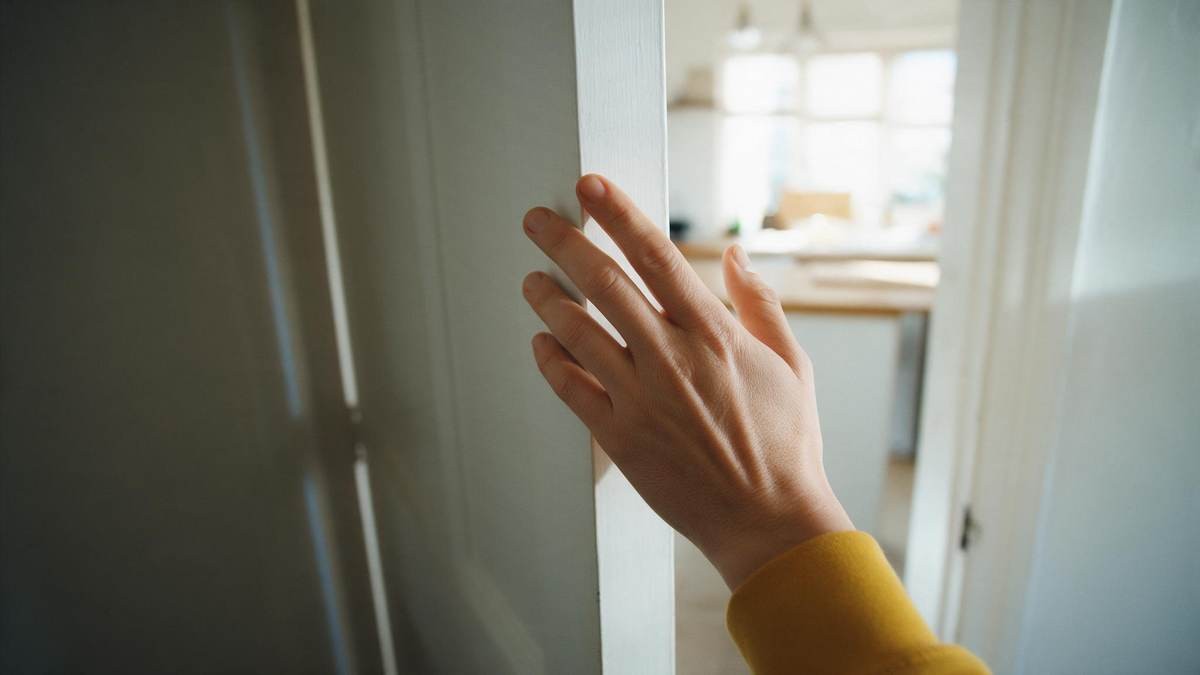 The real reason you blank at doorwaysThe doorway didn’t take itWatch the video to see why the blank at the threshold is rarely about the threshold itself.
If the doorway blank keeps happening and retracing your steps only brings you back to the same empty room, stop blaming the frame and watch the full memory video. It lays out one explanation for recurring lapses and the approach it recommends.
When a voice sent you versus an object
These two kinds of trigger call for different responses, and treating them the same is where people get stuck. Take the request first. You are washing up, someone calls from the other room, you say something agreeable, you stand up, and by the time you reach the hallway the content of the request has evaporated. Walking back into the living room and standing there silently rarely fixes this, because the cue was not the room. The cue was the person and their sentence. The useful move is to ask them to say it again, or to repeat the last thing they remember saying to you. The errand lived in their words, not in the floorplan, so the recovery has to happen through them.
Now take the object. You are rinsing a cup, your eye catches the empty hook where the scissors should be, and you set off to find them, losing the thread somewhere near the fridge. Here, no person can repeat anything, and asking the room to jog your memory means asking the right part of it. The scissors were last used somewhere specific, perhaps on the table where you opened a package yesterday, not in the drawer where they are meant to live. Going back helps only if you go back to the moment, not just the location. Stand where you were, redo the small action you were doing, and let your eyes land where they landed the first time. The empty hook is the clue; the doorway is not.
In both cases, mechanically retracing your steps leaves the actual question unanswered. You can walk the route three times and arrive at the kitchen just as blank each time, because the route was never the problem. The question is always the same: what event, in the room I left, made moving seem necessary? A voice or a visible detail. Until you answer that, the walking is just exercise. Once you answer it, the walking becomes optional. This is why two people can have the same blank at the same threshold and need entirely different remedies, one a repeated sentence, the other a glance at the right hook. The doorway treats them identically. The trigger does not.
If the errand stays missing or returns later
Sometimes none of this works. You reconstruct the scene, you find the person or the object, and the errand still refuses to surface. At that point the sensible move is to stop pushing. Adding unrelated tasks to the moment, unloading the dishwasher, checking messages, tidying a shelf, feels productive but mostly adds noise. Each new action competes with the faint trace you are trying to protect, and it also gives you a fresh reason to be in the room, which muddies the question of why you came. Let the room stay quiet. If there is a safe, ordinary task already in front of you, finishing the rinse on the cup, folding the towel you were holding, attend to that instead. The point is not to force the memory but to stop burying it.
Recover the errand
- Stop where you are and reconstruct the moment before you stood up.
- Do not open a cupboard, check your phone, or start a new task.
- Picture the previous room and the small event that started the errand.
- Name the errand from the request or object you find in that scene.
- If it does not surface, stop pushing and let the room stay quiet.
If a concrete cue exists, keep it. The empty hook, the roll of tape, the unanswered face of the person who asked: these are worth a second look before you leave the room, because they are the physical remains of the intention. You might make a small mark, move the tape to a visible spot, or simply say the half-formed errand aloud even in fragments. None of this guarantees the thought will return, and it is better to treat it as a way of leaving the door open than as a technique that retrieves what is lost. Some errands come back on their own, often when you have stopped looking, and some were small enough that losing them costs little.
When the errand does come back later, the useful habit is to notice the circumstances. Where were you, and what were you doing, when it resurfaced? Often the answer is that you had returned to the original context, or drifted back to the original activity, and the cue finally caught. That observation is worth keeping, because it tells you something about your own patterns: perhaps your errands tend to start with requests you half-hear while doing something else, or with objects you spot mid-task. You cannot build a system from one blank, but you can start to recognize which triggers you are most likely to lose. That recognition, quiet and specific, is more useful than any general theory about doorways.
And if the blank simply stays blank, let it. An errand that cannot be recovered after an honest attempt was either small enough to release or important enough to announce itself again. The light left on will still be on tonight. The tape will be wanted again tomorrow. The momentary frustration of standing in a room without a reason is real, but it is not a verdict on your memory. It is a gap between a trigger and a task, and gaps like that close in their own time more often than they widen.
The blank at the threshold is rarely about the threshold itself. It is the small version of a pattern that keeps returning, and the single slip in this article may be one instance of it watch the full video.
Reading behind this note
Everything on Everyday slips →
▶ Watch the memory video