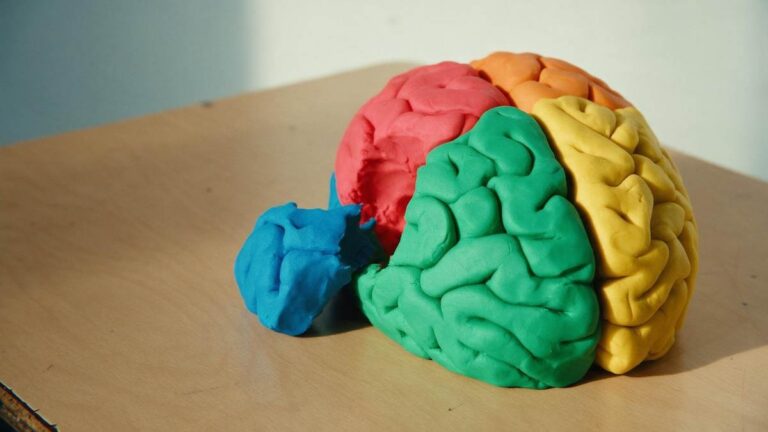
Your partner watches you pat your jacket pockets for the third time, then points toward the hallway table. The keys are sitting there, right beside the door you opened ten minutes ago. You never felt yourself put them down. That is the unsettling part: the hand moved, the object left your grip, and your mind recorded none of it. What else did you set down without noticing?
You are walking from the kitchen to the garage with a box, your keys, and your phone. When you arrive, the box is there, but the keys are gone. They did not fall out of your pocket; they were set down somewhere along the way because your hand was needed for the door, the light switch, or to steady the load. This is the specific problem of divided attention during a single trip: the item that disappears is usually the one that was set down to free a hand for the main task.
To find it, you do not need a general theory of forgetfulness. You need to trace the exact moment a hand was freed and identify which object was sacrificed to continue the journey. The search begins not with where the item should be, but with where your grip changed. This article offers a way to reconstruct that sequence and reduce the chance of it happening again.
Reconstructing the trip hand by hand
The most useful place to start is the moment your hand was freed. When you carry several objects, the one that disappears is usually the item that became secondary the moment a more urgent task required a grip adjustment. You likely set it down automatically, without a conscious decision, simply to clear your palm for the primary goal. This kind of automatic-object-placement leaves no trace because the action was never the focus of your attention. Your brain prioritized the destination, the text message, or the door handle, treating the secondary object as excess cargo to be jettisoned at the first convenient surface.
To find it, do not search randomly. Instead, mentally replay the trip and identify every point where your grip changed. Did you shift a bag to open a door? Did you use a key while holding a coffee cup? Each of those transitions is a candidate location. The missing item is probably at the exact spot where your hand was last free, not where you assumed you would leave it. This narrow focus on physical mechanics narrows the search area immediately.
Why doorways and pauses break the link
Doorways are particularly hazardous because they force a hard reset of your attention. Even a simple pause at a threshold can disrupt the fragile link between an object and its location. When you step through a door, your brain updates the context, often dumping the memory of what you were holding in the previous room. This is why the item is rarely found in the room where you started or the room where you ended up, but rather in the transitional space where the shift occurred.
The same principle applies to counters and hallway tables. A brief stop to check your reflection, adjust a package, or read a label is enough to sever the connection. During these pauses, the item in your hand ceases to be part of the active task. It becomes background noise. If you set it down to sign for a delivery or to press an elevator button, that placement was likely silent in your mind. Reconstructing these micro-stops is often more effective than searching the final destination, because the doorway-effect-and-context-shift is strongest at the boundaries between spaces.
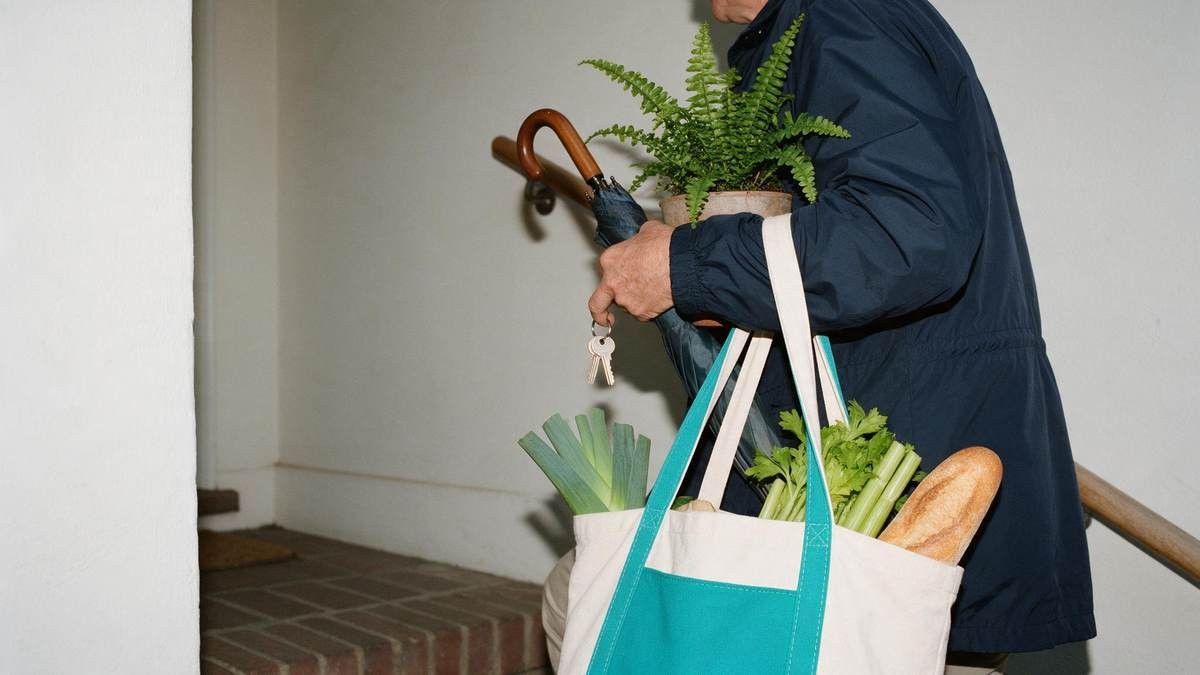 Keys slipping off a full hand?Why your hand forgets before youWatch the video to see the exact moment your grip changes and an object slips from your attention without a trace.
If your keys or phone repeatedly vanish the moment your hands are full and your attention is split, you might want to watch the full memory video to see the approach it proposes for those recurring slips.
When one item is delivered and another retained
The risk multiplies when the trip involves delivering one item while retaining another. This is a swap scenario, and it plays directly into the fragility of object-location binding. When you approach a drop-off point, your attention locks onto the handoff. The retained item, the one you meant to keep, is suddenly just an accessory to the delivery. Once the delivery is complete, your brain marks the task as finished, but the retained item has already been moved or set down without a new location tag.
Consider a hypothetical walk from the kitchen to the garage. You carry a box to store and a phone you need for a call. At the garage, you set down the box with deliberate care. That act is encoded. But the phone, which you shifted to your other hand to manage the box, is now the loose end. When you turn to leave, the phone is no longer relevant to the immediate goal of exiting, so it gets placed on the nearest shelf. The memory of the box is clear; the phone has become a ghost because it was never the star of the show.
To prevent this, create a deliberate separation between delivery and retention. Before you approach the drop-off, pause and consciously transfer the retained item to a pocket or a bag. Do not rely on holding it in your hand while your attention is elsewhere. The physical act of securing the item serves as a marker, forcing your brain to register its presence before the delivery takes over.
The hazard of papers and flat objects
A different problem arises when your possessions become mixed with papers, mail, or work documents. Flat objects are dangerous because they share a visual category. A phone left on a stack of envelopes becomes just another rectangle in the pile. Your brain stops tracking it as a distinct device and files it under paperwork. This is why you might look directly at the item and not see it; you are searching for a phone, but your visual system is scanning for paper.
Retrace the grip change
- Mentally replay the trip and mark every point where your grip changed.
- Identify which object was sacrificed to free a hand for the main task.
- Search the exact spot where your hand was last free, not where you assumed you would leave it.
- Physically walk the route again, noting every surface you passed.
The fix here is categorical separation. Never place a distinct object directly onto a pile of papers. Use a specific corner of the desk, a different colored folder, or a raised surface that breaks the plane. This is part of the broader puzzle of why everyday objects go missing. By forcing a visual distinction, you ensure the item remains in the category of personal effects rather than administrative clutter. If you must set something down on a desk, place it perpendicular to the stack, not parallel, to create a visual interruption.
Habits that reduce the next loss
The most reliable way to prevent these losses is to build a habit of giving keys and other daily items one reliable home. But on a trip, the home is not a fixed location; it is a consistent relationship to your body. Establish a rule that certain items never touch a horizontal surface during transit. They must remain in a hand, a pocket, or clipped to a strap. This eliminates the decision point where the automatic placement occurs.
If you must set something down, say the location out loud. This engages a different memory pathway and makes the placement a deliberate event rather than a background action. If you find yourself losing items frequently on these trips, consider the strategy of retrace the last context to find a missing object. Go back to the last moment you were certain you had the item, then physically walk the route again, noting every surface. Often, the physical retracing of steps triggers the memory of the placement.
Finally, accept that some loss is the cost of divided attention. When you carry too much, your working memory is overloaded, and something will be dropped. The solution is not to search harder but to carry less. If a trip requires more than two items, make two trips or use a bag. Reducing the cognitive load is the only way to ensure that every object has a place in your attention.
You can treat tonight as a one-off, or you can watch the full video and look at the shape these moments make together.
Reading behind this note
Everything on Everyday slips →
▶ Watch the memory video