Your fingers hover over the phone screen, and for half a second the word you wanted sits just out of reach, like a name on the tip of your tongue that will not come. The hallway light is on in the middle of the afternoon, and you cannot remember turning it on. Is this the first sign of something fixed, or is your brain still quietly rearranging itself?
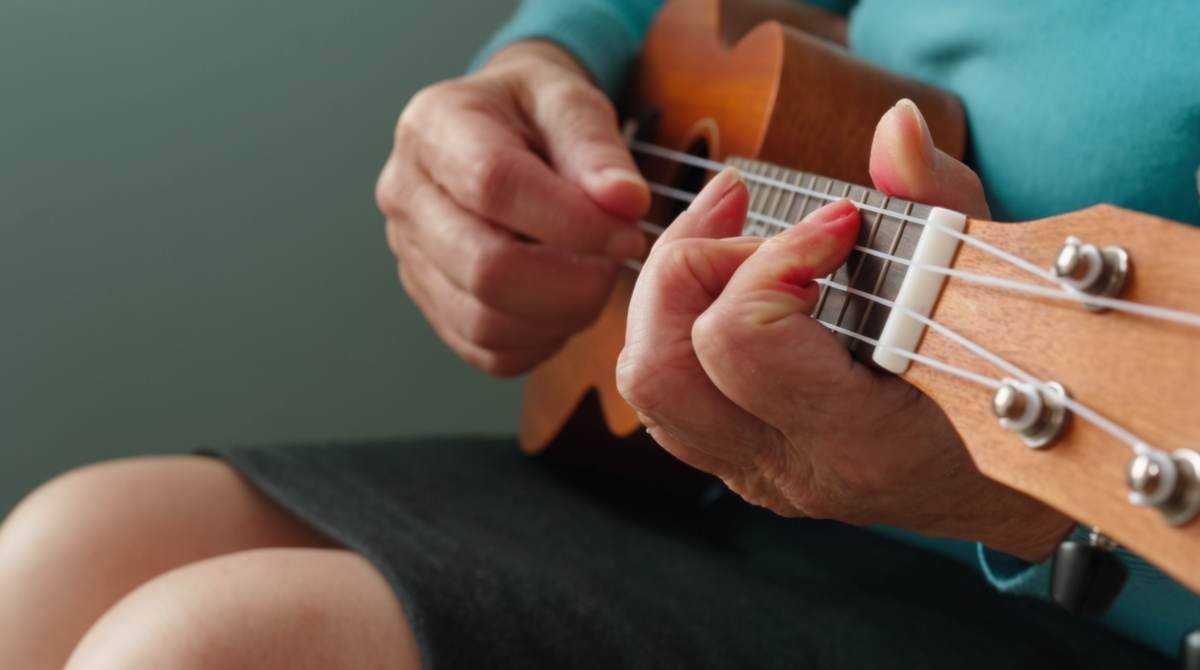 Does your brain change with practice?The pause before the word comes backWatch the video to see why that small pause is not the whole story, and what repeated practice actually changes.
You reach for your phone to look up a word you have used a hundred times, and for a second the route to the answer feels slower than it used to. That small pause can make you wonder whether your brain is still capable of change, or whether the wiring you have is the wiring you are stuck with. Neuroplasticity is the name for the brain’s capacity to reorganize itself by forming and reorganizing connections between its cells, and the honest answer is that this capacity is real but demands sustained, repeated practice rather than a single effort. Good evidence on how much plasticity remains available in everyday adult life is limited, and researchers would need long-term studies that follow the same people through repeated skill learning to say more. What is clear is that the brain is not a fixed machine, and the changes that matter most are usually small, local and built over time.
The plain-English definition
Neuroplasticity is the brain’s ability to change its structure or function in response to experience. The change can be structural, meaning the physical connections between neurons are altered, or functional, meaning the brain uses existing pathways differently. Neither type of change is something you can feel while it is happening. Plasticity has no felt symptoms, no internal click or sense of rewiring, which is why people looking for a sign that their brain is changing often end up disappointed.
Plasticity myths and facts
- Myth: A few sessions of a new activity will produce noticeable change. Fact: Plasticity is slow and specific.
- Myth: Learning a new skill spills over into general mental sharpness. Fact: It improves that skill, not memory for names.
- Myth: Plasticity can undo dementia or reverse brain damage. Fact: Rehabilitation changes are partial and specific.
- Myth: You can feel your brain rewiring. Fact: Plasticity has no felt symptoms, no internal click.
The process is not evenly distributed across the brain. Some regions, such as those involved in learning a new motor skill, show more obvious reorganization than others. The key condition is repetition. A single exposure to a new fact or a single attempt at a new task does not produce lasting change. What produces change is returning to the same demand again and again, usually over weeks or months, until the brain has adjusted to the load.
Structural and functional change are different things
Structural plasticity refers to physical alterations in the brain, such as the strengthening of existing synapses, the growth of new connections between neurons, or the remapping of a function from one area to another. Functional plasticity refers to changes in how the brain activates its existing networks, without necessarily adding new physical connections. A person recovering from a stroke may show functional plasticity when a neighboring region takes over part of a lost skill, and structural plasticity when repeated practice strengthens the pathways that support the new arrangement.
The distinction matters because people often expect plasticity to mean visible growth, as if the brain were a muscle getting larger. In practice, much of what changes is efficiency. The brain may need less effort to perform a task it has practized many times, or it may recruit a slightly different set of regions. These changes are real but they are measured with imaging and behavioral tests, not felt directly by the person doing the learning.
Examples from studies are suggestive, not proof of a general rule
The public health guidance for this page does not include the individual studies often cited as proof of neuroplasticity, such as work on London taxi drivers, jugglers, musicians, stroke rehabilitation or adults learning a new skill. Without access to those studies, their participant counts, years and methods cannot be reported here. What can be said is that the general pattern in the literature points toward experience-dependent change in specific brain regions, and that the quality of the evidence varies from study to study.
The honest position is that good evidence on neuroplasticity in everyday adult life is limited. To know more, researchers would need controlled studies that follow the same adults through a defined period of skill learning, measure brain structure and function before and after, and compare them with people who did not practize. Most of what circulates publicly is either a single snapshot or a small sample, and it should not be read as a promise that any particular activity will reshape your brain.
The mistake people make is treating plasticity as a quick fix
The most common error is to assume that because the brain can change, a few sessions of a new activity will produce noticeable change. Plasticity is slow and specific. Learning a new skill may alter the brain regions involved in that skill, but it does not spill over into general mental sharpness. A person who practizes a musical instrument may improve at that instrument without becoming better at remembering names or finding the car keys.
Another mistake is to treat plasticity as a reason to ignore persistent memory problems. A change in memory that is worsening, or that interferes with daily life, should be discussed with a doctor. Memory trouble has several possible causes, including medicines, sleep problems, mood disorders and medical conditions, and the right response is a proper assessment rather than an attempt to train the brain out of it.
What about after 50?
The short answer is that the brain retains some capacity for change in later life, but the evidence for how much and under what conditions is not strong enough to make firm promises. The question of age and plasticity is covered in more detail on the neuroplasticity-and-age page, which looks at what changes with age and what stays possible. For this page, the important point is that age alone does not switch plasticity off, but it does make the need for sustained practice more important, not less.
Rehabilitation is clinician-led, not a home project
Where plasticity is most clearly relevant is in rehabilitation after a stroke or brain injury, and here the framing matters. Rehabilitation examples are clinician-led. A therapist assesses what has been lost, designs a program of repeated practice, and adjusts it as the person progresses. This is not the same as downloading an app or doing puzzles at the kitchen table. The brain’s capacity to reorganize after injury is real, but it is harnessed through structured, professionally guided work, and it does not undo the injury itself.
It is also important not to claim that plasticity can undo dementia or reverse brain damage. The changes seen in rehabilitation are partial and specific. They may improve function in a particular domain, but they do not restore the brain to its previous state. Anyone hoping that plasticity means the brain can heal itself completely is likely to be disappointed, and anyone selling that hope should be treated with caution.
That is the part worth staying with, so watch the full video about recurring memory slips.
The single slip in this article may be the small version of a pattern that keeps returning, and it is worth seeing how that pattern plays out when you watch the full video.
Everything on Memory training →
▶ Watch the memory video