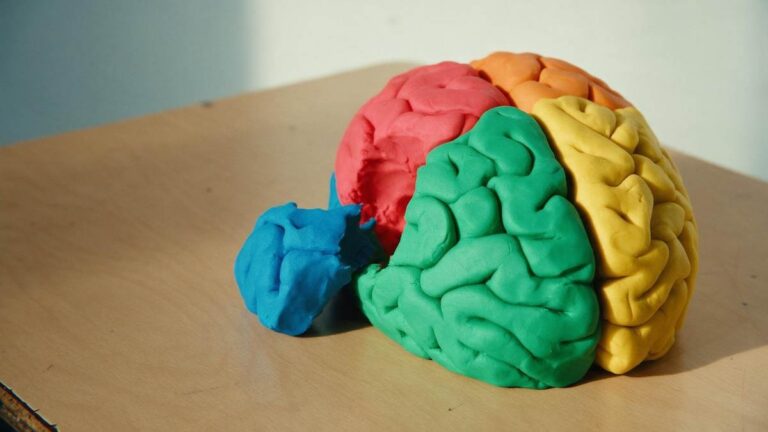
You are standing in the kitchen, holding your phone, and you cannot remember why you walked in here. The kettle is still cold, so it was not for tea. This small pause is what most people mean when they say their cognitive function is slipping, but the term covers far more than that single moment. Cognitive function is the umbrella name for the brain’s work of thinking, learning, remembering, and reasoning, and it is made up of several distinct abilities that do not all age in the same way. The useful answer is that some slowing is normal, especially in how quickly you process information or pull up a name, while other abilities stay largely stable. The six domains clinicians use are attention, executive function, learning and memory, language, perceptual-motor skill, and social cognition. Knowing which one is causing a problem helps you decide whether a change is ordinary or worth a conversation with a doctor.
Attention is the filter that decides what gets in
Attention is your ability to focus on one thing while ignoring everything else. It is what lets you follow a conversation in a busy café or keep your eyes on the road while the radio plays. This domain also includes divided attention, which is the skill of tracking two things at once, and sustained attention, which is staying with a task until it is finished.
Normal aging vs dementia
| Normal aging | Dementia |
|---|---|
| Missing a monthly payment | Problems taking care of monthly bills |
| Forgetting which day it is and remembering later | Losing track of the date or time of year |
| Sometimes forgetting which word to use | Trouble having a conversation |
| Making a bad decision once in a while | Making poor judgments a lot of the time |
With age, attention often becomes more easily pulled away by distractions. You may find that a notification or a background noise interrupts you more than it used to. This is a common age-related change and not by itself a sign of a serious problem. The National Institute on Aging describes these shifts as mild forgetfulness or age-related forgetfulness, and they are often a normal part of aging.
What matters is whether the change disrupts daily function. If you can no longer follow a recipe you have used for years, or you get lost in a place you used to know well, that is a different pattern. The National Institute on Aging lists getting lost in familiar places and having trouble following recipes or directions as signs that it might be time to talk with a doctor.
Executive function runs the planning and the pauses
Executive function is the brain’s management system. It handles planning, organizing, switching between tasks, and stopping yourself from doing something unwize. When you decide to pay a bill before it is due, or you hold back a sharp reply, you are using executive function.
This domain can slow with age, but the change is usually subtle. You may take longer to learn a new phone system or need more time to plan a journey with several steps. The National Institute on Aging notes that older adults may take longer to learn something new, and this is generally a sign of mild forgetfulness rather than a serious memory problem.
A useful distinction appears in the comparison between normal aging and dementia. Making a bad decision once in a while is normal. Making poor judgments and decisions a lot of the time is not. Missing a monthly payment is normal. Having problems taking care of monthly bills is a sign that executive function may be impaired enough to affect daily life.
Learning and memory is the domain people notice first
Learning and memory covers taking in new information, storing it, and bringing it back when needed. Short-term memory holds something for a few seconds or minutes, while long-term memory stores it for a longer period. This is the domain people usually mean when they say their memory is going.
Some change here is expected. As people grow older, changes occur in all parts of the body, including the brain, and some people notice they do not remember information as well as they once did or cannot recall it as quickly. Forgetting a name, where you put your keys, or whether you locked the front door is normal once in a while at any age.
The warning signs are about persistence and pattern. Asking the same questions over and over again, becoming more confused about time, people, and places, and not taking care of yourself are listed by the National Institute on Aging as reasons to talk with a doctor. Forgetting which day it is and remembering it later is normal. Losing track of the date or time of year is not.
Language is more than finding the right word
Language includes naming objects, understanding what others say, reading, and writing. It is the domain that lets you follow a news story, write a note, or explain a problem to a friend. Most people notice it when a word will not come to mind.
Sometimes forgetting which word to use is a normal part of aging. The word usually arrives a moment later, or you find a workaround. Trouble having a conversation, by contrast, is listed by the National Institute on Aging as a sign of dementia rather than normal aging. The difference is not one missed word but a pattern that breaks the flow of daily communication.
If language changes are persistent or worsening, they are worth mentioning to a doctor. The cause may not be dementia. Depression, medication side effects, thyroid problems, and other conditions can affect language and memory, and these problems usually go away once the condition is successfully treated.
Perceptual-motor skill connects what you see to what you do
Perceptual-motor skill is the coordination between your senses and your movements. It is what lets you judge the distance to a curb, catch a falling glass, or use a tool without looking at your hands. This domain is easy to overlook until it becomes difficult.
Normal aging can bring slower reactions and less precise movements, but the change is usually mild. The National Institute on Aging does not list perceptual-motor slowing as a typical sign of age-related forgetfulness, but it does note that serious memory problems make it hard to do everyday things such as driving and using the phone.
A change in this domain is worth discussing with a doctor if it affects safety. Trouble with visual perception is also listed among the problems people with dementia may have, alongside language skills and attention. If you are unsure whether a change is normal, a doctor can perform tests and assessments to help determine the source.
Social cognition reads the room and the people in it
Social cognition is the ability to understand other people’s emotions, intentions, and reactions. It is what lets you know when a friend is upset before they say so, or when a joke has landed badly. This domain shapes how you respond in conversations and relationships.
Social cognition is often preserved in normal aging, though some people become less quick to read subtle cues. The National Institute on Aging notes that some people with dementia experience personality changes, which can include shifts in social behavior. This is different from the mild forgetfulness that is a normal part of aging.
If you or someone close to you notices a marked change in social judgment or empathy, that is a reason to seek medical advice. The cause may be depression, a reaction to a medicine, or another treatable condition. A doctor can help sort out whether the change is part of normal aging or something that needs attention.
 The real reason you pause mid-moveWhich of the six is changingWatch the video to see which domain your own slip belongs to
The single slip in the kitchen may feel small, but it can be the small version of a pattern that keeps returning in one of these six domains, and noticing which domain is involved is the first step toward understanding it. The single slip is the small version of it, so watch the full video about the one that keeps returning.
If the same blank keeps arriving in different rooms, watch the full video and sit with what it suggests about the pattern.
Everything on Everyday slips →
▶ Watch the memory video