The pencil is short, the form is printed on stiff paper, and someone is asking you to hold a short list of words until they tell you to give them back. You give back all but one, and the missing one is the one you were sure of. Back in the waiting room you run the list again, trying to decide whether what just happened was ordinary. That was a screening test, most likely the Montreal Cognitive Assessment, known as the MoCA. It is scored out of a maximum of thirty points, and thirty points is not thirty questions. It is a total earned across several short tasks: drawing, naming, remembering after a delay, calculation, following an idea through, and knowing the day and the place. The usual cutoff sits at twenty-six out of thirty, with an adjustment for schooling: one point added for twelve years of formal education or less, another for six years or less, because part of the test rewards time spent in a classroom. A score below the line is a request for a fuller assessment. A score above it has told you very little, and either way this is screening, never a diagnosis. One caution before anything else: good human trials on this screen are scarce, and the published guidance is thin. A useful study would have to measure how often the score flags people who turn out to have a problem a specialist confirms, against that confirmation rather than against another short test, reported separately for people with more and less schooling. Until that work is solid, treat the number as one reading among several. Memory trouble also has many causes: medicines, sleep, mood, thyroid, vitamin levels, alcohol, head injury, stress. If a change persists or worsens, talk to a doctor.
How the thirty points are divided
The instrument has seven parts, each scored on its own, and the weights are uneven. People assume a memory test is mostly memory, and it is not. Here is how the points fall, in the order the parts usually appear: Visuoexecutive tasks: copying and connecting figures, five points. Naming: identifying pictured objects, three points. Attention and calculation: holding and working with sequences, six points. Language: repeating and describing, three points. Abstraction: finding the thread between paired ideas, two points. Delayed recall: words from earlier, given back after a delay, five points. Orientation: place, date, and time, six points.
Notice what that layout rewards. Orientation and delayed recall carry more than the drawing tasks, and attention carries more than language, so a person who is sharp with figures and shaky on the date can still land near the line. The screen is a portfolio rather than a single measurement, and the parts are not interchangeable: a dip in one area means something different from a dip across all of them. This is why clinicians read the profile alongside the total, and why the same total can come from two people who are struggling in completely different places.
After a score that lands near the line, the screen starts to follow you around. You rehearse word lists in the car before the appointment, you check the calendar twice before answering a simple question about the date, and you quietly stop taking the memory quizzes that used to be a joke, because you no longer trust what they will show. The next visit becomes a performance. You answer faster, you guess instead of leaving silence, and the clinician records a number that describes the appointment rather than the week you actually had. What it costs you is an honest account of what changed.
What the cutoff does and does not do
The cutoff is a referral line, not a wall between well and unwell. Twenty-six out of thirty is where most clinicians start asking for a fuller assessment, and the score is adjusted for schooling because the test leans on vocabulary and classroom habits: one point back for twelve years of formal education or less, another for six years or less. Someone with little formal schooling and an ordinary mind can sit below the line on the raw number and pass once the adjustment is applied, while a highly educated person can lose a point and still be told to come back.
What the number cannot do is tell you the cause. One sitting, in one room, with a trained person watching, on a day you slept badly and drove through traffic to get there. Mood, hearing, vision, language, nerves, and the medicines you take all move the score. That is why the line is followed by more questions, a history, sometimes imaging and lab work, and why a result below it is a request for assessment rather than a finding. Screening, never a diagnosis, and never a single explanation for why you forgot.
We keep a recorded session on file for readers who would rather watch than read, and if that is you, watch the full video while the sections are still fresh.
There is no thirty-question dementia test
Search for a thirty-question dementia test and you will find quizzes, printable sheets, and short videos that promise a verdict in an afternoon. None of them is the thing being searched for. Both the MoCA and the MMSE are scored out of thirty points, and thirty points is a total, not a count of questions. The parts are few, the questions inside them are spoken or shown by a trained examiner, and the score comes from how responses are weighted rather than from a right-or-wrong tally of thirty boxes.
How the thirty points fall
- Orientation: six points
- Delayed recall: five points
- Attention and calculation: six points
- Visuoexecutive tasks: five points
- Naming and language: three points each
- Abstraction: two points
There is a reason no version is offered here. Both instruments are copyrighted, and the official materials come from their developers and their administration guides, which set out who may give the test and how it must be scored. Administering it to yourself, or printing a copy you found, gives you a number with no context attached: no schooling adjustment, no observation of how you approached the tasks, no comparison with how you were doing a year ago. If you want the real instrument, ask the clinician who would interpret it, or take it from the official source.
The MoCA beside the MMSE
The two screens get named in the same breath, and they are not interchangeable. What separates them is coverage, length, and the situation each one was built for. Anyone comparing them for the first time usually wants the same handful of rows laid out plainly: Total: both are scored out of thirty. Coverage: the MoCA spreads across memory, attention, language, executive function, drawing, and orientation; the MMSE leans on language and orientation, with less on executive function. Length: the MoCA takes longer to administer. Schooling: the MoCA builds an explicit adjustment into its score; the MMSE is typically read with schooling and background in view. Access: both are copyrighted, and official forms come from their developers rather than from a search result. Administration: both are meant for a trained professional, in person.
Choosing between them is a question of context, not quality. A clinician who needs a quick check at the bedside may prefer the shorter one; someone mapping attention, planning, and recall across a wider range may take the longer. A person who speaks the test language as a second one, or who left school early, may need a different reading than the raw total suggests. Neither test names a condition. It changes how likely a fuller assessment seems, and then the assessment does the work.
If the score is a snapshot of one sitting, what exactly is it a snapshot of? People who pass with room to spare still lose a neighbor’s name and leave a room without the reason they walked in for. Whether the test measures that particular failure, or only the version of it that survives a quiet room and a short list, is the question this page deliberately leaves open.
Why the good studies are hard to find
Good human trials on the MoCA are scarce, and the guidance that exists leans heavily on clinical experience rather than on large, careful comparisons. A useful study would have to measure something specific: how often the screen flags people who turn out to have a problem a specialist confirms, and how often it flags people who do not, measured against that confirmation instead of against another short test. It would have to report those numbers separately for people with more and less schooling, across languages, and in people whose only complaint is the one they walked in with.
What exists instead is advice about follow-up. The National Institute on Aging recommends a check every six to 12 months for anyone with mild cognitive impairment, because the useful signal is the direction of change across visits rather than the position of one score. It also notes that an estimated 10 to 20% of people age 65 or older with mild cognitive impairment develop dementia over a one-year period, and that many do not: symptoms may hold steady or improve. The screen sits inside that follow-up as one more reading, and the reading that matters most is the trend.
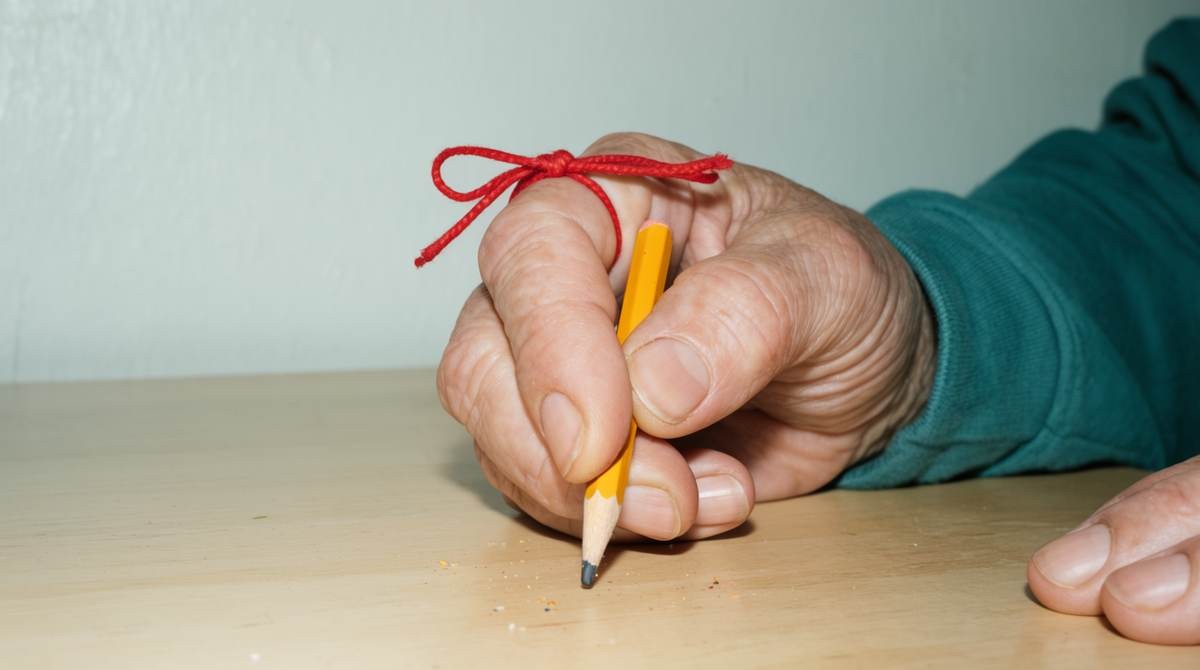 MoCA test: what does it check?What does the cutoff actually tell youWatch the video for a look at the session as it unfolds, task by task
A score is one reading taken on one morning, and the conversation that follows is worth more than the number. Bring your questions to it, and watch the full video before you sit down.
Everything on Memory loss & dementia →
▶ Watch the memory video