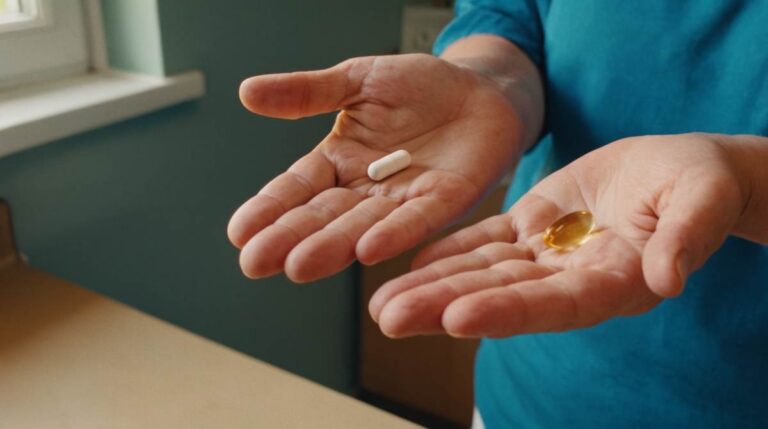
Three weeks into the bottle, you have learned the timing. It is not the capsule that is the problem. It is the half hour after, when your stomach starts a low, persistent churn that no amount of water settles. You have tried taking it with breakfast, with lunch, with a handful of crackers. The pattern holds: a dull cramping that builds through the morning and either resolves by afternoon or does not, and you are standing in a bathroom at work deciding whether to call out. The side effects most people report with bacopa monnieri are gastrointestinal: nausea, abdominal cramps, and loose stools. They are not rare, and they tend to show up in the first two to four weeks of use, which is exactly when you might be starting to notice whether the supplement is doing anything for your memory at all. Here is the uncomfortable part: the research behind this herb is thin. Good human trials are scarce, and published guidance gives no single recommended dose. What follows is what is known, what is not, and where the gaps are.
The stomach issue and why it lands where it does
The compounds in bacopa that people take for cognitive reasons are the same ones that irritate the gastrointestinal lining. This is not a matter of sensitivity or a bad batch. It is a pharmacological property of the plant, and it is the reason the effect is dose-dependent in the way that stomach upset usually is: more of the active compounds means more irritation, and the gut responds before the brain does. The pattern most people describe is not acute. It is a low-grade discomfort that becomes part of the daily background, the kind of thing you stop noticing until it is gone. That makes it easy to rationalize. You tell yourself it is the coffee, or the lunch you had, or the stress of the week. But if you stop the bacopa for two days and the cramping lifts, the attribution becomes simpler. Taking it with food reduces the intensity for most people, but it does not eliminate it. The food slows absorption and spreads the irritation over a longer window, which is better than a sharp hit on an empty stomach, but the total amount of compound your gut has to process is the same.
How the attribution gets simpler
- Take the capsule with food to spread the irritation over a longer window
- Notice the discomfort becoming background until it is gone
- Stop the bacopa for two days and see whether the cramping lifts
- Watch for meals and evenings out now arranged around the capsule
- Ask whether the effect you wanted is there at all
The cost of the stomach issue is not the nausea itself. It is the week where you start timing your meals around the capsule, where you stop eating out because a heavy dinner makes the cramping worse, where you begin to associate the act of taking a supplement with a low-grade physical penalty that you did not sign up for. You start to check the bathroom before you leave the house. You start to wonder whether the thing you are doing to help your memory is quietly making your days smaller, and the question does not go away by the fourth week. It gets more specific. You start to wonder whether the effect you are looking for is even there, or whether you have been measuring a placebo against a stomach ache.
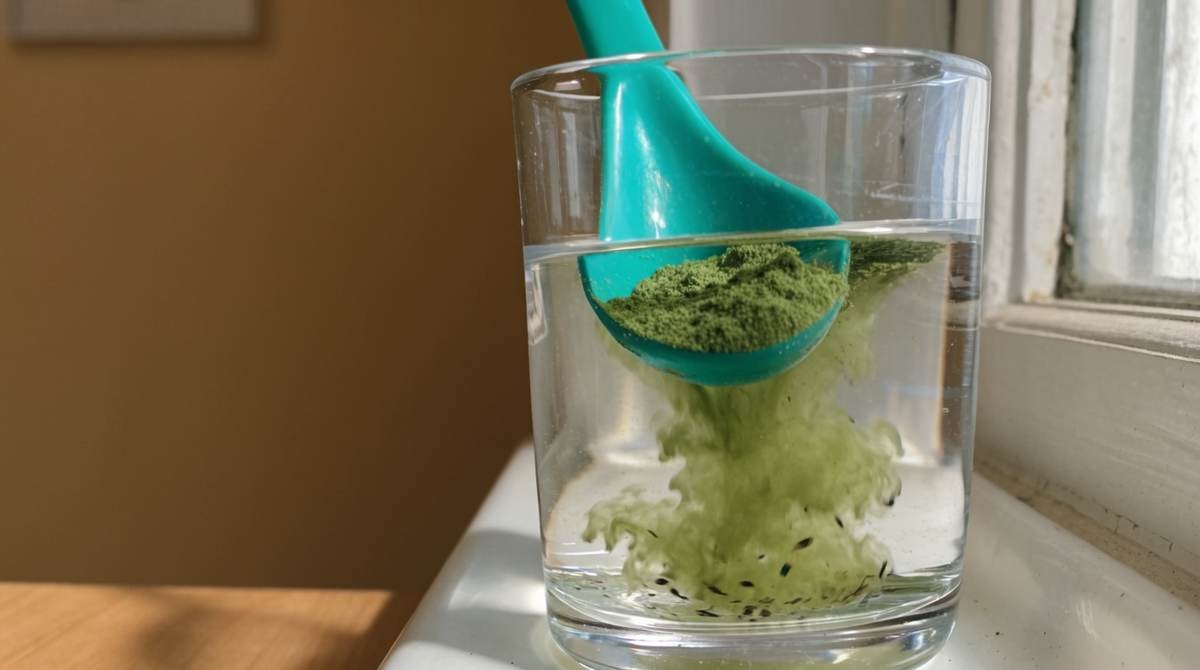 Upset stomach? The dose trials explain itIs a modest benefit worth the churnWatch the video on what bacopa does to the gut and why the dose stays unsettled
Why no one can point you to a number
You will find doses quoted online, sometimes with a degree of precision that implies a level of evidence that is not there. The reality is that the human trials on bacopa monnieri are too few, too small, and too inconsistent in their extract standardization to support a single recommended amount. Different studies have used different standardized extracts, different concentrations of the active bacosides, and different durations. A dose that was well tolerated in one trial may not be the same dose in another, because the extract itself is not the same substance. This is a problem specific to herbal supplements: without a fixed molecular target the way a drug has, the unit of measurement is fuzzy. What this means for you is that there is no evidence-based starting point that a doctor can hand you and say this is safe and this is effective. The responsible answer is that the evidence does not yet support a specific dose for a specific outcome in a specific population.
There is a longer version of this conversation that sits with the trade-off for a while, and you can watch the full video when the timing is right for you.
The interactions that are not optional to consider
Bacopa has cholinergic activity, which means it influences the same neurotransmitter system that several prescription drugs target. If you take a cholinesterase inhibitor for a cognitive condition, the combination is not something to sort out on your own. The same applies to anticholinergic drugs, which work in the opposite direction and can create a pharmacological tug-of-war. Sedatives are another concern. Bacopa has mild sedating properties in some people, and adding it to a medication that already slows the central nervous system can make the effect harder to predict. The interaction is not always dramatic, but it is not zero. Thyroid medication warrants a specific caution. Bacopa may affect thyroid hormone levels, and if you are on levothyroxine or a similar drug, the interaction could shift your levels in a direction that your current dose was calibrated to prevent. This is not theoretical. It is the kind of thing that shows up in a blood test months later as a number that has drifted. If you take any of these medications, the conversation to have is with your doctor, not with a supplement label.
Who should skip it entirely
Pregnancy is an exclusion. There is no safety data for bacopa monnieri in pregnant people, and the absence of evidence of harm is not the same as evidence of safety. The standard applies: do not take it. Children are a separate exclusion. The cognitive effects that are the reason people take bacopa have not been studied in pediatric populations in a way that supports dosing, and the gastrointestinal side effects that are common in adults may be proportionally more disruptive in a smaller body. If you have a known gastrointestinal condition, such as inflammatory bowel disease or a history of ulcers, the addition of a compound that irritates the gut lining is a decision that belongs with your doctor, not with a trial-and-error approach at home.
There is a larger question underneath all of this that the bacopa literature does not touch: if a plant compound produces a small, statistically detectable shift on a cognitive task in a controlled setting, what does that shift mean for the person taking it in their actual life, on the days when they are tired and the task is not a lab test but a conversation they half-followed or a name that should have come easily? The gap between a measure and a lived experience is where the real question lives, and it is one the current evidence is not equipped to close.
What a useful study would have to do
The gap in the literature is not just a matter of sample size. A study that would actually answer the questions people are asking would need to use a standardized extract with a defined bacoside content, a dose that is replicated exactly across sites, a duration long enough to see whether the cognitive effect persists after the stomach effects settle, and a primary outcome that is not just a self-reported sense of sharpness but a validated cognitive measure. It would also need to track the gastrointestinal side effects as a primary safety outcome, not a footnote. Right now, the side effect profile is known mostly from what people report in smaller studies and from post-marketing observation, not from a trial designed to characterize it. Until that study exists, the honest summary is this: the side effects are real and common, the cognitive benefit is modest at best and not well established, and the dose that balances the two is unknown.
The question of whether a modest, uncertain benefit is worth weeks of a stomach that will not quiet down is one we do not settle here, and watch the full video is where we leave it open for you to sit with.
Everything on Supplements & food →
▶ Watch the memory video