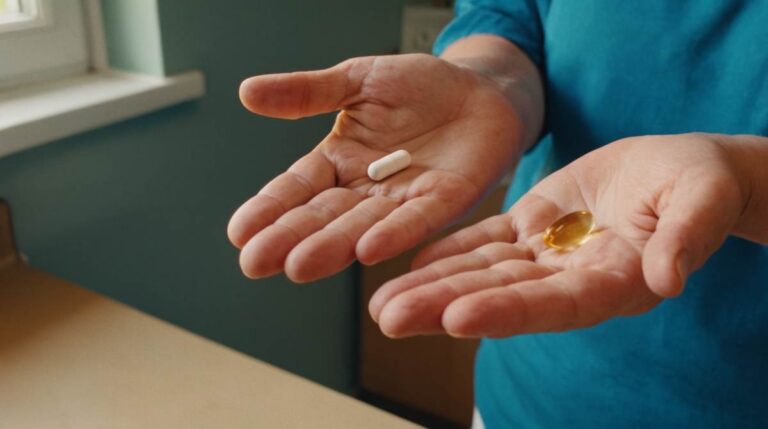
You turn the bottle over under the shelf light and the fine print blurs: six ingredients, none of them familiar, plus a proprietary blend that hides the rest. You know what a strong coffee does to your afternoon, and you want that clarity on demand — but is the sharp hour you are buying really the caffeine, and what becomes of the other five entries if it is?
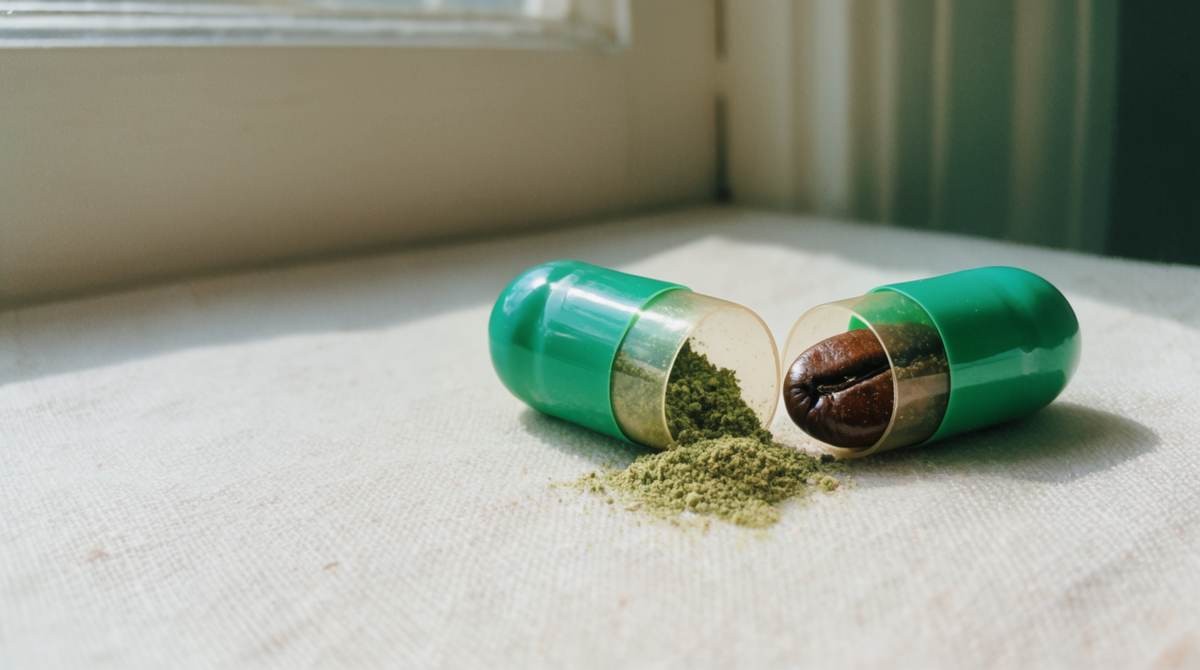 What’s really in this capsule?Which one is actually doing the workWatch the video walk through every entry on the back of a focus bottle
You are standing in the supplement aisle, holding a bottle that promises sharper focus, and the back label lists six ingredients you half-recognize from a podcast. The tension is familiar: you want the clarity the bottle implies, but you are not sure whether you are buying a studied effect or a story. The useful answer is that the clearest short-term focus effect in the research comes from caffeine, sometimes paired with L-theanine, and most focus blends lean on that caffeine rather than on the other herbs in the capsule. A jolt of alertness is not the same as better memory, and the two are often sold as if they were one thing.
The ingredient that does most of the work
When a focus supplement produces a noticeable lift within an hour, the likely cause is caffeine. Caffeine is a stimulant that blocks adenosine receptors, which reduces the feeling of tiredness and can sharpen attention for a few hours. Many blends add caffeine in forms that are easy to miss on a label, such as green tea extract, guarana, yerba mate, or kola nut.
The acute effect of caffeine on attention is well documented, but it is a borrowed alertness. It does not build memory or repair attention over time.
L-theanine changes the texture of caffeine
L-theanine is an amino acid found in tea leaves, and it is often paired with caffeine in focus products. The combination is studied for its effect on attention and calmness. The idea is that L-theanine softens the jittery edge of caffeine while preserving the alertness, producing a smoother kind of concentration.
The evidence for this pairing is modest. Some small trials have measured improvements in attention and reaction time when caffeine and L-theanine are taken together, but the effect sizes are not dramatic, and many studies use doses that differ from what appears in commercial blends. The pairing is reasonable, but it is still a short-term effect, not a training effect.
Ginkgo: a long history, a thin evidence base
Ginkgo biloba is one of the most familiar herbs in the memory aisle. It has been studied extensively, and the results are consistent in one way: there is no conclusive evidence that ginkgo is helpful for any health condition. In three large studies of older adults with normal cognition or mild cognitive impairment, ginkgo extract did not reduce the risk of dementia. One of these, the Ginkgo Evaluation of Memory study, followed more than 3,000 people aged 75 or older for a median of six years and found no difference in dementia rates between the ginkgo and placebo groups.
For healthy people hoping to sharpen focus, the evidence is even weaker. Much of the research on ginkgo for cognitive performance in healthy adults is of low quality, and it is uncertain whether it influences attention or memory at all. Ginkgo may increase bleeding risk in people taking anticoagulant drugs, so it is not a harmless addition to a stack.
Omega-3s are a different category
Omega-3 fatty acids, particularly EPA and DHA from fish oil, are sometimes included in focus supplements, but they do not act like caffeine. They are not acute stimulants. The research on omega-3s for attention and cognition is mixed, and the effects, if any, are likely to be long-term and population-level rather than a same-day boost.
A 2022 review of 33 studies suggested that dietary and supplemental omega-3s may have a protective effect against cognitive decline in healthy people without pre-existing dementia, but there was no effect on cognition for people already diagnosed with Alzheimer’s disease. For ADHD, a 2023 review of 36 studies did not find evidence that omega-3 supplements are likely to improve symptoms in children or adolescents. Omega-3s may matter for overall health, but they are not a focus pill.
The table your label will not show you
Here is the comparison that matters when you are reading a focus supplement label.
Where a focus label misleads
- Myth: feeling sharp means you are learning better. Fact: alertness and memory are different systems.
- Myth: a focus blend doubles as a memory supplement. Fact: caffeine does not help you encode information durably.
- Myth: a proprietary blend is harmless. Fact: stacked extracts can deliver more caffeine than a cup of coffee.
Caffeine: acute effect; clear short-term improvement in alertness and attention; often hidden in green tea extract, guarana, or yerba mate; careful if you have heart rhythm problems, high blood pressure, anxiety, or poor sleep.
L-theanine: acute effect when paired with caffeine; modest improvement in attention and calmness in small trials; rarely hidden, usually listed; generally well tolerated.
Ginkgo biloba: long-term use studied; no conclusive benefit for focus or dementia prevention; no hidden caffeine; careful if you take blood thinners.
Omega-3s: long-term use studied; no acute focus effect; mixed evidence for cognitive protection; no hidden caffeine; generally safe but may cause mild gastrointestinal symptoms.
The mistake people make with focus supplements
The most common mistake is treating a focus supplement as a memory supplement. Alertness and memory are different systems. Caffeine can make you feel more present, but it does not help you encode information more durably. A student who takes a focus blend before studying may feel productive, but the feeling of productivity is not the same as retention.
The second mistake is stacking stimulants without checking the total caffeine load. A capsule that contains green tea extract, guarana, and a proprietary blend may deliver more caffeine than a cup of coffee, and the label may not make that obvious. If you have a heart rhythm condition, high blood pressure, anxiety, or insomnia, the stimulant load is the first thing to check.
No focus supplement is a treatment for ADHD. If attention problems are persistent and interfere with daily life, the appropriate step is a conversation with a doctor, not a stronger blend.
If you recognize yourself here, watch the full video about the wider pattern these moments belong to.
You can treat tonight as a one-off, or you can watch the full video and look at the shape these moments make together.
Everything on Supplements & food →
▶ Watch the memory video