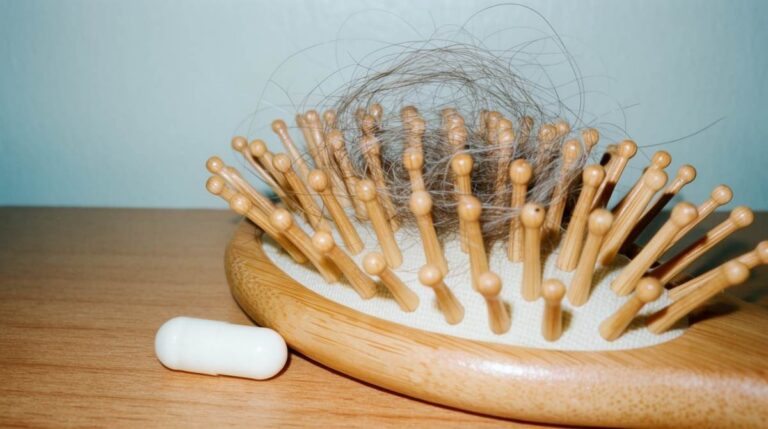
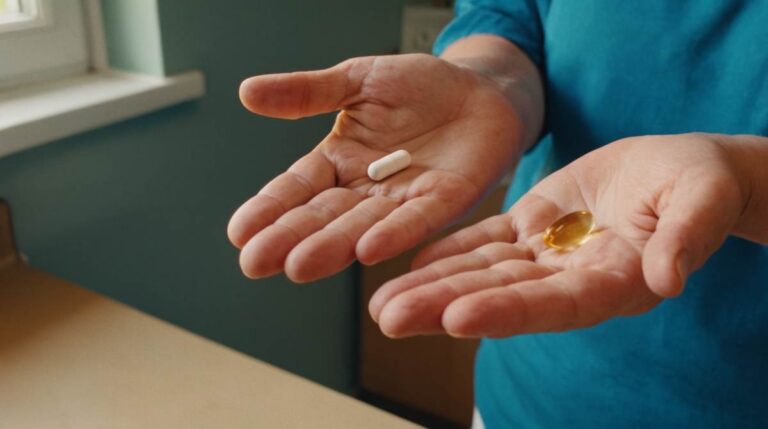
You are about to type a reply on the thread saying it is working, and you stop, because you would word it differently if you had stopped last month instead. Four jars in, the capsule has a fixed place in the morning, and the one measurement still available to you, a clear stretch with nothing added, keeps moving to a later month. Which of the three explanations for that curve would be yours?
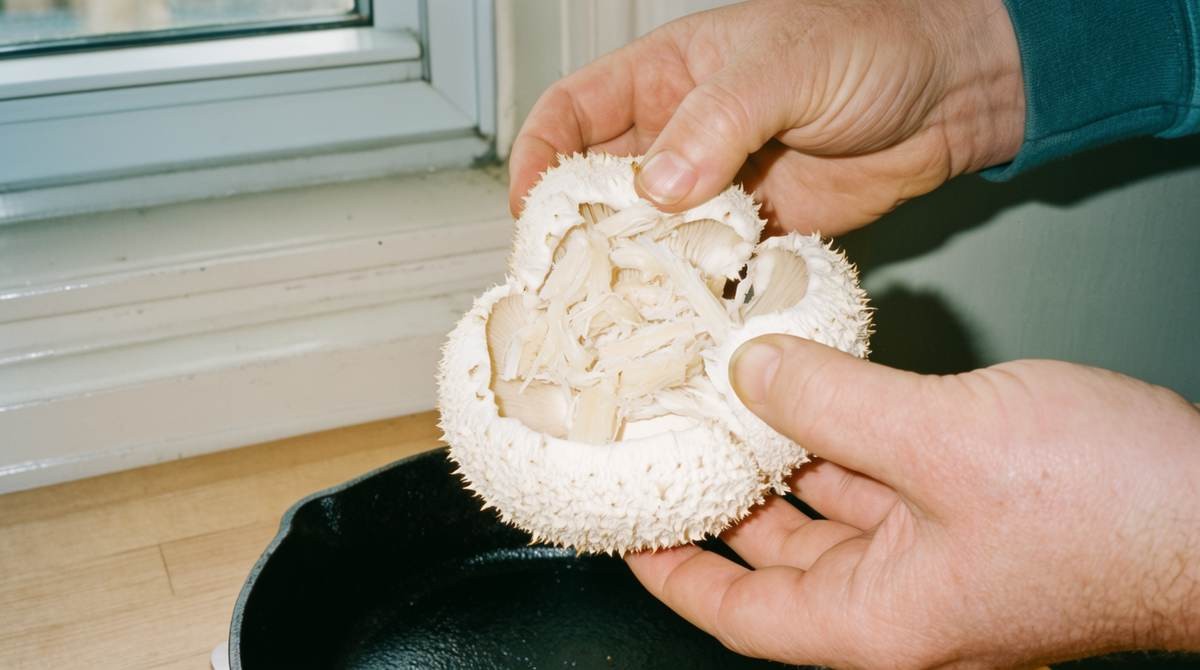 Does this mushroom help memory?Which explanation fits your curve?Watch the video that walks through the three readings behind one falling curve
The bottle is in your hand before the coffee has finished dripping, and the label has been read so often the print has gone soft along the fold. You started this because a forum thread was titled with more confidence than the research behind it, and the replies were full of strangers describing the same small win: names arriving faster, the tip of the tongue giving up sooner. Twelve weeks in, you are standing at the same counter trying to decide whether this morning feels different from last Tuesday, and you have no way to tell. Nothing on the bottle says what would count as working. It lists what is inside and stays silent on what to expect or when, and memory is not the sort of thing that reports itself. You notice a bad week and forget a good one, and the capsule sits in the middle of both. The research on lion’s mane is thin. Good human trials of it are scarce, the work that exists is small and short, and no published guidance gives a dose, so any amount printed on a bottle came from the maker rather than from a body of evidence.
Where the evidence stands
Most of what circulates about lion’s mane is a tall stack of claims resting on a narrow base. The human work that exists was done in small groups over short periods, with tests chosen by the investigators and participants who knew they were taking something. That design can produce a signal. It cannot tell you whether the signal would survive a larger sample, a longer run, or a group that had no idea what was in the capsule. Nobody has published the study that would settle it, and until they do, the honest-sounding summaries online are describing a hope as much as a result.
What a trial would need to settle it
- Adults with a defined memory complaint
- A placebo group and tests repeated the same way
- Follow-up that continues after people stop taking it
- Enough participants and months that drift cannot pass for effect
- A record of stomach aches, rashes, and the people who quit
A study worth believing would need adults with a defined memory complaint, a placebo group, tests given before anyone starts and repeated the same way throughout, follow-up that continues after people stop taking it, and enough participants and months that ordinary drift cannot be mistaken for an effect. It would also record what went wrong: the stomach aches, the rashes, the people who quit. None of that exists here in the quantity the questions deserve.
Ginkgo shows the size of the gap. Federal reviewers report that it has not been shown to be effective for any condition it has been studied for, and in a trial of more than 3,000 adults age 75 or older followed for a median of 6 years, it did not change how many people developed dementia. That is what a large, long, unglamorous trial looks like when the answer comes back flat. Lion’s mane has never been put through anything of that scale.
By the fourth jar the capsule has a fixed place in the morning, and you have stopped asking whether it earns that place. You move the appointment you made for spring. You stop writing down the names you used to write down, because writing them down felt like confirming something. The thread you read in January stays open in a tab you no longer look at. What you are protecting now is the routine rather than the memory, and the one measurement still available to you, a clear stretch with nothing added, gets pushed to a month that keeps moving.
The finding everyone repeats
The sentence that travels furthest is a shape rather than a number: scores went up during the weeks of use, and after people stopped, they went back down. It gets quoted as if the second half were proof of the first. It is not. Returning to baseline is what happens when a real temporary effect wears off, and it is also what happens when a group has simply gotten better at a test they only sat twice.
Small studies are porous. A handful of participants who sleep better in the spring will move a mean. People who believe they are being helped report more good days. Raters who know which capsule is which grade accordingly. When a study ends and the scores slide, you are left holding three explanations that fit the same curve, and the work available cannot rank them.
One pattern, two readings, and nothing in the published record that chooses between them. This is where most of the argument online actually lives, in the gap between what a result could mean and what it is being used to mean.
Why a memory score is a strange thing to improve
Memory tests are learned. Sit for one and then sit again, and the second sitting tends to run smoother whether or not you have changed anything about your brain, because you now know the format, the pacing, the shape of the questions. A study that does not control for that is measuring practice as much as it is measuring memory.
Daily life is noisier still. Sleep, stress, a cold, a week of bad news, whether you ate breakfast: all of them move a self-rating of sharpness, and people doing the rating are not keeping a controlled log. The forum version of this story is one person who began something in winter and felt sharper by spring, and a reply from someone who felt nothing at all, and neither can separate the capsule from the season.
The claims that spread fastest are the ones least equipped to be checked, which is why the same three stories cycle through comment sections for years without accumulating into anything. If you would rather see the whole timeline laid out while this page stays open, watch the full video and come back to the rows below.
Some readers at this point will watch the full video and then come back to the claim rows.
Does it do different work in men and women?
No human research separates the two. There is no trial that enrolled one group and compared results against the other, and no measurement showing a different effect by sex. The pages that market lion’s mane benefits for men and lion’s mane benefits for female readers are splitting a single, undivided evidence base into two products, and the split is doing the work that data would normally do.
Whatever is known applies to adults in general, and so do the cautions. A supplement that has barely been studied in men has barely been studied in women either, and pregnancy and breastfeeding are the least documented situations of all. The absence of a difference is not a finding of equality. It is an absence of study.
What has been tested in humans
Sharper recall in older adults with mild complaints: tested in small, short trials, results inconsistent, any gain not sustained after stopping. Better focus or mental clarity in healthy adults: measured with questionnaires more often than with tests, quality low. Mood and sleep: touched by a few studies, not the point of any of them. Relief for people already diagnosed with dementia: not established, and no supplement treats dementia. Long-term protection against age-related decline: never measured over a period long enough to answer it. Benefits for men as a category: not tested. Benefits for women as a category: not tested.
For scale, omega-3s have been reviewed across 33 studies and still only suggest a possible effect on cognition for healthy people before any diagnosis, with no effect for people already diagnosed. That is the level of scrutiny a cognitive claim has to survive, and lion’s mane has not been put near it. Dietary supplements are also sold without premarket approval from the FDA, so the manufacturer is responsible for what the bottle says.
The claims that get repeated most on forums, sharper word retrieval, quicker thinking under pressure, are the ones with the least human measurement behind them, which is exactly the pattern you would expect if the reports were describing relief rather than a change in ability.
If an effect vanishes the moment you stop taking the thing, what was it doing while you took it: changing memory, changing the score, or changing how a quiet morning feels? And if no one has run the trial that separates those three, how would you know which one you ended up with?
When it is not a good idea
A mushroom allergy rules it out on the spot. If you are pregnant or breastfeeding, if you take medication for diabetes, or if you use a blood thinner, the data are limited enough that a doctor should be part of the decision rather than an afterthought. The same applies before surgery and alongside any other supplement or prescription, because herbal products interact with medicines and the label will not warn you.
If the scores slide, three readings
- If the effect was real and temporary, the slide is it wearing off
- If participants simply learned the test, the slide happens anyway
- If sleep, season, or belief moved the rating, the curve fits all three
- If nothing ranks them, the published record cannot choose
Memory that is persisting or getting worse deserves an appointment, and the causes of memory trouble are several, never one: sleep, depression, medication effects, thyroid trouble, alcohol, hearing loss, and ordinary aging all sit on the list, and a capsule does not sort them. Sudden confusion, weakness, trouble speaking, or a severe headache means call 911 or go to the emergency room now. Do not wait to see whether the supplement handles it.
We would rather you finish this with the question still open, so set the bottle on the counter and watch the full video before you decide anything.
In this section
Everything on Supplements & food →
▶ Watch the memory video