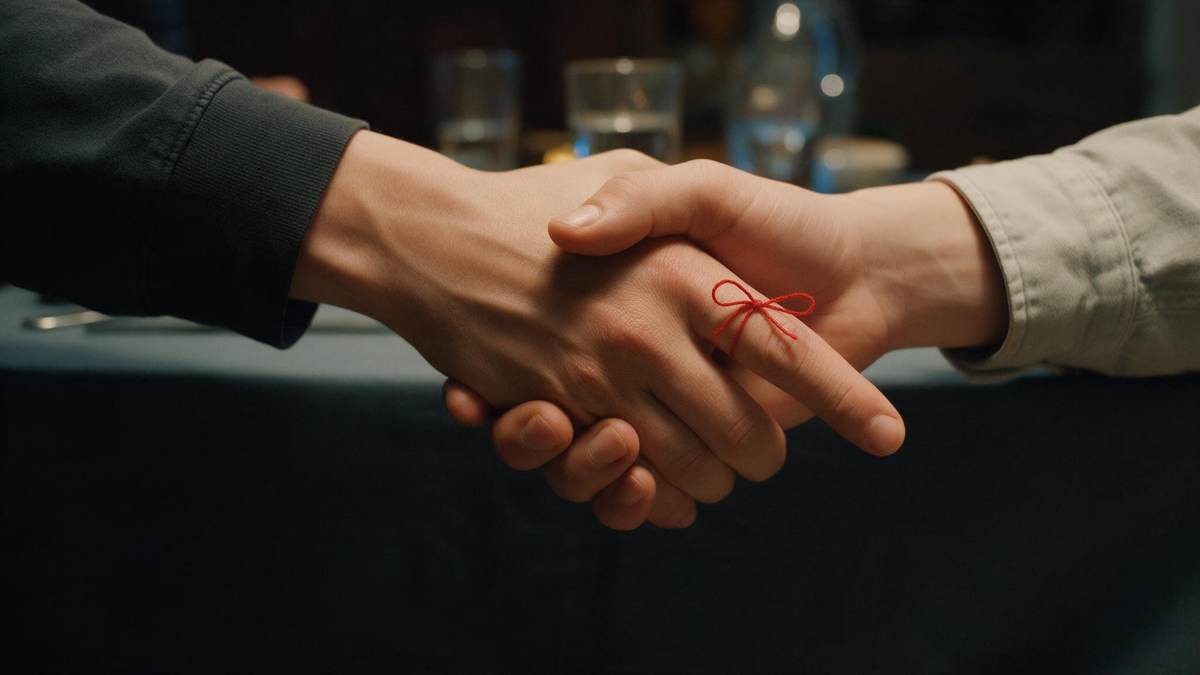
Someone across the table says their name, you repeat it out loud, and by the time you sit down it is gone. The handshake was warm, the coffee cup is in your other hand, and what you keep is only the sense that the person seemed friendly. Your hearing was fine. The name was never given anywhere to land, and names are the hardest case there is: a short, arbitrary string with nothing in it to hold on to. Memory techniques work by supplying the hook that the material did not come with. A name gets tied to one feature of a face and said again before the meeting ends. A list gets a route through your own home. A number gets broken into groups. A speech gets stops you already know. Which one you reach for depends on what you are holding and how long you need it, and the setup cost varies as widely as the techniques do. Pick by the job, not by the reputation. A palace is a poor tool for a four-item errand and a fine one for a route you will walk in your head, and a story is quick and vivid until the order changes. Each section below gives you the two-minute version, tried on something you actually have to learn.
How thin is the evidence, really?
Start with the state of the evidence, because it is thinner than the shelf of books suggests. Good human trials of memory techniques are scarce, and published guidance gives no dose, no fixed schedule, and no improvement figure to plan around. The consistent finding is narrower than the claim usually made for it: a technique applied to material you chose to learn tends to help you recall that material, in the conditions where you practiced it.
A useful study would have to compare the same people recalling the same material with and without the technique, at a delay long enough that the images have faded, and it would have to keep measuring after the training week ended. Much of what circulates instead stops at immediate recall of a short list, or asks whether people enjoyed the session. That is a real result. It is not the result being claimed.
Every time this happens inside the material you are learning, it changes what you do next. The practice test comes back with gaps, and instead of closing them you return to the page, because rereading never makes you feel the gap. Within a few sessions you start avoiding recall altogether: the flashcards sit unopened, the outline gets rewritten instead of recited, and the talk is rehearsed by reading it aloud rather than by standing there to see what comes. The material feels familiar right up until the moment you need it without the page in front of you.
Which technique for which job
A name: the name routine, a few seconds of setup, evidence strongest on the same day. A list: an acronym or an acrostic, almost no setup, and a pattern that weakens once the list grows past a handful. A number: chunking, trivial to set up, as durable as the groups are meaningful rather than arbitrary.
Which technique fits which job
| The job | The technique | Setup cost |
|---|---|---|
| A name at a meeting | The name routine | A few seconds |
| A short list in order | An acronym or an acrostic | Almost none |
| A number string | Chunking | Trivial |
| Facts held in order | Story linking | Low |
| A speech across days | The memory palace | The highest here |
| Where you put something | A fixed place and a habit | Not a mnemonic at all |
Facts: story linking, low setup, easy to recall in the order you built and shaky out of order. A speech: the memory palace, the highest setup cost here and the one that repays rehearsal across days. Where you put something: a fixed place and a habit at the moment of setting it down, which is not a mnemonic at all and answers the problem directly.
The name, the list, the number
The name routine, done slowly. Hear the name and say it back, then use it once inside the next sentence. Find one feature of the face that is already unusual, the eyebrows, the gap in the teeth, the shape of the glasses, and attach the name to that feature alone rather than to the whole person. Use the name once more before you leave. Try it on the next introduction: one feature, one repeated name, nothing else.
Chunking for numbers is simpler still. Break the string at seams that mean something, the way you would read it aloud to someone writing it down. Arbitrary groups feel shorter for a minute and are gone by the desk; groups with a shape you recognize survive the walk.
Acronyms and acrostics handle lists. An acronym compresses the first letters into a word you can hold; an acrostic keeps the order and builds a sentence out of the first letter of each item. Both fail the same way. Once the list grows, or you need one item on its own, the word you invented stops pointing at anything. Keep them for short, fixed sequences where the order matters and nothing is ever added.
We build a peg list on paper first, and you can do the same before you rely on it: watch the full video while the shapes are still fresh.
A palace is too much for a grocery list
The memory palace is a route you already know, your apartment, the walk from the car to the door, with a fixed order of stops. Place one item at each stop and walk the route to retrieve them. The setup is real: choose the route, fix the order, place the items, before any of it means anything. For three errands that is overhead you do not need. For a speech, where the order must hold under pressure, the overhead is paid once and spent for days. Try it on your own hallway now.
The name routine, done slowly
- Hear the name and say it back
- Use it once inside the next sentence
- Find one feature of the face that is unusual
- Attach the name to that feature alone
- Use the name once more before you leave
The peg system trades setup for speed. You learn one fixed set of pegs a single time, then hang each new item on its number, a bun for one, a shoe for two. Two minutes of setup buys a reusable rack. The cost sits in retrieval: it runs entirely through the peg, so a garbled number takes the item down with it.
Story linking is the cheapest of the group: one ridiculous narrative, each item acting on the next. It is fast, it holds order tightly, and it falls apart the moment someone asks for item four on its own.
Why re-reading feels like progress
Retrieval practice is the technique that survives an honest test. Instead of reading the page again, close it and write what you can remember, then check what you missed. The discomfort is the point: effortful recall is where the learning happens, and what you can produce without looking is what you actually have. Try it on this page later: name three techniques and the job each one is for, from memory.
Spacing does the same work across days. One long session feels solid because it is recent, while the same total time split into separate sessions, each opening with recall, holds better once the week has passed. The fuller comparison of study strategies lives in our guide to studying effectively; here it is enough to know that testing beats reviewing.
The larger question behind a slip that keeps returning is why some material stays without effort while other parts slide no matter how you handle them. Is a forgotten name and a forgotten formula the same machinery failing in different places, or two unrelated problems sharing one word? This page does not settle it.
What a mnemonic cannot do for your keys
Here is the honest limit, and it is why this page ends. Every technique above helps with material you decided to learn: a name at a meeting, a list for an exam, a talk on Thursday. None of them does much for the everyday slips that worry people most, the keys set down without a trace, the reason you walked into a room, the word sitting just out of reach. You cannot mnemonic your way out of a distraction you never noticed.
What the gap makes you do next
- If the practice test comes back with gaps, return to recall instead of the page
- If the flashcards sit unopened, the outline gets rewritten instead of recited
- If the talk is rehearsed by reading aloud, stand there and see what comes
- If recall feels uncomfortable, that effort is where the learning happens
Everyday forgetting also has several causes, and they are not one thing. Sleep, medicines, depression, hearing or vision loss, alcohol and untreated health problems can each show up as a worse memory, and the NIH National Institute on Aging lists them alongside normal aging, which slows recall a little for everyone. Persistent or worsening change that affects daily life belongs in a conversation with your doctor, described in terms of what has changed. Sudden confusion, weakness or trouble speaking needs emergency care: call 911 or go to the emergency room.
 Names slip mid-handshake. There is a patternWhich one fits your caseWatch the video to match the technique to whatever you have to learn next
That leaves the part most readers arrive with, the keys, the room, the sentence that dissolves as it forms. It is a different question from mnemonics, and it deserves its own closer look: watch the full video when you want to stay with it.
In this section
- The memory palace (method of loci): build your first one tonight in a home you know
- Mnemonic devices: 9 types, with examples you probably learned in school
- Is photographic memory real? What researchers found when they tested eidetic memory
- Photographic memory test: how much detail can you keep from one picture?
- Can you develop a photographic memory? What memory athletes do instead
- How to memorize a speech fast without sounding like you’re reciting it
Everything on Memory training →
▶ Watch the memory video