You are standing at the kitchen counter with a cold cup of coffee, mid-sentence, and the word you want is spatula. What comes out is spoon. You keep going. Nothing about the wrong word felt delayed or effortful; it arrived with the same weight the right one would have, and the sentence carried on as if nothing had been lost. That is what most of these slips feel like from the inside. Most wrong-word slips are ordinary retrieval misfires: the word you wanted is present, and a neighbor takes its place, which is why the substitution lands as smoothly as the correct word would have. They get more frequent with fatigue, stress and divided attention, and they are more likely when you speak fast while doing something else. One case sits in front of everything else on this page: sudden trouble speaking or finding words, especially with a drooping face or a weak arm, means call 911 now (F.A.S.T.), without waiting to see if it passes. The research on everyday wrong-word slips is thin, and we would rather say that plainly now than dress up a guess. What follows is the shape these slips take, written so you can sort your own by their pattern.
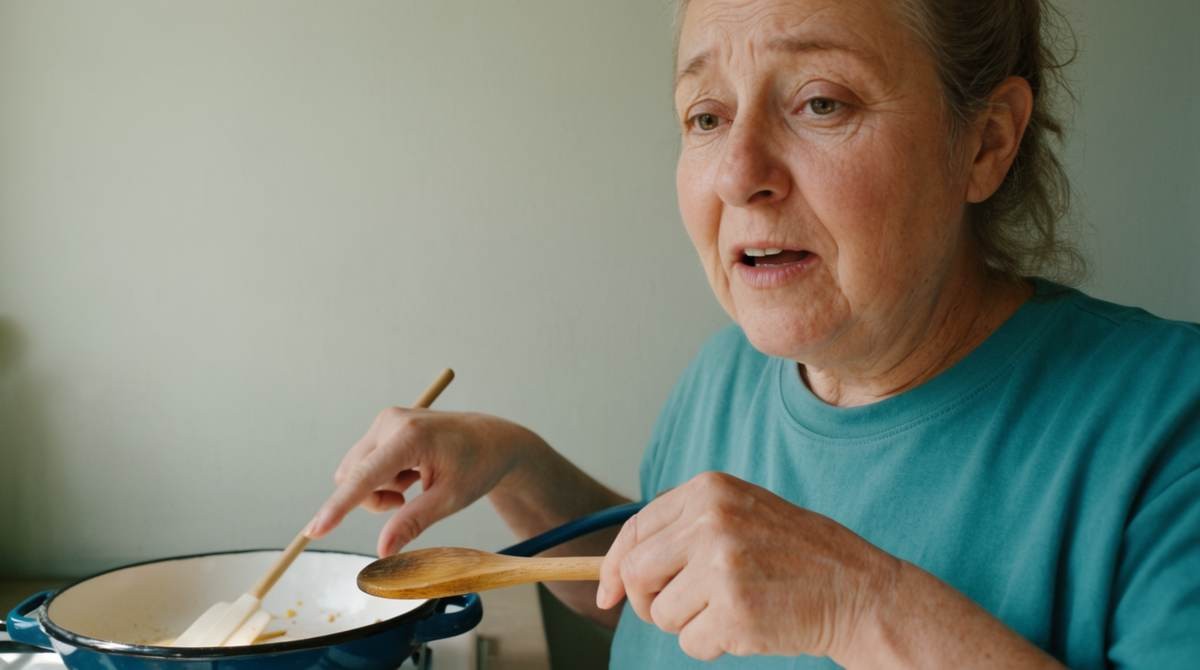 Why the wrong word slipped out?When does a swap stop being a slip?Watch the video on the swap that arrives without a pause
Three kinds of slip
Three shapes come up over and over, and telling them apart is more useful than counting them. Word substitution: the wrong neighbor takes the slot, you want spatula and say spoon. Blends: two words fuse into a plausible one, the way breakfast and lunch might meet in the middle of a rushed order. Swapped sounds: the words themselves are right, but their sounds trade places, so a familiar phrase comes out rearranged. All three are retrieval, not comprehension. You knew what you meant.
What they share is the timing. The wrong word arrives on schedule rather than after a pause, which is why it fools you into thinking you said what you meant. A genuine tip-of-the-tongue moment feels different: the word is held up, you can often give its first sound, and it resolves within seconds. Both are ordinary. The distinction matters only because the swap goes unnoticed and the pause does not.
The cost shows up the next time you have to speak without notes. A substitution lands in front of four people, you correct it out loud, and afterwards you start drafting the sentence before you say it. Calls get postponed to email. Questions get answered in fewer words. In a conversation you care about, you listen for your own gaps instead of the other person, and by the end of it you have said less than you meant to. The slip was small. The editing around it is not.
Why am I suddenly mixing up my words?
Sudden is doing the work in that question. A day of divided attention will produce more swaps than a quiet week: you are holding the sentence, the list in your pocket and the email you have not sent, and retrieval loses. Sleep problems, low mood, anxiety, alcohol, and medicines that affect the brain all sit in this column. The National Institute on Aging lists medication side effects and mental health conditions among the causes of memory problems that have nothing to do with aging.
Frequency alone settles less than you would hope. That same source puts sometimes forgetting which word to use on the side of normal aging, and trouble having a conversation on the side of dementia. The line is not the slip. It is whether the slip stays a slip or starts interfering with the conversation itself.
This is the kind of thing better argued at length, so part of the desk will watch the full video over breakfast.
What decides it: the pattern over time
Here is the fork. Occasional swaps when you are tired, rushed or split between tasks are everyday, and they track the conditions rather than the calendar. A new pattern that builds over weeks or months, especially one that persists when you are rested, is a different conversation: write down what you have noticed and take it to your doctor, who can run tests and assessments to find the source. Gradual, persistent change belongs in primary care, not in a search result. The desk keeps a longer note on it, and some readers will watch the full video over breakfast.
Everyday swap or a pattern to check
| Everyday | Worth taking to your doctor |
|---|---|
| Arrives on schedule, no pause | Persists when you are rested |
| Tracks fatigue, stress and divided attention | Builds over weeks or months |
| You knew what you meant | Starts interfering with the conversation itself |
| Sorted by pattern, not by counting | Written down and brought to your doctor |
Tracking is simple: note the day, what you were doing, whether you were tired, and whether you caught the swap yourself. Two or three dated entries are more useful than your memory of the worst one, and they give a doctor something concrete to work from instead of a general impression that speaking has gotten harder.
What a good study would have to measure
Good human trials on this are scarce, and published guidance gives no dose for anything specific to word retrieval. A useful study would have to count substitutions, blends and transpositions in ordinary speech, then repeat the count under fatigue, stress and divided attention to separate the slip from the condition around it. It would have to tell a change in retrieval speed apart from a change in the conversation itself, and follow people long enough to see whether a new pattern holds. That is a lot of measurement, and much of it has not been done.
Which leaves the question this page deliberately does not open: why does word retrieval slow under fatigue, stress and divided attention, and what actually keeps it quick and accurate? We keep coming back to it. The honest reply is that good human trials on everyday slips are scarce, so anyone offering a single fix is working ahead of the evidence.
The cause is rarely one thing
Memory problems have several causes, not one, and word retrieval is no different. Sleep problems, head injury, blood clots, tumors or infections in the brain, thyroid, kidney or liver problems, low vitamin B12, medicines, depression and anxiety, alcohol or drug misuse, and stressful life events are all listed as possible sources, and some of them resolve once the condition is treated. Bring the list to your doctor rather than picking the row that frightens you, and do not stop a prescribed medicine on your own.
Two related pages on this desk go deeper on the everyday side: forgetting common words while speaking, and stress and word finding. Both stay in the column where these slips usually live, around load, mood and attention rather than a single explanation.
When you are ready for the longer conversation, watch the full video before you settle on what your own slips mean.
Everything on Everyday slips →
▶ Watch the memory video