The bin lorry has just rumbled past, and the street settles back into quiet. You are at the front door, one hand on the handle, trying to remember whether the recycling actually went out last night. The doubt is small but it will follow you all day. What makes a weekly task slip so cleanly between doing and remembering?
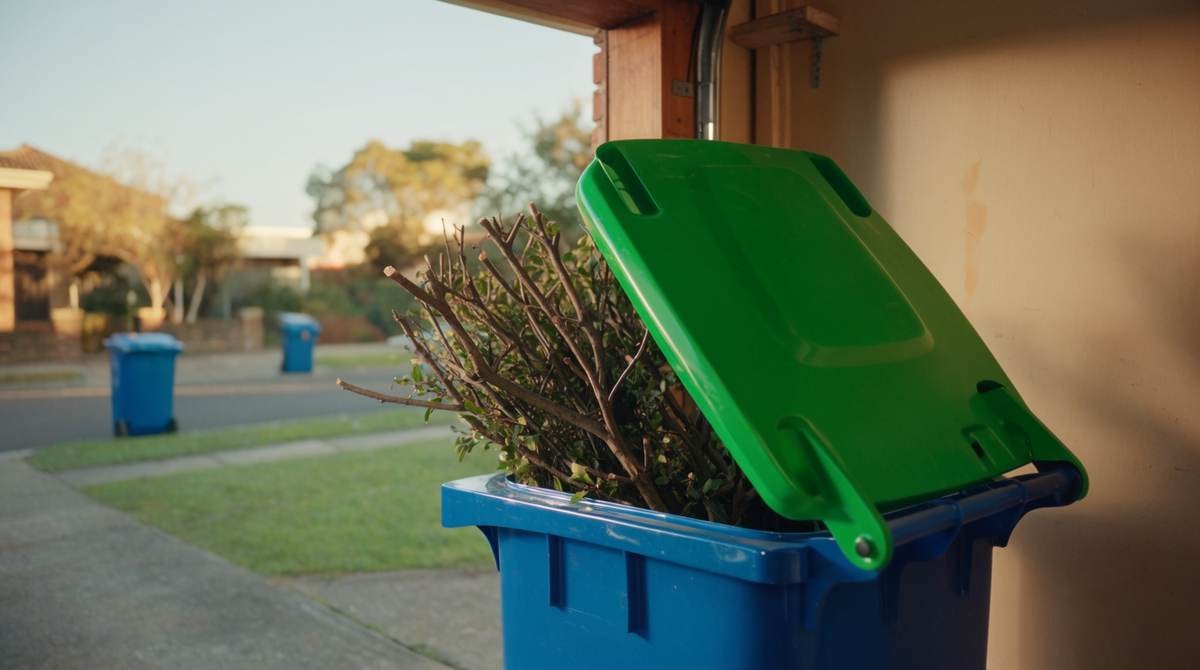 Did this bin miss the pickup again?The moment a weekly task goes missingWatch the video to see one approach to holding onto a recurring task when the day is fixed but the memory is not.
Pick one fixed event that already happens every week, and hang the task on it. Then, the moment the task is finished, mark it done somewhere you will actually look. Those two moves, a stable trigger and a completion record, resolve most of the uncertainty around a weekly household chore. You stop relying on a feeling that you probably did it and start working from something you can check.
The reason this works is that a weekly task fails in one of two places. Either the trigger never fires, so the day comes and goes unnoticed, or the task gets done but nobody records it, so two days later you cannot tell whether the dishwasher was emptied this morning or last Tuesday. A floating reminder on a phone does not fix either problem if it fires at the wrong moment or if dismissing it feels identical to completing it.
What follows is a practical way to choose the anchor, a record of completion that survives busy weeks, and the adjustments worth making when the routine is disrupted or when someone else in the house sometimes does the task for you.
Why a repeating task slips
A weekly task is different from a one-time appointment because there is no single date to remember. It is a future intention that has to come back at the right moment, in the middle of a life already full of other claims. That is the kind of remembering researchers call prospective memory: forming the intention, holding it across a delay, and retrieving it when the moment arrives. Studies of reminders and implementation intentions show this is a recognized weak point, not a character flaw.
The failure mode here is rarely dramatic. It is the vague sense on Wednesday evening that the bins may or may not have gone out, or the washing machine may or may not still hold yesterday’s load. The intention was real. What went missing was either the trigger, the record of completion, or both. The fix that follows addresses both halves, because a reminder without a completion note still leaves you guessing whether you acted on it.
This sits inside the broader work of making everyday reminders work, but a weekly chore has its own specific shape. Unlike an ordinary appointment with a fixed slot and an end point, a recurring task loops forever and offers no natural moment of closure. You have to build the closure in yourself. The sections below walk through how to choose the anchor, how to record done, and how to handle the weeks that do not go to plan.
Match the fix to your situation
Routine week: pick a concrete event you already do and attach the task to it. The strongest anchor is not a day name floating in your head but something that actually happens, like after Sunday lunch, when the recycling lorry passes, or when you start the weekend wash. Research on implementation intentions suggests that linking an action to a specific cue performs better than a bare resolve to remember. Write the pair down once: when X happens, I do Y. Keep the cue stable for at least a few weeks before judging it.
Mark done only after acting
- Tick the wall calendar by the fridge.
- Flip the magnet on the washing machine.
- Turn the card over on the plant pot.
- Check the shared mark before doing the task.
Schedule disrupted: when travel, illness, or a shift change breaks the anchor, reset it within a day rather than waiting for the next cycle. A disrupted week is where the completion record earns its place, because you can see whether the task was done early, late, or not at all. If the usual cue vanished, choose a temporary one tied to whatever routine remains, such as the first morning back home, and note the change so the record still makes sense when you look at it later.
Another household member completes the task: agree on one shared place to mark done, and check that place before acting. The classic shared-home failure is doing the task twice or, worse, each person assuming the other did it. A single mark in a predictable spot solves both. It does not need to be elaborate. It needs to be the one place everyone has agreed to look, close enough to the task that checking it takes seconds rather than a house-wide search for evidence.
That kind of recurring weekly uncertainty usually stops being a single forgotten chore and starts feeling like the same intention slipping at the moment it was supposed to return. When the day is fixed and you still cannot tell whether the task was started, finished, or silently done by someone else, watch the full memory video presenting one approach to improving memory.
Choosing an anchor that actually fires
A day name alone is a weak trigger because nothing about Tuesday afternoon forces the thought to surface. An event is stronger. The NHS patient guidance on managing memory problems makes a related point about structure: having routine in our lives reduces the number of things we need to hold in mind deliberately. A weekly chore benefits from the same logic, so it is worth anchoring it to something that already happens without any effort from you.
Choose an event that is frequent enough, visible, and hard to sleepwalk past. The arrival of the bin lorry, the start of a regular phone call, the moment you put the kettle on after a particular program: these all work because they happen to you rather than requiring you to remember them. This is the same principle behind setting a reminder when you can actually act. A cue that fires when your hands are already busy just teaches you to dismiss it.
The research literature on prospective memory adds a useful caution here. Laboratory work with reminders shows that people who are overconfident in their unaided memory often fail to set any external prompt at all, and then have nothing to fall back on when the intention fades. The lesson for a weekly task is not that your memory is broken. It is that relying on recall alone, with no external anchor, is the version of the plan most likely to leave you guessing on Thursday.
Recording done, not just planned
Remembering to do the task is only half the problem. The other half is knowing, later, whether you did it. Without a record, every week generates the same low-grade doubt: did I water the plants yesterday, or am I remembering last week? The completion record closes that loop. It converts a fuzzy sense of probably into a checkable fact, and it does so at the exact moment doubt tends to arrive, which is usually hours after the window for action.
Keep the record physical, visible, and as close to the task as the task allows. A tick on a wall calendar by the fridge, a magnet flipped on the washing machine, a card turned over on the plant pot. The CUH patient booklet recommends a related technique for remembering completed actions: pay deliberate attention at the moment of doing, saying to yourself that you are now doing it. Recording completion immediately after the action pairs naturally with that. The mark is made while the doing is still fresh, not reconstructed later from wishful memory.
One boundary matters. The record is only trustworthy if the mark is made after the action, never before. Ticking the box when you set the intention, rather than when you finish, recreates the original uncertainty in a new format. It is the same discipline as using a calendar and a task list for different jobs: the calendar holds when, the record holds whether. Mixing them produces a note that looks reassuring and tells you nothing.
Keeping the system alive
Even a good anchor and a clean record will collide with real life. The disrupted week deserves its own rule: when the routine breaks, decide the replacement cue immediately and write it where you will see it. Do not let the task drift into whenever I get round to it, because that phrase is where weekly chores go to be forgotten. A named temporary cue, however imperfect, keeps the intention attached to something real until the normal rhythm resumes.
Weekly task memory
- Myth: A day name alone is a strong trigger.
- Fact: An event that happens to you is stronger.
- Myth: Dismissing a reminder means the task is done.
- Fact: A completion record is what closes the loop.
It also helps to keep the system small. One weekly task with one anchor and one completion mark is manageable. Five tasks with five different reminder apps is not, and the research on reminder checking suggests that an unused prompt is worse than none because it breeds false confidence. If your reminders have multiplied to the point where you skim past them, that is a signal to simplify a crowded reminder list rather than add another layer.
Finally, a quiet word about when this is and is not the right tool. An occasional missed bin day is ordinary forgetfulness, the kind NHS sources describe as a nuisance rather than a warning sign. The picture changes if memory problems are affecting your day-to-day life more broadly, in which case the sensible step is to see a doctor, since many causes are treatable and earlier assessment tends to help. For the single recurring chore, though, the decision in front of you is simpler: pick the event that will trigger it this week, and decide now where the mark will go the moment you finish.
You can treat tonight as a one-off, or you can watch the full video and look at the shape these moments make together.
Everything on Everyday slips →
▶ Watch the memory video