You are standing at the kitchen counter with your phone in one hand, the grocery list open, and no idea why you walked in. You retrace your steps. The reason does not come. This is not a character flaw. Your brain cannot store every second of the day, so it has to decide what is worth keeping. The National Institute on Aging describes memory as the process of storing information and then remembering it, with short-term memory lasting seconds or minutes and long-term memory lasting longer. As you grow older, it may take longer to remember things.
If you came looking for brain parts and functions, here is the map in plain terms. The brain has three main parts: the cerebrum, the cerebellum, and the brainstem. It has four lobes: frontal, parietal, temporal, and occipital. Two deep structures matter for everyday remembering: the hippocampus and the amygdala. Memory is not one room. It is distributed across networks, which is why a missing name is usually a retrieval problem rather than a single broken drawer.
That map is enough to act on. When a word will not come, you are not proving that something is wrong. You are noticing that the system is slower, distracted, tired, or overloaded. The useful question is not which part failed. It is what pattern you are seeing, and whether it is changing.
The three main parts, and why the list is shorter than you expect
Start with the three main parts. The cerebrum is the largest and handles thinking, learning, remembering, voluntary movement, and the senses. The cerebellum sits underneath at the back and helps with coordination, balance, and smooth movement. The brainstem connects the brain to the spinal cord and manages automatic jobs such as breathing, heart rate, and the sleep-wake cycle.
For memory, the cerebrum carries most of the load. The cerebellum supports learned movement sequences, the kind your body remembers when you ride a bike or type without looking. The brainstem is not where a name is stored. It keeps you alive and awake so the rest can work.
A simple labeled diagram often shows these three parts first because they are the easiest to see. That does not make them the whole story. The four lobes sit inside the cerebrum, and the deep structures sit beneath the temporal lobe. The map is a way to organize the territory, not a set of separate boxes.
The weight of a recurring slip is not the slip itself. It is the pause before you answer a question you should know. It is the name that will not come in the meeting, the detail you apologize for later, the private count you keep of how often this happens. That count changes how you plan a day, what you avoid, who you ask to remind you. It can make you quieter in conversations you used to lead. If it keeps happening, the stakes are ordinary and real: trust, ease, and the worry you carry without saying it out loud.
The four lobes, mapped to what you actually notice
The four lobes are the frontal, parietal, temporal, and occipital. The frontal lobe handles planning, judgment, attention, and word retrieval. The parietal lobe handles touch, spatial awareness, and navigation. The temporal lobe handles hearing, language, and some memory processing. The occipital lobe handles vision.
Five questions on the map
- Can you name the three main parts without looking?
- Can you point to the four lobes on a blank outline?
- Which deep structure helps form new long-term memories?
- Which deep structure tags an event as emotional?
- Which lobe helps you plan and find words?
In memory terms, the frontal lobe helps you hold a fact in mind while you use it. The parietal lobe helps you remember where things are. The temporal lobe is where the hippocampus sits, and it is central to forming new long-term memories. The occipital lobe helps you recognize what you have seen.
When you cannot find your keys, several lobes are involved: you saw them somewhere, you planned where to put them, and you are now searching space. That is why a single slip rarely points to a single lobe.
If you want to test the diagram, ask yourself five questions. Can you name the three main parts without looking? Can you point to the four lobes on a blank outline? Which deep structure helps form new long-term memories? Which deep structure tags an event as emotional? Which lobe helps you plan and find words?
Where memory lives, and why that question has no single address
Memory is distributed. The National Institute on Aging does not describe one memory center. It describes a process of storing and remembering, with short-term memory for seconds or minutes and long-term memory for longer periods. Different kinds of memory use different networks.
The hippocampus is essential for forming new long-term memories, especially facts and events. It is not a filing cabinet where the memory sits forever. The amygdala attaches emotional weight to experiences, which is why a tense conversation can stay vivid while a routine Tuesday disappears. The frontal lobes help with working memory, the mental scratchpad you use to hold a phone number or follow a recipe.
When a name will not come, the memory may be stored but not reachable in that moment. That is a retrieval problem, not proof of loss. Stress, poor sleep, and distraction can all make retrieval harder. The National Institute on Aging notes that stress and negative emotions can leave people confused or forgetful, and those problems are usually temporary.
If you want to see how these regions are usually drawn, watch the full video when you reach the end of this section.
What the hippocampus does when a name will not come
The hippocampus is a deep structure in the temporal lobe. It helps turn a new experience into a lasting memory. If you meet someone at a party and remember their name the next day, the hippocampus did part of that work. If you forget the name before you finish the conversation, the encoding never had a chance to settle.
Age changes speed more than it erases the map. The National Institute on Aging says that as people grow older, they may not remember information as well as they once did and may not recall it as quickly. They may misplace things or forget a bill. These are usually signs of mild forgetfulness, not a serious memory problem.
The trade-off is attention. A name learned while you are scanning a room, planning dinner, and listening to music is a name learned poorly. The hippocampus can only encode what it is given. That is why the same slip returns in the same crowded moments.
What changes with age, and what does not
Forgetfulness can be a normal part of aging. Dementia is not a normal part of aging. The National Institute on Aging lists differences that matter. Normal aging includes making a bad decision once in a while, missing a monthly payment, forgetting which day it is and remembering it later, sometimes forgetting which word to use, and losing things from time to time. Dementia includes poor judgments and decisions a lot of the time, problems taking care of monthly bills, losing track of the date or time of year, trouble having a conversation, and misplacing things often and being unable to find them.
Mild cognitive impairment, or MCI, means more memory or thinking problems than other people your age. People with MCI can usually take care of themselves and carry out daily tasks. MCI may be an early sign of Alzheimer’s disease, but not everyone with MCI will develop Alzheimer’s.
If you are an older adult who forgets things more often than others your age, talk with your doctor. A doctor can perform tests and assessments to help determine the source. A follow-up appointment to check memory every six to 12 months may be recommended. If you have sudden confusion, weakness, trouble speaking, or other signs of a stroke, call 911 or go to the emergency room.
The larger question is not which part failed. It is why the same kind of slip returns in the same kind of moment, and whether that pattern is simply how your attention works or something worth checking. We do not settle that here. A single forgotten name tells you almost nothing. A pattern might tell you something. What that something is depends on sleep, stress, medication, health, and time, and no diagram can answer it for you.
What else can affect memory, and when to call a doctor
Memory problems can come from several directions, not one. The National Institute on Aging lists head injury, blood clots, tumors, or infections in the brain; thyroid, kidney, or liver problems; medication side effects; mental health conditions such as depression and anxiety; alcohol or drug misuse; sleep problems; low levels of important nutrients such as vitamin B12; and not eating enough healthy foods. Major life events such as retirement or the death of a spouse can also cause stress and negative emotions that leave someone confused or forgetful. These problems are usually temporary and improve as stress fades.
The National Institute on Aging also describes steps that may reduce risk of cognitive decline and support cognitive health. Those include getting recommended health screenings, managing chronic conditions such as high blood pressure, diabetes, depression, and high cholesterol, talking with your doctor about medicines that may affect memory or sleep, treating hearing or vision loss, reducing fall risk, limiting alcohol, quitting smoking, eating a balanced diet, and getting enough sleep, generally seven to nine hours each night. Federal guidelines recommend at least 150 minutes of physical activity each week.
For blood pressure, the SPRINT MIND study found that people age 50 and older who lowered their systolic blood pressure to less than 120 mmHg reduced their risk of developing mild cognitive impairment over five years of treatment. That is a population finding about risk, not a personal prediction. No vitamin or supplement is recommended for preventing Alzheimer’s or other forms of cognitive decline, though recent clinical trials have shown that a daily multivitamin may improve memory and cognition in older adults.
Cognitive training has some evidence. The ACTIVE trial tested memory, reasoning, or speed of processing training over 10 years. Participants who trained in reasoning and speed of processing experienced less decline than those in the memory and control groups. Commercial brain-training games do not have the same evidence. Learning new skills, staying socially engaged, and volunteering are associated with better cognitive health in later life, but evidence for a lasting effect is not definitive.
Call a doctor if you are experiencing noticeable changes in memory. Do not stop any prescribed medication without consulting your doctor first. If memory problems persist after a few weeks, make an appointment. Finding the cause matters because the cause may be treatable.
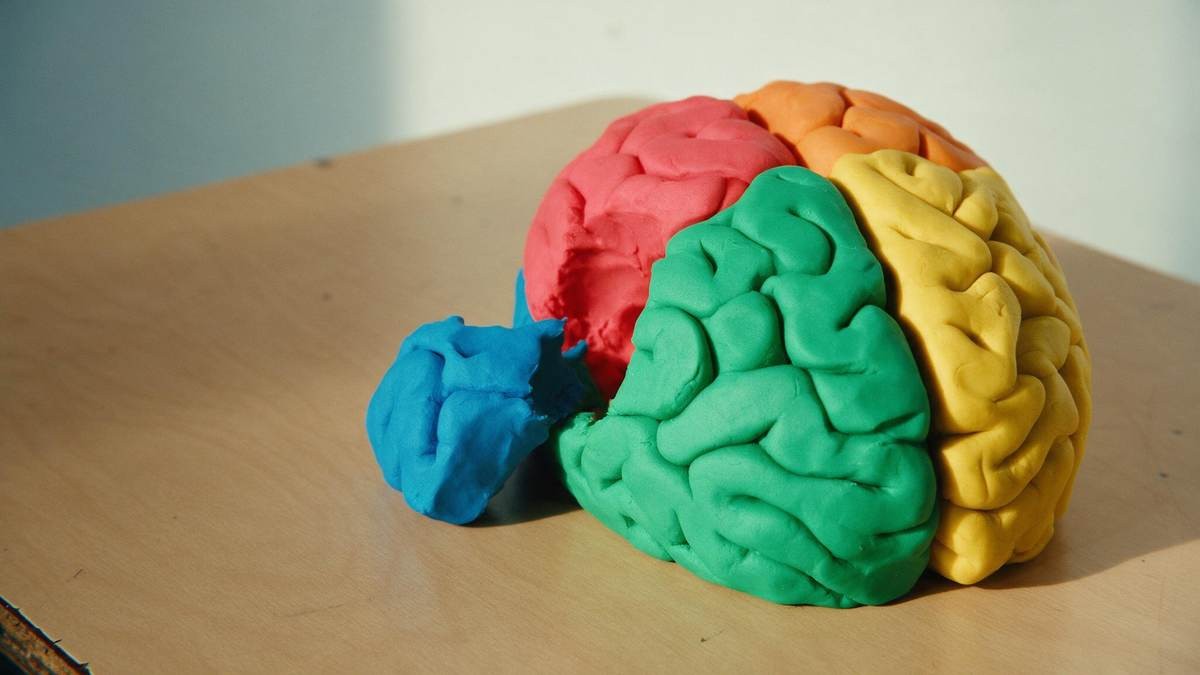 Which part of this brain remembers?Where the name goes when it will not comeWatch the video to follow the labeled map through each region this article names
The labeled map is easier to hold in your head once you have seen it move. Watch the full video for that.
Everything on Everyday slips →
▶ Watch the memory video