You are standing in your hallway with a phone in your hand, trying to hold ten grocery items in your head while you lock the door. The list is already slipping: milk, eggs, something green, the thing for tomorrow’s lunch. You have heard that memory champions use a trick called a memory palace, and you wonder if it could work for you tonight. The useful answer is yes, for a specific kind of remembering: you can build a simple ten-item route in a home you know and test yourself tomorrow. But be clear about what this is. A memory palace is a rehearsal tool for lists you choose to encode, not a fix for appointments, names, or the everyday forgetting that worries most adults. Good evidence on it is limited, and the honest version is that it helps you practize a skill, not repair a memory system.
What a memory palace actually is
A memory palace, also called the method of loci, is a way of attaching items to places you already know. You choose a route through a familiar building, pick a series of spots along that route, and place a vivid image at each spot. When you need to recall the items, you walk the route in your mind and see what you left there.
The technique is old, but the modern evidence base is thin. The public health guidance for this page cites no study on memory palaces, no trial, no year, no participant count, and no percentage. That means the honest opening statement is that good evidence on it is limited. To know more, researchers would need to compare memory palace training against a matched control task, follow people over time, and measure whether gains transfer to everyday remembering rather than only to rehearsed word lists. Until that work exists, treat the method as a skill worth trying, not a proven intervention.
Choose a route you can walk blindfolded
Start with a home you know well. The route should be linear, with no backtracking, and it should have about ten distinct spots. A hallway, a kitchen, a living room, and a bedroom often work. The spots must be fixed objects you can see in your mind: the front doormat, the coat hook, the kettle, the fruit bowl, the sofa arm, the bookshelf, the bedside lamp.
Walk the route once in real life, touching each spot in order. Then close your eyes and walk it again. If you hesitate at any point, swap that spot for something more obvious. The goal is a route so automatic that your attention can go to the images you place on it, not to finding the next location.
Build your first ten-item route tonight
Take a ten-item grocery list and turn each item into an image that is strange enough to notice. A carton of milk could be a white waterfall pouring over the doormat. Eggs could be a nest balanced on the coat hook, cracking one by one. The image should involve the spot doing something, not just sitting there.
Here is a worked example with a ten-item grocery list, one row per spot. The doormat holds a milk waterfall. The coat hook holds a nest of eggs. The kettle pours spinach leaves instead of water. The fruit bowl holds a loaf of bread wearing sunglasses. The sofa arm has a jar of peanut butter stuck to it like glue. The bookshelf has a salmon swimming between two books. The bedside lamp has a head of lettuce as its shade. The bathroom mirror has a bar of soap drawing a face on the glass. The shoe rack has a bag of rice spilling into each shoe. The kitchen sink has a block of cheese melting over the tap. Each line is short and parallel, so you can read it as a checklist or a table later.
The mistake people make is choosing images that are too polite. A carton of milk next to a door is forgettable. A milk waterfall soaking the doormat is not. Make the image move, make it large, and make it interact with the spot.
Do the next-day recall check
After you place all ten images, walk the route once more before bed. Then do nothing else with it. The next morning, before you look at the list, walk the route again and write down what you find at each spot. Count how many items you got right.
Build your first route tonight
- Choose a familiar home and a linear route with about ten fixed spots.
- Walk the route once in real life, touching each spot in order.
- Close your eyes and walk it again, swapping any spot that makes you hesitate.
- Turn each list item into a strange, moving image that interacts with its spot.
- Walk the route once more before bed, then recall it the next morning.
If you missed some, look at the images you made for those spots. Usually the failure is not the route but the image: it was too ordinary, too similar to another image, or not connected to the spot. Change the image and walk the route once more. The recall check is not a test of your memory in general. It is a test of whether your images were vivid enough to survive one night.
What this will and will not do for you
The method of loci helps with lists you rehearse on purpose. If you need to remember a sequence of points for a talk, a set of errands, or a pack of vocabulary, a route gives you a structure. The gain comes from the encoding: you are making the items strange and placing them in space, which gives you more handles for retrieval.
It is not a fix for forgotten appointments, names, or the feeling that your memory is slipping. Those everyday failures usually come from attention, sleep, stress, or the sheer number of things competing for your notice, not from a missing route through your kitchen. If you are worried about persistent or worsening forgetfulness, see a health care provider. Memory trouble has several possible causes, and a doctor is the right person to sort them out.
Keep the practice honest
You can build a new route in a different building when the first one feels crowded, but do not expect the skill to generalize on its own. The useful habit is to rehearse a route only when you have a specific list to remember, then let it go. Using the same route for everything makes the images blur together.
Forgettable versus vivid images
| Forgettable image | Vivid image |
|---|---|
| A carton of milk next to a door | A milk waterfall soaking the doormat |
| Eggs on a coat hook | A nest of eggs cracking one by one on the coat hook |
| Spinach in a kettle | A kettle pouring spinach leaves instead of water |
Because the evidence is limited, do not treat memory palace training as a brain health program. It is a technique, not a treatment. If you enjoy it, the benefit is that you have a reliable way to hold a list for a day. That is a real, modest skill, and it is enough.
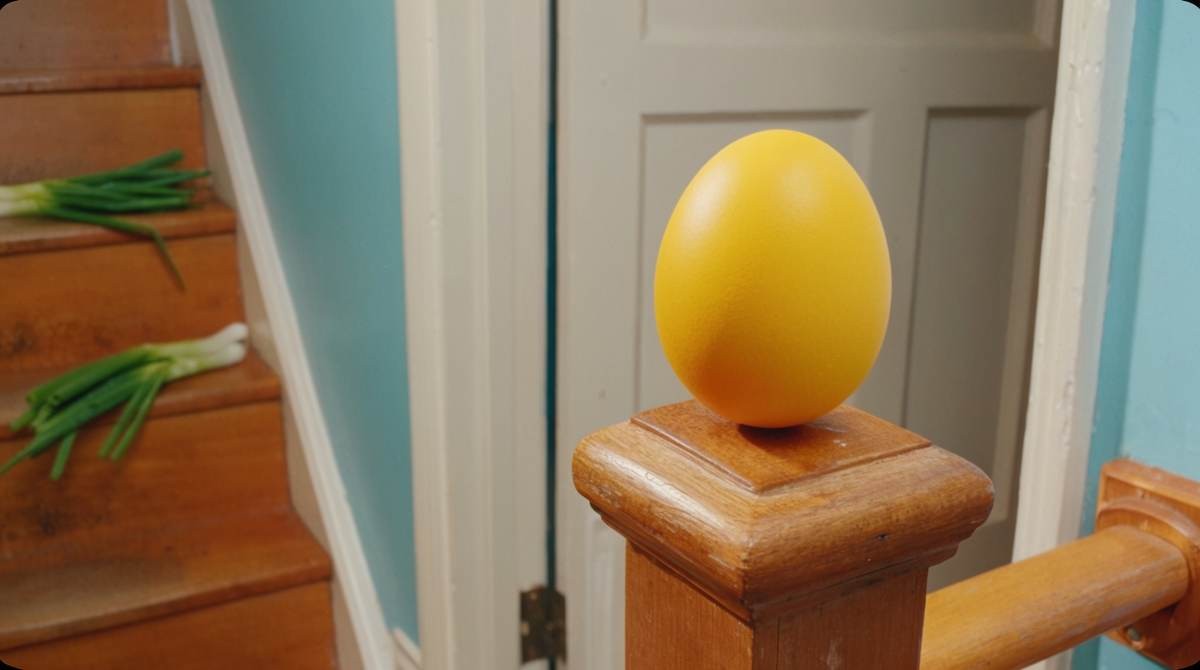 Can a memory palace help me remember?How many of the ten came back?Watch the video to see the route walked before bed
When the same blank keeps coming back, watch the full video and sit with the wider question it raises.
When the same blank keeps coming back, it may be the small version of a pattern that keeps returning, and you can watch the full video to sit with the wider question it raises.
Everything on Memory training →
▶ Watch the memory video