Your hand is on the door handle, bag over one shoulder, and the familiar weight of keys and phone sits in your pocket. You have done this a hundred times. Yet somewhere behind you, on a shelf or a charger, the one thing today actually depends on is still waiting. Why does the routine that gets you out the door keep missing the thing that matters?
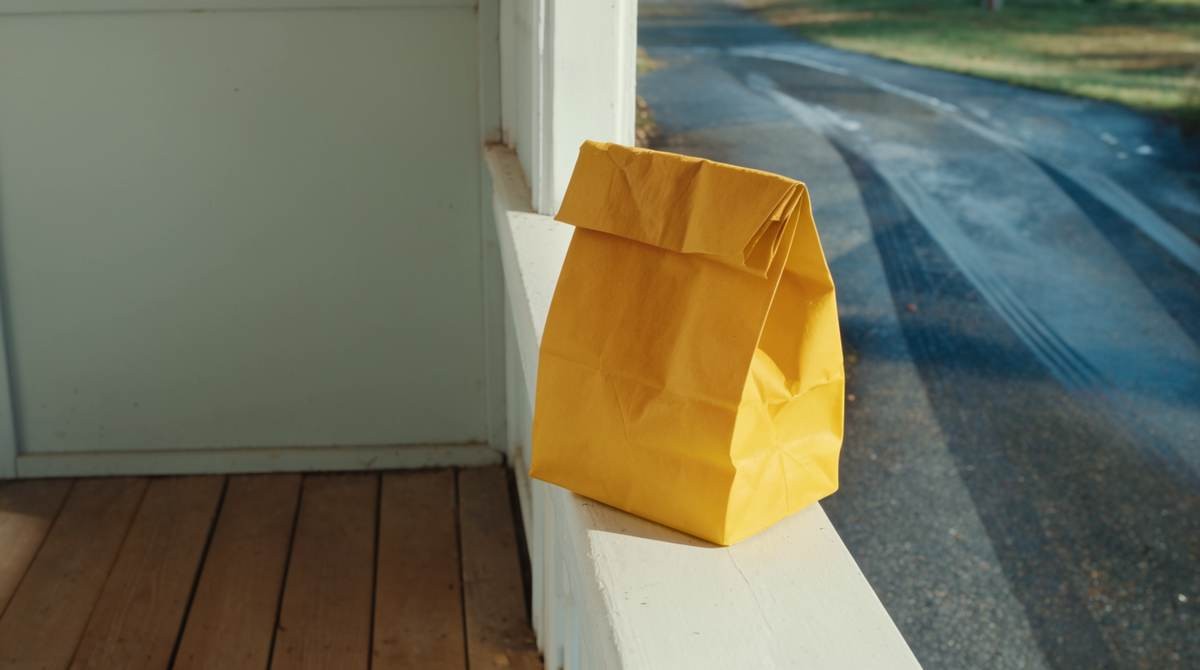 Left this lunch behind again?Why your exit routine keeps missing today’s one thingWatch the video to see the small slip at the door from the inside.
Keys, wallet, phone, bag: you have all four, and you are still going to forget the one thing that matters today. The fix is not a longer list but a shorter one. Separate the items that leave the house every single day from the one-off additions that change with the day, and do your final check at the actual door, not in the kitchen where you packed.
The stable essentials get a fixed sequence you run in the same order each morning. The one-off item gets its own cue, staged the night before or placed where your hand will land on the way out. When those two tracks stay separate, the routine stops collapsing under the weight of remembering everything at once.
Separate the stable essentials from today’s additions
Start by splitting what must leave with you into two groups. The stable essentials are the items you need on nearly every departure: keys, wallet, phone, and whatever you carry daily. The one-off additions belong to today only: a form to return, a package to mail, a charger for a longer day. This separation matters because the two groups fail in different ways. Stable items get missed when a routine step is skipped, while one-off items get missed because nothing in the routine points to them.
Choose one departure point and make it the place where the final check happens. For most homes that is the actual door you exit through, not the kitchen counter or the bedroom. A checklist reviewed at the table fails the moment you walk past it with your hands full. The check belongs where leaving becomes irreversible.
Keep the stable list short enough to recite without looking. Three to five items is workable; ten is a second job. If you need more than that, the list is absorbing one-off items that should be handled separately, and it will quietly stop working on the days you are rushed.
Build the sequence around your actual exit
Your morning follows the same path most days, so build the check into that path. Attach each stable item to a step you already do in order: phone off the charger when you unplug it, wallet into your pocket after you pick up the phone, keys into your hand before you touch the door handle. The order is the checklist. When the sequence is fixed, a skipped step feels like a gap rather than a mystery, and you can name exactly which link broke instead of searching the whole house.
Your departure point is the door itself, so do the final pass there with the handle in reach. Touch or look at each stable item in the same order every time, and say the short list once if speaking it helps you notice a missing one. This is the moment that catches the phone left charging or the wallet still on the counter, because you are checking where leaving actually happens rather than where packing happened. Research on prospective memory describes this as remembering to act at the appropriate moment, and the door is that moment for you.
If your bag, keys, and phone are all accounted for but the one thing unique to today is still sitting inside, watch the full video presenting one approach to improving memory for recurring memory slips.
Handle the days that break the routine
A different destination changes what counts as essential. The stable list covers your everyday departure, but a day that ends somewhere unusual, a trip to the gym before work, or an appointment across town adds items that the standard sequence was never designed to catch. Treat the destination as a separate question the night before: what does this specific day need that an ordinary day does not? Write that answer down or stage the item, rather than trusting yourself to remember a longer list under morning pressure.
Some items cannot wait by the door. Perishable food, medication that stays refrigerated, or a laptop in use until the last minute all break the staging habit. For these, the cue has to live at the departure point instead. A note on the door handle or an empty spot in your bag that must be filled works better than a mental note, because the reminder sits where you will act on it. Health guidance on managing memory problems makes the same point about external prompts: a cue placed in the environment does the holding so your attention does not have to.
Another person changing the plan is the hardest case because it breaks the sequence itself. If a partner announces a different departure time or an extra stop, the routine you rehearsed no longer matches the morning. The practical move is to re-anchor immediately: state the new plan out loud, name the one item it affects, and adjust the staging before anything else. A checklist survives a changed plan only if you rebuild the last step instead of hoping the old one still fits.
Keep one-off items on their own track
The stable list and the one-off cue solve different problems, and confusing them is where most exit routines fail. A checklist is good at repeating the same few items reliably; it is bad at remembering the thing that has never been on it before. Laboratory work on prospective memory shows that people often overestimate how well they will remember a future intention unaided, which is exactly the error that leaves today’s form on the printer. The fix is not a longer list but a separate channel for the unusual item.
For the one-off, decide the cue at the moment you learn about it, not in the morning. If a document must go with you tomorrow, put it with your keys now, or put a note where your hand will land at the door. The same logic applies to remembering documents for a specific errand: the cue belongs to the departure, not to the moment you first think of it. remembering documents before an errand is its own problem with its own staging, and it pairs with the checklist rather than replacing it.
Timing matters as much as placement. A reminder that fires while you are still in bed is easy to dismiss and forget; one that arrives as you reach the door is actionable. If you use your phone for the one-off item, set the alert for the departure window rather than the night before. The broader habit of setting reminders when you can actually act keeps the alert from becoming background noise you have trained yourself to ignore.
Test the routine and know its limits
Test the routine for a week before you trust it. The first few days will show you which step is fragile: the item that lives in two places, the morning when you leave through a different door, the day someone hands you something as you are leaving. Each failure points to a specific fix, either a staging change or a cue that belongs earlier in the sequence. A routine that survives a busy week is worth keeping; one that only works on calm mornings is not finished.
Is the routine working
- Does a skipped step feel like a gap rather than a mystery?
- Can you name exactly which link broke?
- Does the routine survive a busy week?
- Have you made one step deliberate again if it became invisible?
Watch for the moment the checklist becomes invisible. Once the sequence is automatic, you may stop noticing whether you actually did each step, which is the same inattention that makes people unsure whether they locked the door. If that uncertainty starts creeping in, the answer is not to abandon the routine but to make one step deliberate again: touch the item, name it, and look at it. That small act of attention is what separates a completed step from a half-remembered one.
The checklist is a tool for ordinary forgetfulness, not a test of whether something is wrong. Everyone leaves things behind occasionally, and a routine that catches most of them is doing its job. If you find that lapses are multiplying, affecting safety, or worrying you beyond the occasional missed item, that is a separate question worth raising with a doctor rather than a reason to add more items to the list. For the everyday problem, the next decision is simple: tonight, name your stable three, pick your door, and stage tomorrow’s one-off before you sleep.
The single slip at the door may be the small version of a pattern that keeps returning, and watch the full video to see how that pattern plays out when memory slips repeat.
Everything on Everyday slips →
▶ Watch the memory video