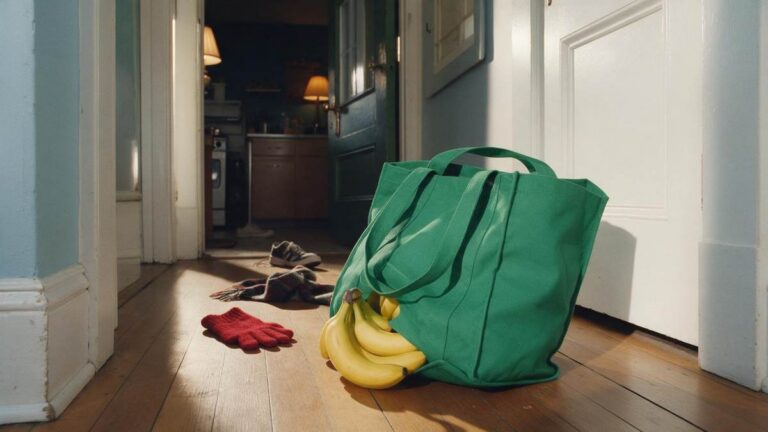
You glance at the phone in your hand, the screen already dark, and realize you cannot say whether you replied to the message or only meant to. The morning moved so quickly that the moment never left a mark. Was it done, or just rehearsed?
You are halfway down the street when the question arrives: did I actually lock the door, or did I just move through the motion while thinking about something else? The honest answer is often that you cannot tell, and the reason is usually not a faulty memory. It is that the moment of locking never got noticed in the first place.
The practical answer is to find the specific step that slipped, not to blame your whole memory. In a rushed sequence, one action typically gets done on autopilot while attention is elsewhere, and that is the step you cannot later confirm. Once you know which step it is, you can give that single action a brief pause the next time, so it registers as something you deliberately did.
Name the step that went missing
The useful move, when you catch yourself unsure, is not to argue with your memory but to identify which step in the sequence was never properly noticed. Think of the departure as a short chain: pick up keys, lock the door, take the bag, check the stove. The gap almost always sits at one link, and it is usually the link you did while your mind was already on the next thing. Naming that link, even roughly, tells you what to verify and what to change tomorrow.
It helps to treat the uncertainty as information rather than as a flaw. If you can picture locking the door but not picking up the folder, the folder is the step that went unobserved, and that is where a small intervention belongs. A vague sense that the whole morning was a blur is harder to act on than a specific missing moment. The more precisely you locate the skipped noticing, the more concrete your next decision becomes.
This is also why generic advice to slow down often fails. You cannot slow down an entire morning, but you can pause for a single second at the exact step that keeps vanishing. The pause works not because it fixes memory in general but because it gives that one action a chance to register as something you did, rather than something that happened in the background while you thought about the train.
When several actions compete at once
A rushed sequence fails differently depending on how many actions are competing at the same moment. When you are doing one thing quickly, you may still notice it. When you are doing three things at once, or doing one thing while holding two others in mind, the noticing gets crowded out. The door gets locked while you are answering a message and mentally rehearsing a conversation, and later there is no trace of the lock at all.
This is the same territory as the question of how divided attention relates to recall: attention that is split at the moment of action leaves less behind to retrieve later. The problem is not that the action did not happen. The problem is that it happened without enough of you present to mark it. That distinction matters because it changes what you try next. You do not need a better memory; you need a less contested moment.
A practical implication follows. If several actions must compete, give the one you will later need to confirm a small piece of exclusive attention, even if the others stay rushed. Lock the door and say nothing else for that second. Put the keys in your pocket and feel them land. The rest of the morning can stay chaotic; the step you care about gets a clear frame.
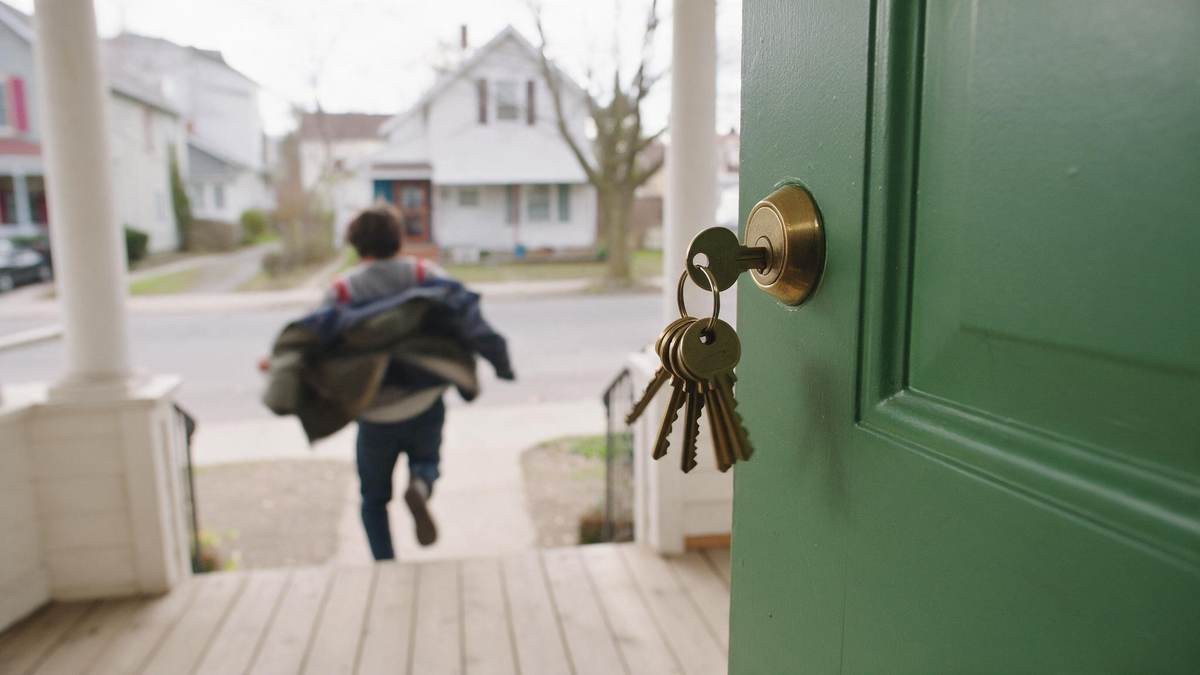 Rushing makes you forget?When the door locks itselfWatch the video to see why one deliberate second can change what you remember.
When you reach the car unsure whether you locked the front door because the whole departure happened in a blur, watch the full video presenting one approach to improving memory for recurring slips like these. The pause that fixes a single morning is a small, practical thing; the presentation looks at the wider pattern of rushed moments that never quite register.
When the plan changes mid-departure
Sometimes the plan itself changes mid-departure, and that is when a step is most likely to be skipped entirely rather than merely unremembered. You meant to take the letter, then someone asked you to also take the parcel, and in the reshuffle the letter never left the table. Later you cannot recall taking it because you did not. The memory gap is accurate; the task state is what differs from your expectation.
Locate the skipped step
- Picture the departure as a short chain of actions
- Find the link done while your mind was already ahead
- Name that link, even roughly
- Give that single action a brief pause next time
This is a different problem from divided attention, and it calls for a different response. When the plan changes, the useful habit is to restate the new final list out loud or in your head before you move, however briefly. The restatement is not a memory trick; it is a way of checking that the revised plan actually replaced the old one rather than sitting alongside it. Many skipped steps are steps that belonged to a version of the plan you quietly abandoned.
If you find yourself unsure later, ask first whether the plan shifted. If it did, the missing item may never have been done at all, and retracing your memory will not find it. Check the physical state instead: look at the table, the hook, the counter. The visible world often holds the answer that memory honestly cannot.
When memory and the visible state disagree
There is a subtler case where your later memory and the visible state of the task seem to disagree. You feel sure you turned off the hob, but you also felt sure last week when you had not. Confidence is a poor guide here, because a rushed action can leave behind a feeling of completion without a usable record of the act itself. The feeling comes from routine, not from noticing.
The way through is to make the action briefly memorable at the moment it happens, not to interrogate yourself afterward. One quick pause, in which you actually look at the hob and register its state, gives you something to retrieve later that routine cannot. This is close to the distinction drawn in whether you forgot or never noticed: many lapses that feel like forgetting are really failures of noticing at the time. You cannot recall what was never taken in.
A hypothetical morning makes this concrete. Suppose you always lock the door with the same hand while holding your bag in the other. One day you pause, look at the key turning, and think, locked. That evening, when doubt appears, you have a specific image to check against the doubt, rather than a blank where the morning should be. The pause did not make you slower in any way that matters; it made the action available to you later.
Make one step worth remembering
The pause itself deserves a little precision, because a vague resolve to be more mindful rarely survives a busy morning. What works better is attaching the pause to a specific step you have already identified as vulnerable, and keeping it short enough that you will actually do it when rushed. A single deliberate look, a hand left on the key for a breath, a quiet word naming the act: any of these can serve, provided it is tied to the step and not to a general intention.
Forgetting or not noticing
- Myth: A gap means your memory is faulty
- Fact: The moment was never taken in to begin with
- Myth: Slowing down the whole morning helps
- Fact: One deliberate second at the vulnerable step is enough
It is worth separating this from the broader question of whether stress affects everyday remembering. A rushed departure is often a stressed departure, and the tension can narrow attention further. But you do not need to resolve the stress question to fix the skipped step. The pause addresses the noticing directly, whatever else is true about the morning.
Most forgotten steps in a hurry are ordinary and low-stakes, and an occasional gap is part of being human rather than a sign of decline. If lapses become frequent, worsen, or involve getting lost or forgetting how familiar things work, that is a different matter and worth raising with a doctor. For the everyday version, the next decision is simple: pick the one step that keeps vanishing, and give it one deliberate second tomorrow.
The step that slipped this morning may be the small version of a pattern that keeps returning whenever attention is split. To see the wider shape of that pattern, watch the full video and notice what a deliberate second can do.
▶ Watch the memory video