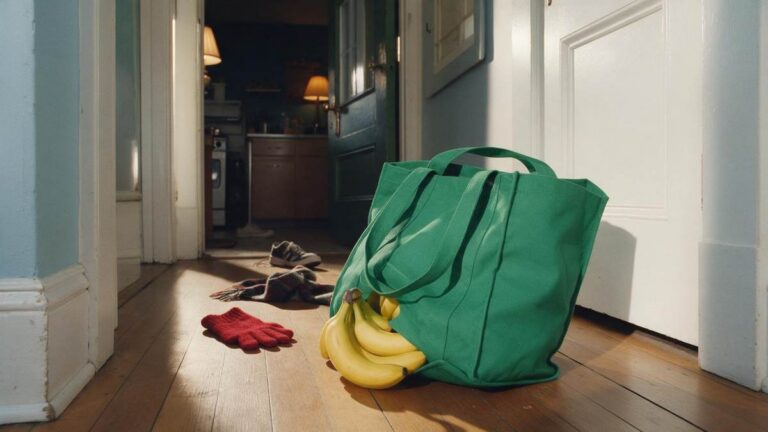
You are standing in the kitchen, vitamins in your palm, trying to remember whether you just opened the bottle or never touched it. The morning has that thick, underwater quality where small routines lose their edges, and you cannot replay the last thirty seconds without hitting static. Sleep and memory feel tangled here: was the detail never stored, or is it simply refusing to come back? The article that follows separates those two possibilities, explains how your nights shape what you remember, and shows you what to fix first when recall starts to slip.
 Poor sleep and poor memory?When your morning won’t replayWatch the video to see why one kitchen moment keeps slipping and what the pattern around it reveals.
Yes, poor sleep can make memory feel worse, but the useful answer is narrower than the fear. Sleep deficiency can interfere with learning, focusing, reacting and remembering things, so a bad night can leave you more likely to miss details, lose track of intentions, or feel that recall is slower than usual. That is not the same as saying every new slip is caused by sleep, or that one rough night explains a persistent change.
The practical distinction is this: after one disrupted night, expect a temporary drop in attention and reliability; after repeated poor sleep, the pattern can start to affect work, conversation and daily follow through; and if lapses continue even when your sleep routine changes, sleep may be only part of the picture. That is the point where you stop blaming the night and start looking at the pattern more carefully.
What poor sleep can plausibly do to remembering
The most defensible statement is also the least dramatic one: poor sleep can interfere with learning, focusing, reacting, decision making and remembering things. That matters because many everyday complaints that feel like pure memory failure are partly attention failures at the front door. If you were foggy when the plan was made, the name was said, or the keys were put down, later recall has less to work with.
One bad night vs repeated poor sleep
| One disrupted night | Repeated poor sleep |
|---|---|
| Slower reactions | Trouble concentrating |
| More mistakes | Slower problem solving |
| Weaker focus | Ordinary tasks take more effort |
| Small intentions slip | Memory slips as one symptom of strain |
This is why a sleepless night can make an ordinary morning feel strangely unreliable. You pour coffee, reach for your phone, and the errand you meant to do before work has gone soft around the edges. The problem is not necessarily that the memory was erased. It may never have been encoded cleanly in the first place, especially if the moment was rushed, noisy or half attended.
A useful distinction is between a retrieval problem and a registration problem. Retrieval trouble is when something was learned but will not come back on demand. Registration trouble is when the day was too fragmented for the detail to stick properly. Sleep loss can blur that line because it weakens the alertness that helps information get stored in usable form.
One rough night is not the same as a pattern
One bad night deserves a narrower explanation than a month of bad nights. After a single disrupted night, the safest reading is temporary inefficiency: slower reactions, more mistakes, weaker focus, and a greater chance that small intentions slip. You might forget why you opened a cupboard, miss a turn in a familiar drive, or read the same paragraph twice. That is frustrating, but it is not the same as declaring that your memory itself has changed.
Repeated poor sleep is different in practical meaning. When sleep deficiency stretches on, the daytime effects can become part of the background: trouble concentrating, slower problem solving, and a general sense that ordinary tasks take more effort than they should. In that setting, memory slips may look less like isolated events and more like one symptom of a system running under strain.
That is also where other pressures start to matter. A person who is tense, overloaded or trying to do three things at once may have the same outward symptom as someone who simply slept badly. If your days are noisy and fragmented, it can help to look at how attention and setting shape recall before treating sleep as the whole story.
There is a second overlap with mood and workload. When people are stretched thin, they often notice the lapse and miss the conditions around it. If that sounds familiar, whether stress affects everyday remembering is a useful adjacent question, because the same missed detail can come from a crowded mind rather than a bad night alone.
If you keep noticing the same kind of lapse after restless nights and also on mornings that seemed fine, watch the full video presentation about recurring memory slips and the approach it proposes for improving memory.
Why tired recall feels different from true forgetting
Fatigue changes the feel of recall, not just the odds of success. On a tired day, a name can feel almost present and still refuse to arrive, or a familiar detail can take longer to surface than usual. That subjective drag is one reason tiredness gets confused with deeper memory trouble. The experience of reaching for something and finding it slow, dull or incomplete can be more noticeable than the lapse itself.
This is where why recall feels harder when tired becomes a helpful distinction. A tired brain may still know the information, but the path to it feels less direct. You may eventually remember the appointment, the word or the reason you entered the room, just not at the speed you expect. That delay can be unsettling even when the underlying knowledge is still there.
It also helps to separate fog from a cleaner description of the event. How brain fog differs from forgetfulness matters because fog suggests a broader haze over thinking, while forgetfulness points to a particular item that did not come back. If the whole day feels thick and effortful, sleep may be part of the weather. If one specific detail vanished while the rest of the morning ran normally, the explanation may be narrower.
A hypothetical example makes the difference easier to see. Suppose you wake after a short night, stand in the kitchen, and cannot remember whether you already took your vitamins. That could be a simple attention lapse during an automatic routine. Now suppose the same thing happens after several poor nights, and you also keep losing the thread of conversations, rereading emails and missing small steps at work. The second picture is still not a diagnosis, but it is a stronger signal that the conditions around your sleep deserve attention.
When sleep is not the whole explanation
Sleep is a serious lead, not a universal explanation. If your schedule changes and your sleep improves, yet the same kinds of lapses keep appearing, it is time to widen the lens. A new pattern that persists despite a different sleep routine should not be flattened into a sleep story just because sleep is the easiest variable to name.
Sleep and memory
- Myth: Every memory slip is caused by poor sleep.
- Fact: Sleep can interfere with learning, focusing, reacting and remembering.
- Myth: One rough night explains a persistent change.
- Fact: One bad night means temporary inefficiency, not a changed memory.
- Myth: If sleep improves and lapses continue, sleep is still the cause.
- Fact: Persistent lapses after better sleep mean it is time to widen the lens.
One common trap is to notice only the nights before a mistake and ignore the days when memory worked normally. Another is to assume that because sleep affects learning and focus, every lapse must be a sleep problem. That leap is too fast. Everyday memory is also shaped by interruption, divided attention, background noise, stress, and whether you were fully present when the detail first arrived.
If you often lose the point while juggling tasks, how divided attention relates to recall may be the better next question. If your days are built around constant switching, whether multitasking helps or hurts memory can be more relevant than blaming the night before. And if you are trying to protect one important task from the general static, how to make a quiet focus window is a practical way to reduce the conditions that make recall feel unreliable.
The key is to keep the hypothesis bounded. Sleep can be part of the explanation without becoming the explanation for every new symptom. That restraint is useful, because it keeps you from overlooking another pattern that is easier to test in daily life.
What to do next when the pattern keeps changing
A reasonable next move is to track the pattern for a short stretch, not to build a case file on yourself. Note the lapse, the kind of day around it, and whether sleep was short, broken or simply unrefreshing. The point is not to prove a theory. It is to see whether the slips cluster after poor nights, after frantic mornings, or after both.
If the pattern is mostly tied to one rough night, the practical response is usually modest: lower the load that day, avoid stacking demanding tasks, and give important information a cleaner chance to register. If the pattern keeps recurring across different sleep conditions, then sleep may still matter, but it is no longer enough as the only explanation. That is the moment to look more carefully at attention, routine and stress.
There is also a clear care boundary. If memory problems persist, worsen, affect daily life, or come with other changes that concern you, do not self diagnose and do not keep explaining them away as bad sleep. A doctor or other qualified clinician is the right place to sort out whether something common and treatable is going on, or whether a fuller assessment is needed. That is especially true when the change is persistent rather than occasional.
The most useful question is not whether sleep can affect memory. It can. The better question is whether your particular lapses behave like a sleep related wobble, a fatigue soaked attention problem, or a pattern that deserves proper assessment. That distinction gives you a next step that is grounded in the day you actually had, not in a vague fear about your brain.
You can treat tonight as a one-off, or you can watch the full video and look at the shape these moments make together.
▶ Watch the memory video