The person you are talking to pauses, then finishes your sentence for you, and you laugh it off as them knowing you too well. Later you realize they have been doing it more often, supplying the name, the date, the thing you were about to say, while you call it being tired. They noticed the gap before you did. Which of the two patterns described here have you actually been running?
You are in the middle of a sentence, and the word you need is there. You can feel it pressing against the inside of your jaw, almost on the tip of your tongue, but it will not come out. You say “the thing” instead, and the person across from you nods like they understand, and you let it go. This is not the same as last Tuesday, when you were sitting at your kitchen table with nothing pressing, and every detail of a conversation from three days earlier came back to you in the shower, complete with the tone of voice. You noticed the difference between those two states. That is what you are trying to figure out. The short answer is that your brain under stress is not broken. It is running a different program. A brief spike of stress hormones, cortisol among them, sharpens attention and can make a specific memory encode more strongly. A long running load of the same hormones does the opposite: it fragments focus, disrupts sleep, and makes recall feel like pulling something through wet sand. Which pattern you are in depends on how long the load has been running.
The part of stress that is not the problem
The National Institute of Mental Health describes the stress response this way: your body releases hormones that travel through your bloodstream and make you alert and ready to act. They raise your blood pressure, your heart rate, and your blood sugar. The response is sometimes called fight or flight, and it is designed to be brief. A car pulls out in front of you, your body floods with those hormones, you hit the brakes, and once the danger passes, the system resets.
Acute versus chronic pattern
| Acute | Chronic |
|---|---|
| Cortisol spikes and drops within hours | Cortisol stays elevated over days and weeks |
| Attention narrows to the immediate demand | Attention fragments and is hard to sustain |
| Recall sharpens for the event in front of you | Recall of recent events fades, older memories stay intact |
| Sleep is briefly delayed and recovers | Sleep is disrupted and recovery is slow |
In the context of memory, this brief alertness is useful. You are paying closer attention to the specific thing in front of you, and that attention helps the memory form. The NIMH notes that a little short term stress can sometimes be helpful in exactly this way: the pressure of a deadline pushes you to finish work, and once the deadline passes, the pressure lifts. The memory of what you did under that pressure can be vivid and detailed, because your attention was locked on it.
You are at the dinner table and your child asks you what you said about tomorrow, and you realize you were not listening. You were thinking about the thing you are worried about, and the conversation passed through you without landing. After that, you start double checking. You write things down that you used to hold in your head. You start steering conversations away from topics where you might be asked to recall a detail, and you notice yourself doing it before you decide to. The memory is still there. It is just harder to reach, and the effort of reaching for it is starting to shape what you will and will not engage with.
Where the pattern changes
Chronic stress is different in one critical way: it does not reset. The NIMH describes long term stress as lasting weeks, months, or longer, during which your body acts as if you are always being threatened. The hormones that were meant to prepare you for a single moment keep circulating. The system that was designed to spike and recover is stuck in the spike.
Signals worth reading against the chronic profile
- Trouble falling asleep or staying asleep most nights
- Hard to focus your thoughts on a single task
- Lost interest in things you usually enjoy
- Not able to do your usual daily activities
- Easily upset or irritable more often than feels like you
- Eating has changed enough to affect your weight
The effects compound. The NIMH lists the things people notice when stress keeps going: trouble sleeping, headaches, feeling sad or angry or easily upset, and a body that gets sick more often because the immune system is under constant strain. The sleep material from the National Heart, Lung, and Blood Institute adds a specific mechanism: when you do not get enough sleep, your ability to think clearly, react quickly, and form new memories is impaired.
This creates a loop. Stress disrupts sleep. Poor sleep impairs memory. Impaired memory adds a small layer of frustration or worry, which feeds back into stress. The loop is not dramatic. It is quiet and cumulative, and by the time you notice it, it has been running for a while.
If the comparison above matches what you have been noticing, watch the full video when you want to sit with it a while.
The table you can use tonight
Here is the comparison laid out plainly. Read it against your own last few weeks and see which column fits.
Acute: cortisol spikes and drops within hours. Attention narrows to the immediate demand. Recall sharpens for the specific event in front of you. Sleep may be briefly delayed but recovers the next night. Chronic: cortisol stays elevated over days and weeks. Attention fragments and is hard to sustain. Recall of recent events fades while older memories stay intact. Sleep is disrupted and recovery is slow.
What the checklist is for
This is not a diagnosis. It is a way to see whether the pattern you have been noticing matches the chronic profile described by the NIMH. If several of these have been present for two weeks or more, it is a signal to talk with your doctor, because memory trouble has several possible causes and a professional can help sort them out.
You have trouble falling asleep or staying asleep most nights. You find it hard to focus your thoughts on a single task. You have lost interest in things you usually enjoy. You are not able to do your usual daily activities the way you used to. You feel easily upset or irritable more often than feels like you. Your eating has changed enough to affect your weight.
None of these items alone means anything. The NIMH specifically flags the combination and the duration: severe symptoms lasting two weeks or more are the threshold where it is worth getting help. A doctor can rule out medications, sleep disorders, and other factors that produce similar symptoms.
If the brain under chronic stress is running a different program from the brain at rest, at what point does different become something that does not fully reverse when the stress lifts? The research on this is still developing, and the answer likely depends on how long the load ran, how much sleep was lost along the way, and what else was happening in the body at the same time. This page does not settle that question.
Why the same person can be both
You can be running both patterns at once. The deadline that got you through last week’s project was acute stress, and it probably helped you perform. The background hum of worry about a relationship, or a health concern, or the general weight of responsibilities that has been running for months is chronic stress, and it is the one wearing on your recall.
Where the article draws the line
- Two weeks or more of severe symptoms is the flagged threshold
- Long term stress is described as lasting weeks, months, or longer
- A brief spike of stress hormones resets once the danger passes
This is why the comparison matters more than a simple message that stress is bad. The brain is not malfunctioning. It is responding to two different signals with two different programs, and the chronic one is the one that is costly. Recognizing which pattern is dominant right now is the first step toward changing it, and it is something you can do with nothing more than the table above and an honest look at your last few weeks.
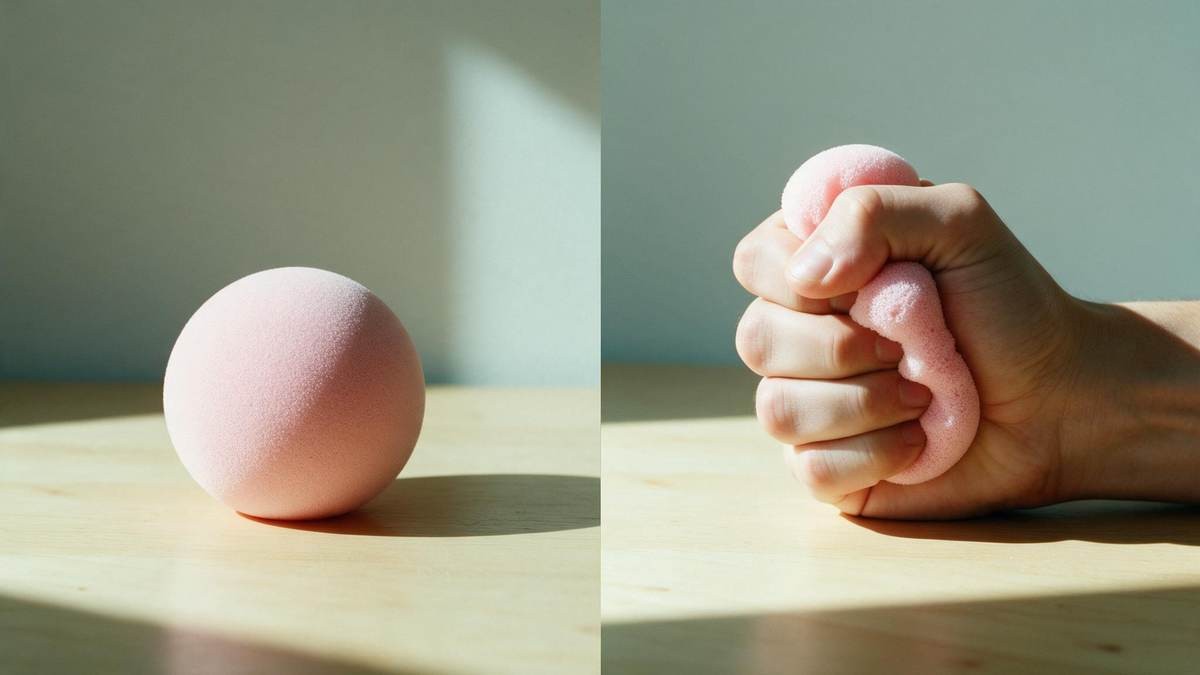 Stress makes you grip like thisWhich column fits your last few weeksWatch the video that sets the two patterns side by side for an honest look
There is more to say about where the line sits between the two patterns, and watch the full video carries that further.
▶ Watch the memory video