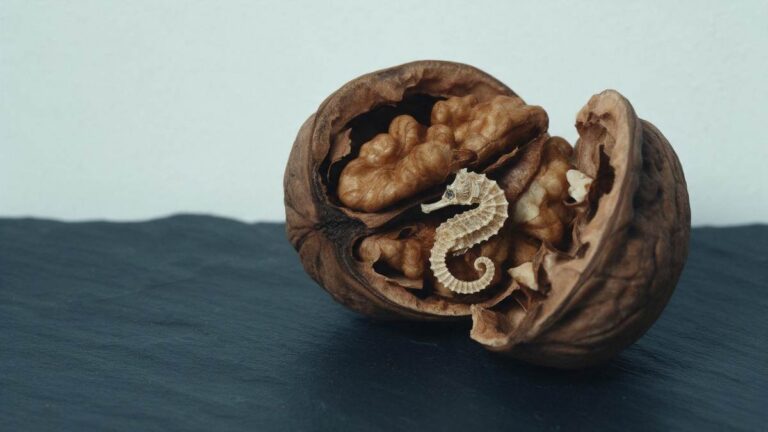
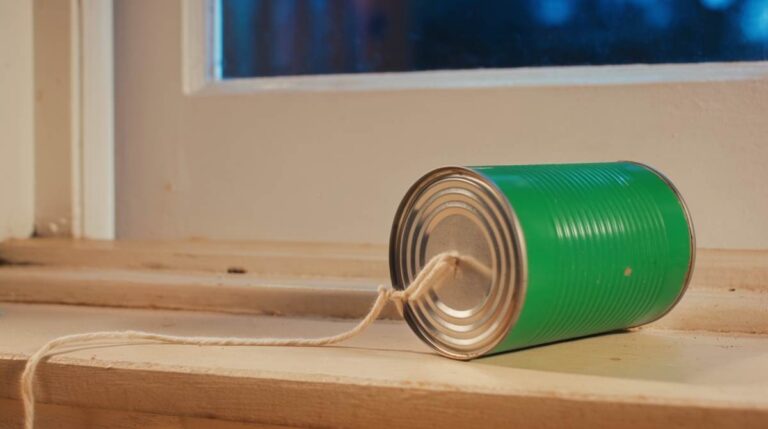
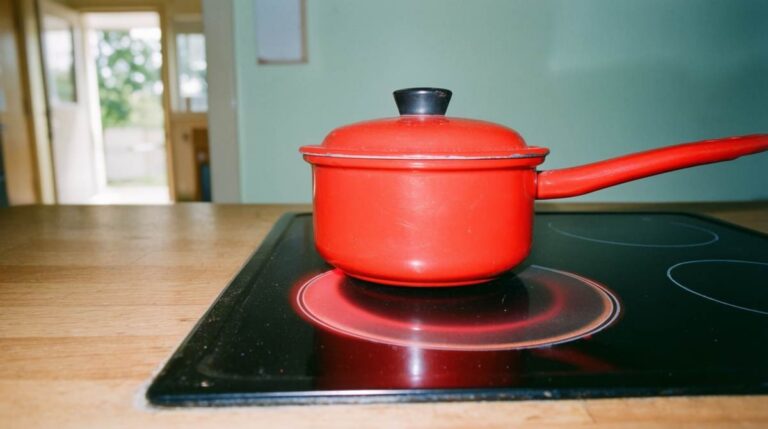
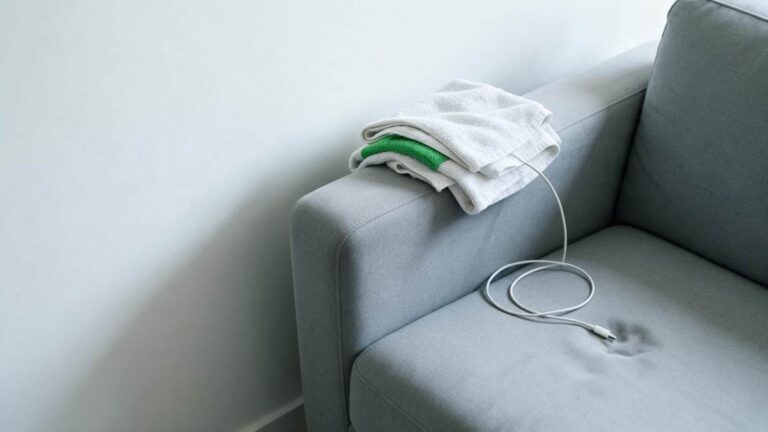
You put your keys down while the kettle was boiling and the phone was ringing, and now they are gone from your mind as cleanly as if you had never touched them. You passed the third stair twice without seeing them, because your mind still has them in your hand. The set-down moment never became an event. So why do you keep losing things? The answer is not that the whole episode vanished. It is that the placement was handled on autopilot while your attention stayed with the call, the kettle, or the next errand.
 You set it down without noticingWhy your hand remembers what your mindWatch the video to see the one slip that keeps hiding your keys, glasses and phone in plain sight.
You put something down while doing something else, and a few minutes later it is gone from your mind as cleanly as if you had never touched it. Usually the problem is not that the whole episode vanished. It is that the placement moment was handled on autopilot while your attention stayed with the call, the kettle, the doorbell, or the next errand.
Start with the last confirmed action, not the place where the item is supposed to be. Ask what you were holding, which hand was free, what interrupted you, and which nearby surface could have become temporary storage. That gives you a real starting point before you turn the house upside down.
This kind of lapse is common, and it does not by itself prove that nothing was stored. It suggests the memory was thin, rushed, or crowded out at the exact instant the object left your hand. If memory problems keep recurring, worsen, or come with other changes, NHS guidance is to see a doctor rather than self-diagnose.
Why the set-down moment goes missing
The useful distinction is not whether you have a good memory or a bad memory. It is whether the placement itself ever became a clear event. Putting something down can be so automatic that your hand completes the action while your attention is already elsewhere. Later, you may remember the larger task, the interruption, even the room you were heading toward, and still have no solid trace of the exact set-down moment.
That is why the last confirmed action matters more than the last assumed location. If you know you used the scissors at the kitchen counter, that is confirmed. If you only think they must be in the drawer because that is where they usually live, that is assumption. The first gives you a real trail. The second sends you searching inside a guess.
When one hand moves faster than attention
A common version starts when one hand is freed for another task. You are carrying the mail and the phone rings, so the keys leave your hand almost as a side effect. Or you are unloading bags and the glasses get parked for a second while you answer a question. The object is not lost in that instant; it is demoted. Your mind keeps the main task and treats the placement as background.
That background handling is exactly what makes the later blank so convincing. You were not careless in any dramatic way. You were efficient. But efficiency often means the object was set down without a deliberate mark, and later recall has very little to grip. This is also why a room change can make the gap feel sharper: a doorway can interrupt your intention, and the old context may stop helping you just when you need it.
When an object leaves your hand while your mind is already on the next task, the placement can be the weakest part of the whole episode. If that same kind of slip keeps turning up with keys, glasses, or your phone, watch the full memory video for a broader look at recurring memory slips and the approach it proposes for improving memory.
Temporary surfaces quietly become storage
Temporary surfaces are the next trap. A stair tread, the top of the washing machine, the arm of the sofa, the edge of a shelf near the door: these places are convenient precisely because they are not final. You tell yourself the item is only there for a moment, so the placement never gets the status of a real decision. Later, the surface stops advertising itself because it was never meant to hold anything for long.
That is different from a true storage spot. A bowl by the door or a hook near the coat rack works because the return is repeated and predictable. If an item keeps landing in improvised places, the practical fix is not to try harder to remember every exception. It is to reduce the number of exceptions. Giving daily items one reliable home removes many of those weak one-off placements before they happen.
Search from evidence, not habit
Once the object is missing, the next mistake is starting from where it should be instead of where it was last confirmed. People often check the usual drawer three times while ignoring the one odd place created by the interruption. A better rule is simple: name the last confirmed use, then move forward from that point. If the last confirmed moment was answering the phone in the hallway, start there, not in the room where the item is normally kept.
Memory lapses
- Myth: The whole episode vanished. Fact: The placement moment was handled on autopilot.
- Myth: A lapse proves nothing was stored. Fact: The memory was thin, rushed or crowded out.
- Myth: You were careless. Fact: You were efficient, and the object was demoted.
This is where retracing helps, but only if it stays tied to evidence. Reconstruct the route you actually took, the hand that was free, and the surfaces within reach. That is the practical core of how to retrace steps for a missing object. It is not a dramatic mental exercise. It is a way of replacing a confident guess with a short chain of checkable facts.
What to do the next time it happens
A hypothetical example shows the difference. You come in with keys, a tote bag, and a letter. The kettle is boiling, so the letter goes on the first flat surface near the hall while you reach for a cup. Later you look on the desk because the desk is where letters belong. The better search starts with the entry point, the free hand, and the nearest temporary surface, not with the desk drawer.
Retrace with evidence
- Name the last confirmed use.
- Reconstruct the route you actually took.
- Note which hand was free.
- Check surfaces within reach of that hand.
If this happens often, build a small interruption rule for high-risk moments: if an object must leave your hand during another task, say the placement out loud or put it only in its designated home. That feels almost too simple, which is why people skip it. But the goal is not to create a perfect memory. It is to make the placement event strong enough that you do not need one. For the wider pattern of where everyday objects go missing, that small change in the set-down moment is often the deciding move.
You can treat tonight as a one-off, or you can watch the full video and look at the shape these moments make together.
Reading behind this note
Everything on Everyday slips →
▶ Watch the memory video