You are holding the proposal in one hand and your phone in the other, thumb already drifting toward a notification you did not mean to open. The document has been at the same paragraph for twenty minutes, and every time you find the thread, a voice or a chime pulls it loose. If you need to increase concentration immediately, the answer is not a whole afternoon reclaimed but one bounded interval with a defined start, a visible end, and a return point that tells you where to reenter after an interruption.
A reading or planning task that keeps getting displaced by noise or other people rarely needs a whole afternoon reclaimed. What it needs is one bounded interval with a defined start, a visible end, and a return point that tells you where to reenter after an interruption. The setup is smaller than most people expect, and it works best when the task itself is shaped to fit the space you actually have rather than the silence you wish for.
Choose one interval you can defend, clear the immediate surface of competing signals, and write a specific return point before you begin. That return point is a single sentence, such as resume the third paragraph of the proposal or continue the list from item four, and it matters more than any particular productivity rule. The rest of this article treats the conditions that make a quiet window difficult to hold, and how to adjust the interval without abandoning it.
Choose a feasible interval and clear the surface
Decide the interval before you touch anything else, because a vague intention to read soon is the first thing a crowded room dissolves. Look at the material and ask what a realistic finish line would be, a section, a list of three decisions, or a first draft of the plan. Set that boundary out loud or in writing, even if the writing is a single line on a scrap of paper. The purpose is not ritual; it is to make the task feel already begun rather than merely available.
Setting a quiet window
- Decide the interval before touching anything else
- Clear competing signals from the desk surface
- Write a specific return point before you begin
- Protect the first few minutes deliberately
- Adjust the interval to fit the noise
Clear the competing signals from the desk surface itself, which matters more than the desk’s appearance. Move the phone beyond arm’s reach and turn it face down if you cannot silence it entirely. Close the tabs that belong to other questions, because each one is a separate memory loop asking to be reopened. Leave only what this interval needs, the document, the pen, the water glass. The act of removal is quick; the benefit is that you will not have to negotiate with each object while the reading is underway.
Anchor the interval with a return point that survives interruption. Before you begin, write the first step you will take after any break, such as reread the last paragraph or add the next item to the list. This is the piece most people skip, and it is why many interruptions become endings. A specific return point shrinks the cost of a door knock from a full restart to a single sentence.
Protect the beginning of the interval more than the middle. The first few minutes are when the mind is still offering alternatives, so guard them deliberately by doing nothing else for that span. If you feel the tug to check something, name it in a quick note and keep reading; the note often discharges the urgency without satisfying the habit.
If quiet is impossible, adjust the interval to a size that fits the noise rather than demanding a silence that will not come. A focused stretch can be shorter than you imagine, and two adjacent stretches with a deliberate pause can carry the material forward. The pause itself becomes part of the plan rather than proof that the plan failed.
Three situations that shift the setup
You need the interval today but the household is moving. Tell the person nearest you the specific span you are protecting, and give them a physical signal, a particular chair turned or a note on the door, that means this is the current focus block. If they interrupt anyway, use the return point you prepared, and let the interval be shorter rather than resentful. The goal is not isolation; it is one defended stretch inside shared space.
When the interval breaks
- Was the return point specific enough?
- Was the finish line too distant?
- Did I guard the first few minutes?
- Did I leave a single channel for urgent contact?
The alert cannot be silenced because someone may need you. Designate a single channel for urgent contact and let the rest wait, which is different from letting everything wait. If the phone must stay audible, place it face down across the room so only the ring, not the screen, can reach you. After the interval ends, check the pending items deliberately rather than grazing on them throughout, because partial attention leaves the reading and the messages both thinner.
You keep stopping because you feel behind on everything else. Make the interval smaller than your guilt and treat it as a container rather than a performance. Choose a finish line that is unambiguous, such as reading to the end of a marked section, and stop there even if momentum tempts you to continue. The paradox is that a smaller completed window often leaves more usable material for tomorrow than a larger abandoned one.
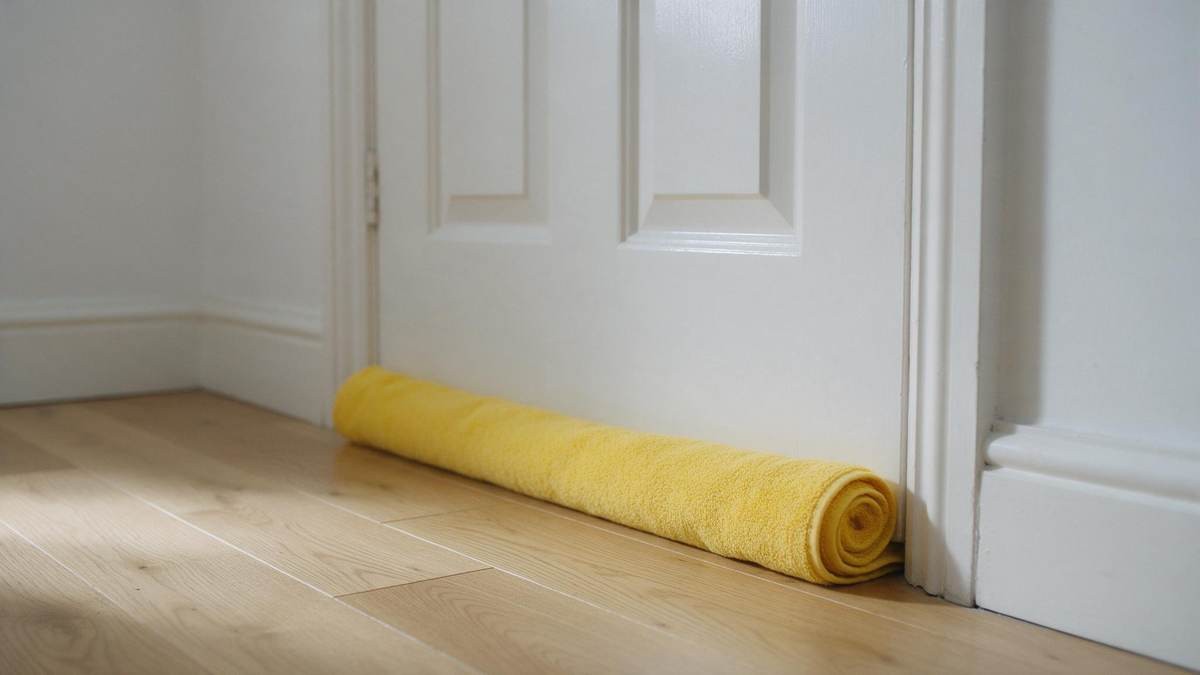 Concentration leaks under this door?The sentence that survives any interruptionWatch the video to see one approach to memory for the pattern that keeps slipping your quiet window.
When the same planning or reading block keeps slipping from a quiet afternoon into fragmented snatches, watch the video presenting one approach to improving memory for the recurring pattern.
Protect the return point during interruptions
The return point is a practical hedge against the way ordinary movement can erase an intention. Research on event boundaries has shown that people sometimes forget details after crossing a doorway or shifting tasks, and the effect appears most clearly when the mind is already holding several things at once. In one set of experiments, participants carried objects between virtual rooms and showed worse recall when the route crossed a boundary, especially while also counting backward. You are not in a laboratory, but the underlying fragility is familiar: you walk to the kitchen for a pen and arrive without the reason you went.
To make the return point sturdy, write it in the form of an unfinished sentence. Instead of work on the plan, write open the budget column and list the three remaining dates. The specificity matters because the mind returning from an interruption is not the same as the mind that left; it needs a handle, not a category. Keep the note in the same place every time, the top corner of the page or the first line of the document, so that finding it does not become a second task.
Some interruptions are long enough that the material itself cools. When you return after an hour rather than a minute, reread the last paragraph you completed rather than the one you were in the middle of, because the completed one is more likely to hold the thread you actually retained. If you were planning rather than reading, restate the last decision aloud before adding the next one. These are small repairs, but they prevent the common experience of staring at your own notes and wondering who wrote them.
The return point also serves the ending. When the interval closes, add one line about what remains, even if the answer is nothing remains except review. This makes the next session easier to enter, because you are never starting from zero, you are continuing from a place you can see.
When quiet is unavailable or focus is thin
Noise is not the only condition that compresses attention; fatigue does the same work from the inside. The National Heart, Lung, and Blood Institute describes how sleep deficiency can interfere with learning, focusing, and reacting, and can leave a person taking longer to finish tasks and making more mistakes. If you are short on sleep, the interval may need to be shorter and the return point more explicit, not because you are less capable but because the margin for competing signals is smaller.
Background noise that carries speech is harder to ignore than steady hum, because the mind keeps trying to resolve the words. If you cannot change the room, you can change the material’s relationship to the noise by reading with a pen in hand and marking the point where comprehension thins. When you notice you have read the same sentence twice, stop and restate the last idea you actually followed, then continue from there. This is not a failure of will; it is a practical response to a divided channel.
The feeling of being scattered can resemble the feeling of being unable to remember, but they are distinct descriptions. brain fog and forgetfulness are different descriptions, and treating a noisy afternoon as a memory problem can send you looking for solutions in the wrong place. If the material is simply not entering because the room is loud, the answer is the room, not a deeper concern.
One overlooked condition is the residue of the last task. If you were just answering messages, the mind may still be composing replies. Give yourself a literal two minute transition, a short walk or a deliberate look out the window, to mark the change of mode before the interval begins.
Decide the next interval before the pattern repeats
The interval you protected today is one instance of a larger pattern in how setting shapes recall. How attention and setting affect recall is not a single trick but a set of observations about what the mind retains when the room, the hour, and the company change. A quiet window works because it removes some of the competing loops, not because it makes the mind fundamentally stronger.
If you try to keep the reading alive while also monitoring a conversation, you are asking memory to do two jobs that research suggests it does poorly together. The question of whether multitasking helps or hurts memory has a consistent practical answer for material you need later: the divided version leaves less behind. A shorter single channel interval often produces more usable residue than a longer split one.
Stress adds its own layer, because worry consumes the same working space that reading and planning need. whether stress affects everyday remembering is a real question, and the honest answer is that a tense day can make the interval feel harder without meaning anything is wrong with your memory itself. The practical response is not to wait for calm but to make the interval smaller and the return point more explicit when tension is high.
The next decision is concrete. Look at the task waiting for you now and choose a finish line you can see from where you are sitting, then set the return point before you begin. If the interval works, protect another one tomorrow; if it breaks, examine whether the return point was specific enough or the finish line too distant. The quiet window is a tool you adjust, not a verdict on your attention.
You can treat tonight as a one-off, or you can watch the full video and look at the shape these moments make together.