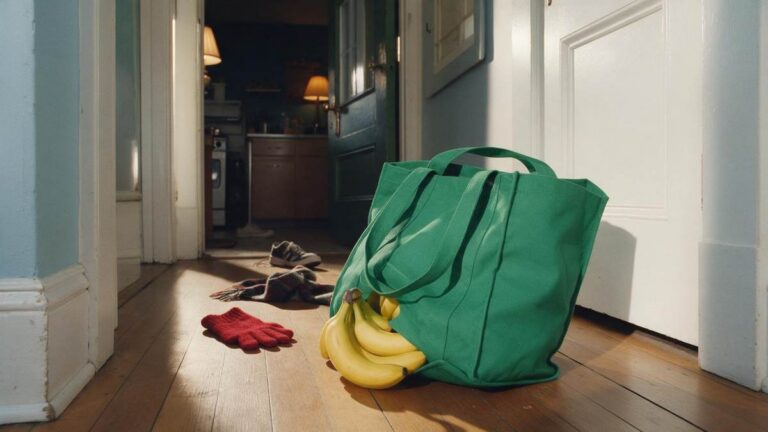
You are standing in the kitchen, trying to remember a colleague’s last name while also thinking about a deadline, and the name simply will not come. The word was right there a second ago, familiar as your own street, but now it sits just out of reach while the worry keeps humming underneath. How anxiety affects memory recall is not about losing the fact for good; it is about access under pressure, and that distinction changes what you do next.
You are not imagining it: a familiar fact can become hard to reach while you are worrying, even if it comes back later when the pressure drops. That does not mean the fact is gone, and it does not prove worry caused the blank. The best immediate move is a low-pressure pause: stop forcing the answer, note the cue, and return after a short reset.
The useful distinction is that some research links worry to changes in working-memory updating and slower early task responses, but that evidence is narrow and does not explain every everyday blank. If the fact matters, give it an external anchor and revisit it when the moment is less charged.
Worry can crowd the update, not erase the fact
In one student experiment, trait worry was linked specifically to working-memory updating, the job of replacing or revising information you are actively holding in mind. That matters because it is not the same as failing at a simple word-span task. The research did not show that a worried person loses every fact they know; it pointed to a narrower cost in the moment when the mind has to adjust what it is holding while other demands compete. That is why a familiar name or date can feel strangely unreachable even though it is still part of your long-term knowledge.
A separate experiment comparing clinical and nonclinical groups found that worry was associated with slower responses in the first task block. Slower responding is not proof that memory itself is damaged. It does suggest that worry can interfere with efficiency before accuracy, which fits the everyday sense that the mind is busy but not freely available. In practical terms, the blank can be a retrieval problem under load, not a sign that the fact has vanished for good.
That distinction helps in the moment. If you need the answer now, do not keep wrestling with it while the mind is already crowded. Write down the cue, step away from the pressure point for a minute, and let the task shift from forced retrieval to calmer search. That low-pressure pause is not a cure and it is not a guarantee; it is simply a way to stop making the blank bigger than it already feels.
When the blank resolves later, the timing matters
A blank that clears later is often the most confusing kind. You may be standing in the kitchen, trying to remember a colleague’s last name while also thinking about a deadline, and the name simply will not come. Then, half an hour later, it appears while you are doing something ordinary like washing a cup. The delay does not mean the original struggle was imaginary; it means the retrieval conditions changed once the immediate pressure dropped.
Worry and memory
- Myth: A blank means the fact is gone for good. Fact: It is often a retrieval problem under load.
- Myth: Worry damages memory itself. Fact: Research links worry to working-memory updating and slower early responses.
- Myth: Forcing the answer is the best move. Fact: A low-pressure pause is more useful in the moment.
That is one reason it helps to separate the fact from the scene. If the answer returns after the meeting, after the email is sent, or after the conversation ends, treat that as a clue about timing rather than proof that your memory is unreliable. The fact was still there. What failed first was access under pressure, and access can improve when the surrounding load eases. The distinction is small, but it changes what you do next.
When a familiar fact goes blank at the exact moment worry spikes, that gap can feel like the mind is failing you. If this kind of lapse keeps showing up across ordinary days, watch the full video on recurring memory slips to see the approach the presentation proposes for improving memory.
The task still needs a route after the blank
The original task still has to be handled, even if the blank felt dramatic. Suppose you are in a seminar and cannot summon a term you normally know well; the useful move is not to sit there arguing with yourself, but to use a workaround that keeps the task moving. Say the broader point plainly, write the missing word in shorthand, or come back to it after the discussion has moved on. That keeps the current job from collapsing just because one retrieval moment failed.
The same logic applies to everyday errands. If you are trying to remember whether you already paid a bill or packed a document, do not let the worry-blank become the final authority. Check the calendar, the receipt, the folder, or the device you used earlier. Memory is allowed to have witnesses. how attention and setting shape recall is useful here because it keeps the focus on the conditions around the lapse, not on a dramatic verdict about your mind.
A practical rule is to make the next step external when the answer feels brittle. If the fact matters, give it a physical anchor: a note in the margin, a tab left open, a reminder set for the moment you can act, or a file placed where you will see it. That is not an admission that your memory is broken. It is a way to stop one pressured blank from controlling the rest of the task.
When the blanks keep recurring, look wider
Not every lapse during a tense week should be filed under worry. If the same kind of blank shows up when you are calm, rested, and not under pressure, then worry may be only one part of the picture or not the main part at all. That is when it helps to compare settings. A name that disappears during conflict, a word that vanishes when you are rushed, and a detail that slips when you are tired may feel similar, but they are not necessarily the same event.
The National Institute on Aging notes that negative emotions, including stress and anxiety, can contribute to everyday forgetfulness in older adults, and it also advises medical review when changes persist or become more serious. That advice matters because a recurring pattern deserves a different response than a one-off blank. If the problem keeps appearing outside worry, or if it starts to interfere with ordinary functioning, the sensible next move is not more self-diagnosis but a conversation with a clinician.
There is also a practical distinction between whether stress affects everyday remembering and the specific experience of a fact going blank in a worried moment. The first is broader; the second is narrower and easier to observe. why divided attention weakens later recall can also be relevant when the mind is split between the worry itself and the thing you are trying to retrieve. Keeping those categories separate makes the next decision cleaner: manage the moment, then watch the pattern.
A calmer next step for the next blank
If a familiar fact disappears while you are worrying, do not assume the worst and do not waste time trying to force it. Pause, note the cue, and give yourself a small route back to the task. If the answer matters later, attach it to something stable: a calendar entry, a written reminder, a folder label, or the place where you will need it next. That keeps the blank from turning into a second problem.
It also helps to notice whether fatigue or what distraction does to information held briefly in mind is part of the scene. A tired evening, a noisy room, or a moment of how brain fog differs from forgetfulness can make a familiar fact feel farther away than it really is. None of that proves a single cause, and it does not turn one bad moment into a diagnosis. It simply gives you a better next question than, why did my mind fail me?
 Anxiety blocking memory recall?Why worry makes a familiar fact goWatch the video to see the approach proposed for recurring memory slips when familiar facts go blank under pressure.
That is where this article stops and the wider question starts, so watch the full video and take it from there.
▶ Watch the memory video