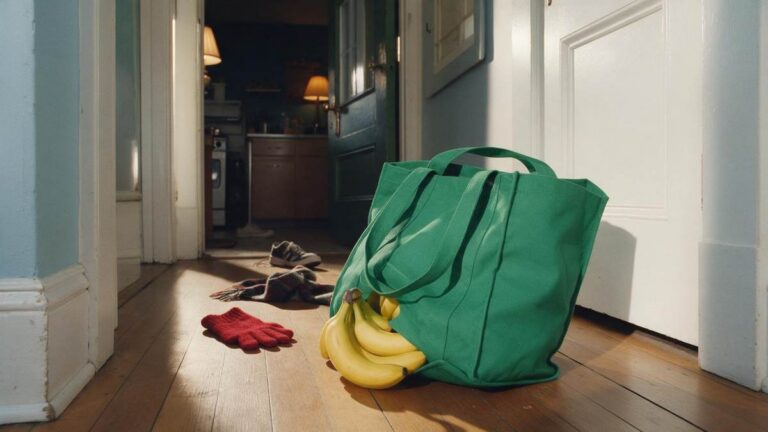
You walk into the kitchen and stop, unable to recall why you came. The week has been a blur of deadlines and interruptions, and now a simple errand has slipped through the cracks. You wonder whether stress and memory loss are connected, or whether something else is going on.
Stress can sit beside a memory lapse without being its cause, and the honest answer to whether it explains yours is: sometimes plausibly, never provably from research alone. Task-specific experiments and lists of possible contributors describe groups and possibilities, not the reason behind one person’s missed appointment or lost sentence. What the evidence does support is more useful than a blanket yes: an acute, socially stressful moment can interact with short-term recall in lab settings, large everyday-stress surveys have not shown a working-memory link, and persistent change after the pressure lifts deserves medical review rather than more self-diagnosis.
That means the practical question is not does stress cause memory loss but which situation is this. A lapse confined to a brutal week reads differently from one that continues on calm days, and both read differently from a pattern that starts affecting daily function. Each calls for a different next step, and none of those steps requires settling the cause in advance.
The short answer and its honest limit
A tense afternoon can make a missed detail feel like evidence. The reader who forgets an appointment during a deadline week is not imagining the overlap; stress and negative emotions are listed among the possible contributors to everyday forgetfulness, and trying to manage a difficult period can leave a person confused or forgetful. The National Institute on Aging describes those lapses as often temporary, improving as the strain fades. That is not a guarantee about any one person, and it is not a dismissal either. It is a plausible reading of a bounded episode, not a verdict on the brain.
The honest caveat is narrower. A list of possible contributors cannot rank them inside one life. A lab finding about a social-evaluative stressor cannot measure what a mortgage worry did to yesterday’s errand. So the right move during an acute spell is modest: notice the lapse, write down what slipped and when, and let the episode end before interpreting it. Acting on the timing is useful. Declaring the cause is premature.
Two kinds of stress, two different findings
Picture a job interview morning where the subway route you have used for years suddenly goes blank. That is the acute-stress case, and one laboratory version of it asked younger and older adults to complete a socially stressful task before memory testing, then examined who performed well afterward. In that sample, older adults who reported higher perceived resources and more positive mood before the stressor showed better short-term memory after it, while the younger group showed no significant link. The finding ties performance to the person’s appraisal of a specific task, not to stress in general, and it says nothing about which memory failure belongs to which reader.
Contrast that with a large survey of nondepressed American adults that asked about ordinary daily stress and tested working memory, the kind that holds a phone number while you hunt for a pen. That study did not find a working-memory association for normal variation in everyday stress. Put side by side, the two results draw a useful line: an intense, evaluated moment can shift short-term recall under some conditions, while the background hum of an average stressful week may leave working-memory scores alone. Neither result licenses the sentence stress erased my memory, because both describe groups and tasks rather than the contents of one person’s afternoon.
If a memory gap happens during a stressful day, keep that context visible without deciding what connects the moments. If similar gaps appear across different situations, what broader question would you want to examine while keeping that distinction open?
 Wringing the towel? It is not ageWhen a brutal week steals your recallWatch the video for the wider pattern behind a single memory slip and the approach it proposes.
For a wider perspective on those recurring moments, watch the full memory video presentation about recurring memory slips and the approach it proposes for improving memory.
Three situations that change the next step
A first situation is the single crushing week, the move, the funeral, the audit. Here the lapse plausibly tracks the episode, and the reasonable action is practical triage: externalize what must not be lost, put keys and documents in one place, and revisit the question once life settles. If memory steadies as the strain lifts, the pattern supports a temporary, context-linked reading without proving it.
A second situation is the worry that outlives the trigger. When the deadline passes and names, words, and plans keep slipping, the episode explanation weakens. Persistent change is the point at which general guidance about older adults suggests medical review, because many treatable contributors, from mood and sleep to medication effects and thyroid problems, sit on the same list as stress. The National Institute on Aging advises talking with a doctor if memory problems persist after a few weeks. That boundary does not become less relevant for a younger reader; it simply came from an older-adult source.
A third situation is the pattern that interferes with daily function, such as getting lost on familiar routes, repeating the same question within minutes, or missing steps in a well-practiced routine. At that point the debate about stress stops being the main task. Sudden confusion warrants urgent assessment, and a gradual worsening deserves a scheduled one. Recording the pattern of slips in the days before an appointment gives that conversation more substance than a general feeling that memory is worse.
Why attention, mood, and setting muddy the picture
Stress also travels with company, and the company explains part of the confusion. Anxiety narrows attention toward threat, poor sleep erodes the encoding that recall later needs, and low mood blunts the effort that remembering requires. Any of these can sit beside a stressful week, which is why a lapse during one is so easy to misattribute. The broader discussion of how attention and setting shape recall makes the same point from another angle: the mind registers less when the room, the moment, and the body are all competing for it.
It also helps to separate descriptions before hunting for causes. The difference between brain fog and ordinary forgetfulness is one of degree and texture, not a diagnosis, and a tip-of-the-tongue stall during a tense exchange is its own event with its own possible triggers. The reader asking whether stress makes words harder to find is circling a related question that a single study cannot settle. Each of these labels keeps one observation distinct, and distinct observations are what make a later judgment, medical or otherwise, worth anything.
What the evidence cannot settle for one person
The limitation worth holding onto is that none of the sources here identifies the cause of an individual’s symptoms. One experiment manipulated a laboratory stressor, one survey measured normal stress variation, and one guidance page listed possibilities for older adults. Between them lies the reader’s actual question, and the only instrument that fits it is a careful record over time.
When to act on a memory lapse
- During a stressful day: keep the context visible without deciding what connects the moments.
- After a few weeks of persistence: talk with a doctor.
- When getting lost on familiar routes or repeating questions: seek urgent assessment.
- Before an appointment: record the pattern of slips in the days leading up to it.
So the concrete next decision is this: if the lapse belongs to a bounded episode, manage the episode and watch whether memory recovers with it. If concerns continue outside it, or the pattern affects daily function, treat persistence as the threshold and arrange an assessment rather than another round of self-explanation. Stress may be part of the story. The evidence does not let it narrate alone.
The single slip you noticed this week may be the small version of a pattern that keeps returning, and watch the full video to see how that pattern is described and what approach it proposes for improving memory.