You are back at the same shelf for the third time, and your hand pauses before it touches anything. The hallway light is still on from the last pass, and the bag you carried in sits untouched by the door. Somewhere in the house the thing you need is exactly where it has been for an hour. Why does your memory keep sending you to the places you have already cleared?
Stop walking in circles. Pick one room, write down the places you will check, and cross them off as you go. Do not move to the next room until the list is finished. This is the only way to stop checking the same shelf three times while the item sits untouched in a bag you carried through the hallway.
The method is simple because the problem is simple: your memory of where you looked is less reliable than the search itself. A written record removes the doubt. If the item is not in the first room, you will know it, and you will not waste another twenty minutes proving it to yourself again.
This is not about remembering better. It is about searching better. The item is somewhere. Your job is to look in each place once, properly, and to know that you have done so.
Draw a boundary before you start looking
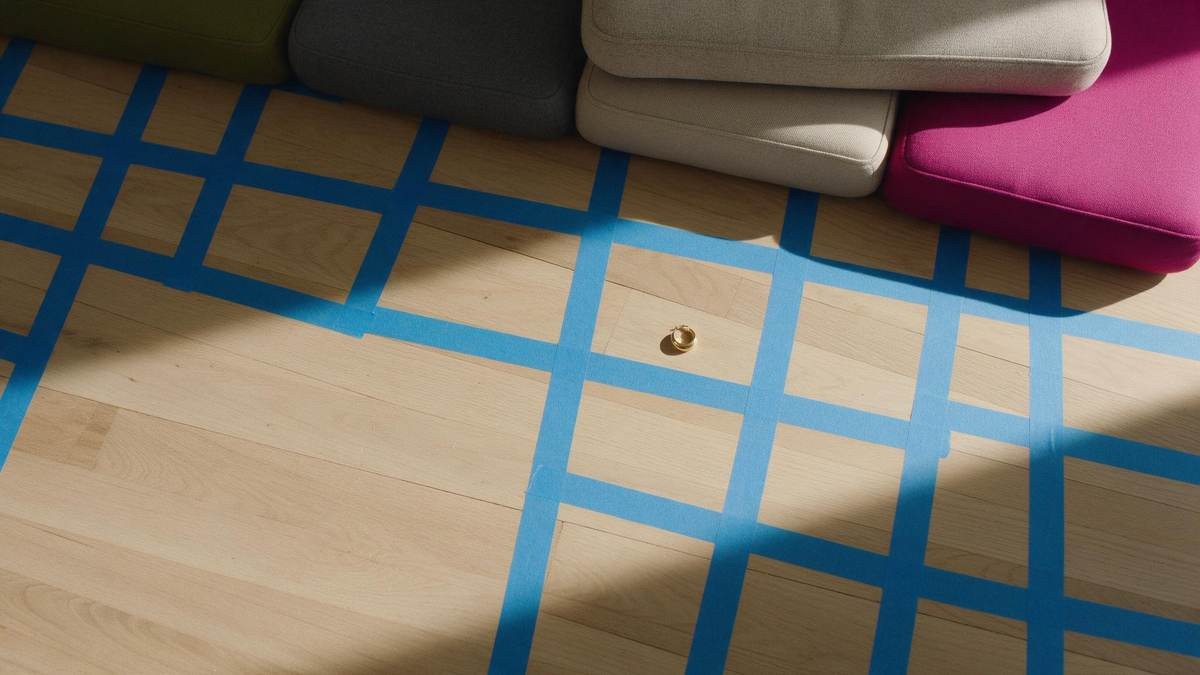
You last saw your keys on the kitchen counter at eight. Now it is nine and the counter is empty. You have checked the hook by the door twice, your coat pockets three times, and the bathroom shelf once. Each time you return to the kitchen, the empty counter feels louder. This is the moment to stop moving and draw a boundary. Pick one room, any room, and commit to searching only that room until you have checked every plausible surface and container within it.
One room at a time
- Write the room name at the top of a scrap of paper.
- List ten to fifteen spots you intend to check.
- Cross off each spot as you check it.
- Do not move to the next room until the list is finished.
Write down the room name at the top of a scrap of paper. Below it, list the spots you intend to check: the counter, the table, the windowsill, the fruit bowl, the recycling bin, the floor beside the bin. As you check each spot, cross it off. Do not skip ahead. Do not wander into the hallway because you suddenly remember the stairs. The paper is your memory now. If the item is not in this room, you will know for certain, and you will not need to check it again in twenty minutes.
This is the object-location memory problem in miniature. The item exists somewhere, but your recall of its location has detached from the object itself. Laboratory work on object-location binding shows that when people misremember where something is, they often place it at the location of another item from the same scene. Your keys are not on the hook because you saw them there yesterday. They are where they are. The list keeps you honest about where you have actually looked.
Write down what you have checked
The list works because it separates the search from the searcher. Without it, you rely on a feeling of having checked, and that feeling is unreliable. You remember opening the drawer, but was that this morning or yesterday? You remember looking in your bag, but did you look in the front pocket or just the main compartment? A written record does not argue with itself. It either has a line through it or it does not.
Container search
- Empty the container completely onto a surface.
- Check the empty container.
- Check the pile of removed items.
- Return each item one at a time, confirming it.
Keep the list small enough to finish. If you write down forty spots for one room, you will abandon the list and start circling again. Ten to fifteen spots is usually enough for a single room. Group them by height: eye level first, then waist level, then floor level. This order matters because it forces you to look at the room in a way you did not when you were moving through it automatically. The doorway effect research suggests that moving between contexts can fragment your recall of what you were doing. A systematic list rebuilds that context deliberately.
Do not trust the obvious spots just because they are obvious. The hook by the door is obvious. The counter is obvious. But obviousness is not evidence. Check them once, cross them off, and move to the less obvious places: the shelf behind the door, the pocket of the coat you wore yesterday, the surface you cannot see without bending down. The item is not hiding from you. It is simply where it is, and your job is to look there once, properly.
Picture checking the same shelf again while another part of the room remains untouched. If different items go missing again, what broader question would you want to ask about the repeated experience?
 Same spots every time? Look hereThe reason you check the same spotThis short video shows the search habit that keeps sending you back to the same shelf, and the simple fix that stops it.
To examine the broader question, watch the full video about recurring memory slips and the explanation it proposes.
Move through rooms in a fixed order
When one room is finished, the next decision is which room to enter. Do not choose the room where you feel the item should be. Choose the room where you last remember using it. If you cannot remember using it, choose the room where you last remember seeing it. If you cannot remember seeing it, choose the room closest to where you are standing. The point is to have a rule, not a hunch.
Work through the house in a fixed direction. Clockwise from the front door, or top floor to bottom floor, or whatever order matches your floor plan. The direction matters less than the consistency. If you skip the bathroom because you are sure you did not go in there, you will end up checking the bathroom last, after you have already checked the bedroom twice. A fixed order removes the negotiation. You do not have to decide again at every threshold.
Some rooms will be quick. A bathroom has fewer hiding places than a kitchen. A hallway has almost none. But quick does not mean cursory. Check the windowsill, the top of the radiator, the floor behind the door. Cross them off. Move on. The list is not a ritual. It is a tool for not repeating yourself.
Bags and containers are rooms too
The hardest searches involve containers that move. Bags, backpacks, laundry baskets, shopping totes, coat pockets, the glove compartment of the car. These are not rooms, but they behave like rooms. They have interiors, they have contents, and they travel. If you carried a bag between rooms, the bag is a room. If you wore a coat, the coat is a room. Treat them with the same respect.
Choosing the next room
- If you remember using the item, choose that room.
- If you remember seeing it, choose that room.
- If you remember neither, choose the room closest to you.
Empty the container completely. Do not rummage. Rummaging is how you miss the thing that is underneath the thing you just moved. Take everything out, put it on a surface, and check the empty container. Then check the pile. Then put everything back, one item at a time, confirming each object as you return it. This is slower than rummaging, but it is faster than rummaging three times.
If you share your home with other people, the container problem multiplies. Someone else may have moved the bag. Someone else may have emptied the laundry basket. This is not a failure of your memory. It is a feature of shared space. The shared household item problem is different from the solo search. You cannot retrace steps you did not take. Ask before you search. The answer may save you an hour.
When the last-use assumption breaks
Sometimes the list fails. You have checked every room, every container, every pocket, and the item is still missing. This is the moment to change the question. Stop asking where you put it. Start asking when you last used it. The retrace your steps approach works when the last confirmed use is clear. But if the last confirmed use was hours ago, or if you were interrupted, or if you were carrying several things at once, the retraced path may be too long to search exhaustively.
In that case, shrink the search to the most recent hour. Where were you in the last hour? What were you doing? What were you carrying? The item is more likely to be near your most recent activity than near its usual home. This is not a guarantee. It is a probability. But probability is better than panic.
If the item is still missing after a bounded, recorded search, stop. Set a limit. Thirty minutes, or one hour, or until you have checked every room once. Then do something else. The item may turn up when you are not looking. Or it may not. But you will have stopped circling, and that is worth something on its own.
The slip that sent you back to the same shelf may be the small version of a pattern that keeps returning. To see the broader question behind the repeated experience, watch the full video.
Reading behind this note
Everything on Everyday slips →
▶ Watch the memory video